Online Reporter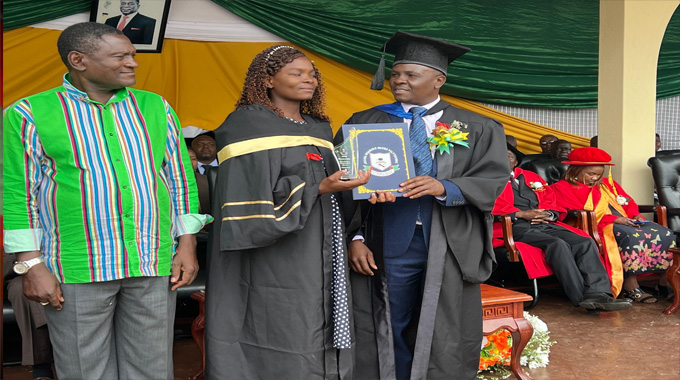
Sukulwenkosi Dube-Matutu, [email protected]
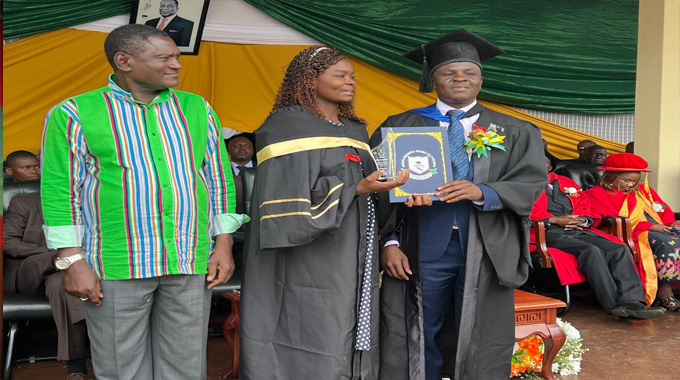
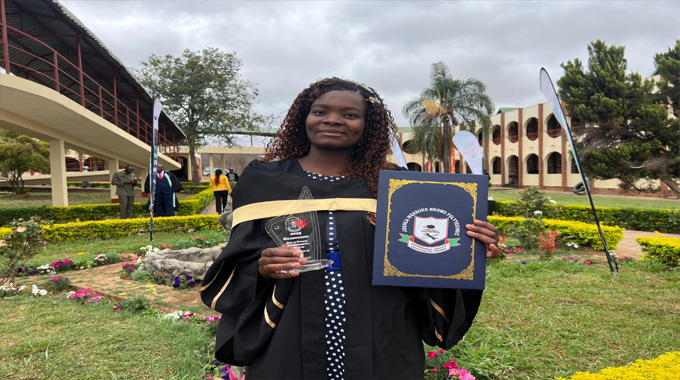
WHEN 23-year-old Ruth Ngwenya walked across the stage to receive her award as the top graduate in the Division of Technical Education, she carried more than just her 21 distinctions. She carried the aspirations of young women breaking barriers in traditionally male-dominated fields.
A graduate in Environmental Health from Joshua Mqabuko Nkomo Polytechnic, Ms Ngwenya completed 25 rigorous modules and made an impact that extended far beyond the classroom. During her 2022 attachment, she led a diverse team of trainee environmental health technicians in a research project focused on rural sanitation. Together, they redesigned the “sigubhu gear” — a latrine-handwashing device — to make it accessible for people living with disabilities.
Her innovation did not end there. She also published a scholarly paper titled “An Impact Evaluation of Vaccine Hesitancy: A Limitation to Achieving Good Health and Well-being of Students at Joshua Mqabuko Nkomo Polytechnic” in the International Journal of Research Publication and Reviews.
“I’m glad to have made a meaningful contribution to environmental health during my studies. I was attached to various health institutions in Matabeleland North, and during my time at Fatima Clinic, the innovations we developed showed me that even with limited resources, we can change lives,” she said.
For Ms Ngwenya, the irrigation pipes, handwashing systems and research papers are just the beginning. She sees herself as part of a generation poised to reshape communities through practical, locally-driven health solutions.
“This is just the start of a bigger journey. Our communities need more innovation, more women in science, and more home-grown solutions. I helped assemble a handwashing system known as sigubhu gear. At the time, it was not available at the health facility. It is an affordable system, made from locally sourced materials,” she said.
Ms Ngwenya was not alone in blazing a trail. Ms Iphithule Dube, who received the award for outstanding performance in Secondary Sciences, demonstrated that women belong at the forefront of science and innovation. Majoring in Biology and Chemistry, she used her teaching practice at Esikhoveni Secondary School in Umzingwane District to pioneer waste management solutions.
By reviving the traditional method of digging pits for solid waste and converting the compost into organic manure, she turned a school’s waste challenge into fertile ground for crop production.
“Waste can either pollute our schools or nourish our crops. The choice is ours. With the skills I have acquired, I want to bring new solutions that benefit both communities and the environment,” said Ms Dube.
In Early Childhood Development, Ms Precious Chakanyuka also made her mark. During her teaching practice, she led a poultry and horticulture project that generated enough income to build an ICT laboratory and library, while also supporting disadvantaged learners.
Her achievement is a testament to the fact that innovation and leadership are not confined to boardrooms — they can be nurtured within the classroom.
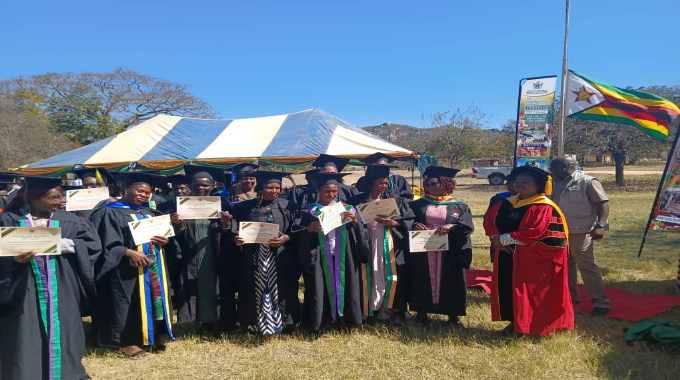
This year, 642 students graduated from Joshua Mqabuko Nkomo Polytechnic, with 392 from Teacher Education and 250 from the Technical Division. The ceremony, held under the theme “Transforming Education: Fostering Research, Innovation and Industrialisation for a Prosperous and Empowered Upper Middle-Income Society by 2030,” was a celebration of resilience, creativity, and the unstoppable rise of women in education and science.
Since its modest beginnings as Gwanda Zintec in 1981, the institution has produced over 21,500 graduates, including more than 4,300 technicians and artisans. —@DubeMatutu