

 Online Reporter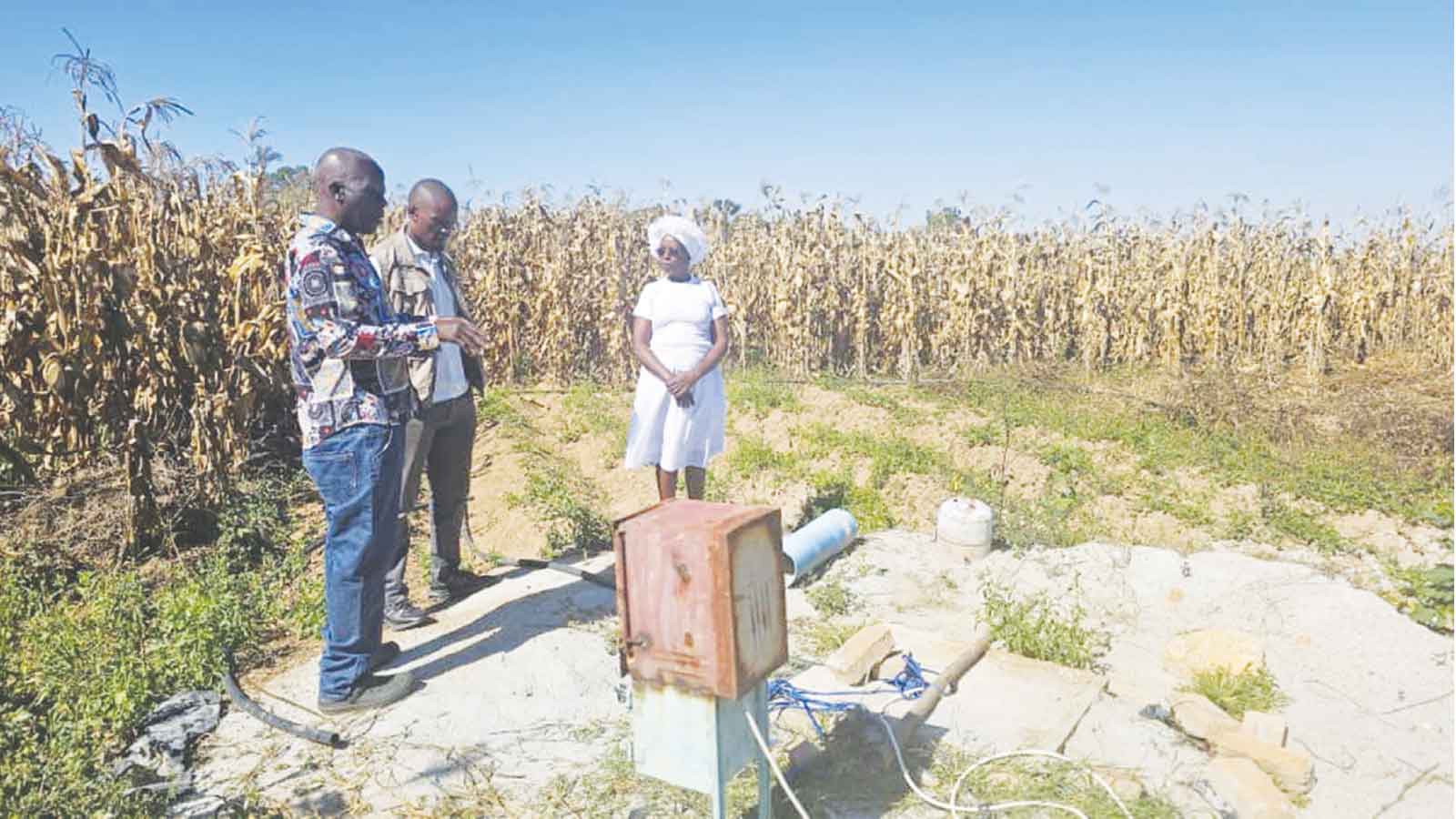
Theseus Shambare
Correspondent
IN the farming heartlands of Murehwa District, Mashonaland East province, Gogo Perfennia Kahuni has learnt a hard truth about agriculture: sometimes success does not come from what lies beneath the soil, but from what survives above it.
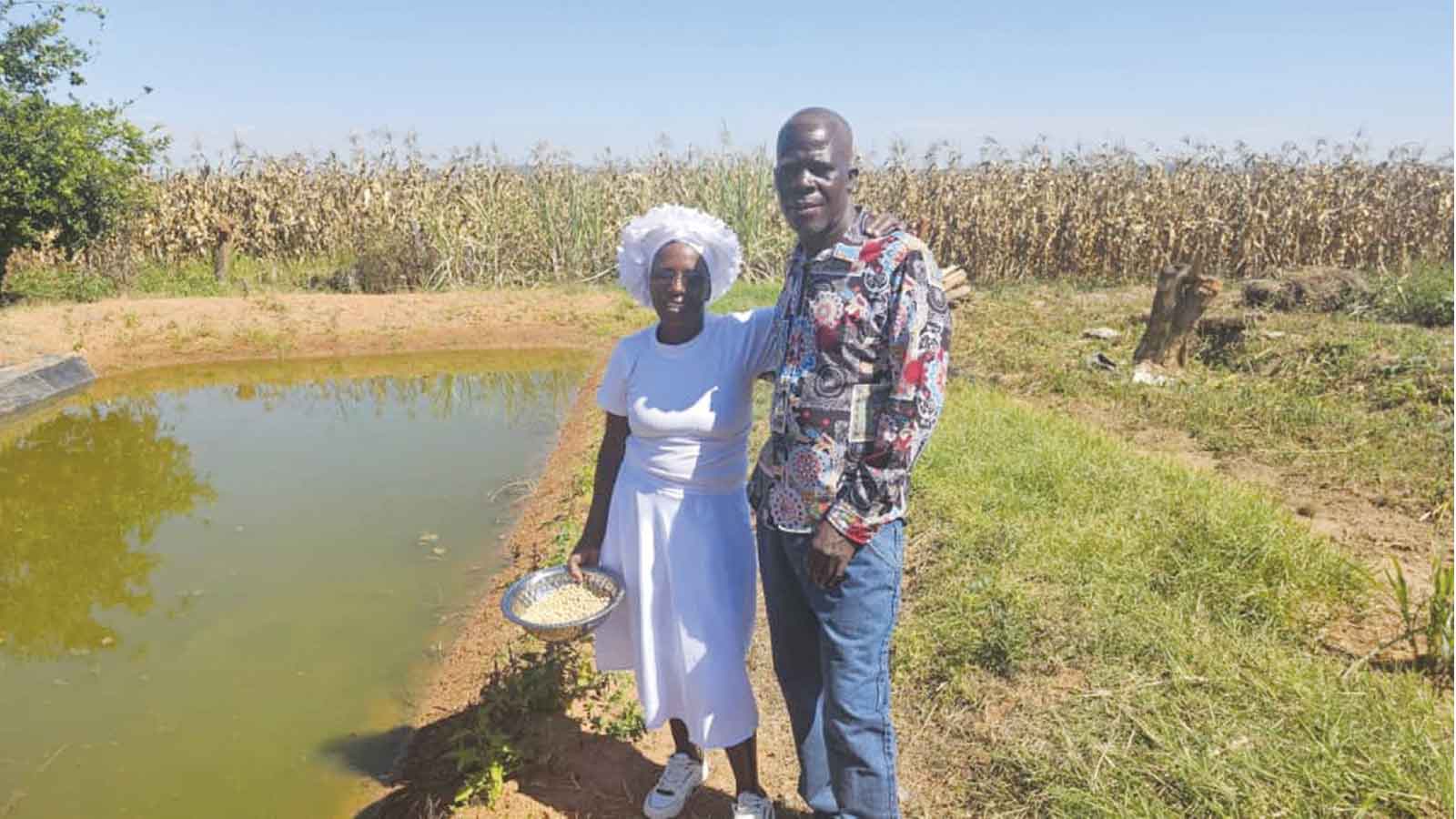
On her smallholding, six fish ponds shimmer with life.
Tilapia thrive in controlled waters, feeding a growing aquaculture enterprise that has already outperformed her former life in tobacco farming.
But just a few metres away from this success story stands a different reality – four failed boreholes that speak of broken promises, costly drilling experiments, and a water system that never fully delivered.
For Gogo Kahuni and her retired soldier husband, the journey into aquaculture was meant to begin with certainty.
Instead, it began with water uncertainty.
FOUR BOREHOLES, ONE DREAM
The first borehole was drilled to 70 metres and had “massive water”.
It collapsed, reportedly due to class six casing pipes. The second went deeper – 85 metres – but produced nothing.
The third reached 140 metres, yet still failed to yield sustainable water.
What came out could barely fill a 1 000-litre tank. Each attempt represented not just financial loss, but renewed hope followed by disappointment.
“We kept thinking the next one would work,” Gogo Kahuni recalled.
“But it was always the same story.”
The fourth attempt seemed more promising.
After the rains, the couple lowered a string with a weighted plastic bottle into the borehole. At 17 metres, they found water.
“It was joy,” she said.
“We thought finally, we have succeeded.”
A 2-horsepower submersible pump was installed.
For 20 minutes, it worked.
Then it began pumping mud.
A plumber advised lifting the pump higher to avoid sediment intake.
But when they tried to retrieve the system, disaster struck – the rope snapped, followed by the electrical cable and pipe.
The borehole was lost.
To date, it remains non-functional.
WHERE WATER FAILED, FISH SUCCEEDED
Ironically, while underground water proved unreliable, surface aquaculture thrived.
Six fish ponds on the farm became the foundation of a growing business under the Presidential Fisheries Scheme getting water from a river a distant away.
Each harvest brought better returns.
“We have already harvested four times,” she said.
“Each time, the results improved.”
For Gogo Kahuni, fish farming has not just replaced tobacco — it has surpassed it.
“We started as tobacco farmers, but the prices were unpredictable,” she said.
“Now, I can safely say we are earning more from fish farming than we ever did from tobacco.”
The ponds have become symbols of stability in an otherwise uncertain farming environment. A national programme, a local transformation
Her story sits within a wider national programme aimed at transforming rural livelihoods through aquaculture.
Under the Presidential Fisheries Scheme, farmers receive fingerlings, technical support, and training to promote fish production across rural districts.
During a field day held at her farm, Mr Milton Makumbe, Director of Livestock and Fisheries Production, said the programme is part of a broader national food security strategy.
“The provision of fingerlings under this programme is not merely an intervention — it is a strategic investment aimed at strengthening food security, promoting rural incomes and stimulating economic growth,” he said.
In Murehwa alone, 22 farmers have benefited, with 22 ponds stocked with more than 32 000 Nile tilapia fingerlings.
The programme targets women, youth, war veterans and persons with disabilities, positioning aquaculture as a pillar of rural transformation.
The missing link: water infrastructure
Yet beneath the success of fish farming lies a structural gap that continues to frustrate farmers: reliable water access.
For Gogo Kahuni, the contradiction is impossible to ignore — fish thriving in ponds, while boreholes fail repeatedly.
“We are facing challenges with water supply because of bogus borehole drilling service providers,” she said.
“Some of the boreholes we paid for are not producing enough water.”
Her experience reflects a wider rural challenge: dependence on private borehole drilling services that are often expensive, inconsistent and in some cases, ineffective.
A dream beyond her farm
Despite her setbacks, Gogo Kahuni is not only thinking about her own farm anymore.
Her vision has expanded.
She now dreams of establishing a fish hatchery that would serve as a production and distribution hub for surrounding farmers — helping others access fingerlings locally and at lower cost.
“I have tasted the sweetness of fish money,” she said with a smile.
“Now I want to go bigger. I want to help others also start.”
But at the centre of her vision lies a deeper policy appeal — one rooted in her painful experience with boreholes.
A call for institutional support
Gogo Kahuni believes that the future of rural agriculture depends not just on farmer effort, but on stronger institutional support in water infrastructure development.
Her appeal is clear: institutions such as the Rural Infrastructure Development Agency (RIDA) and the Zimbabwe National Water Authority (ZINWA) should be strengthened and equipped with functional borehole drilling rigs to support productive farmers.
She argued that access should be subsidised to ensure affordability for serious agricultural producers.
“If RIDA or ZINWA had proper drilling machines and could support farmers at subsidised rates, it would reduce failure and exploitation,” she said.
“We are ready to produce, but water is the biggest barrier.”
Her call speaks to a broader rural development debate — how to align water infrastructure development with agricultural transformation goals.
Between policyband practice
Experts say Zimbabwe’s aquaculture expansion will depend not only on fingerlings and training, but also on integrated water systems that support production.
While programmes like the Presidential Fisheries Scheme are addressing the production side, farmers like Gogo Kahuni highlight a critical gap in enabling infrastructure.
Without reliable boreholes, irrigation systems and technical oversight in drilling, rural enterprises remain vulnerable to collapse.
A woman still building
Back at her farm, Gogo Kahuni moves between her ponds with quiet confidence.
The water is calm. The fish are growing.
The borehole, however, remains silent.
Yet she is not discouraged.
Each harvest reinforces her belief that she made the right shift — from tobacco uncertainty to aquaculture stability.
The failed boreholes are not the end of her story.
They are part of it.
Because for her, agriculture is no longer just about digging deeper.
It is about building systems that work.
And even in the absence of underground water, Gogo Kahuni has proven that resilience can still flow on the surface.


 Bongani Ndlovu