Chronicle Editor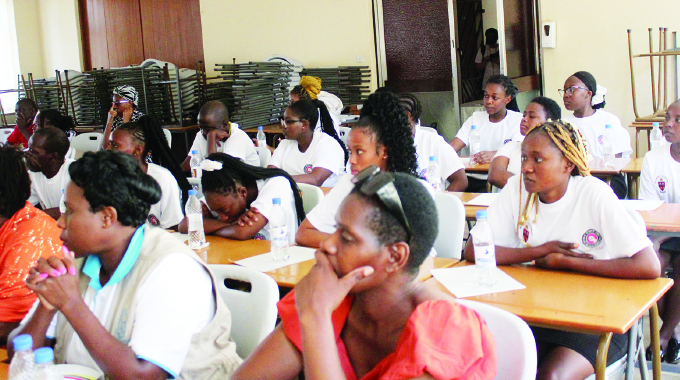
Sikhulekelani Moyo, [email protected]
WOMEN continue to face cultural norms that challenge their full participation in various aspects, including studies, the economy, and technology.
This is evident in the low number of women graduating from technical colleges in science, technology, engineering, and mathematics (STEM) programmes.
This issue was highlighted during the launch of the Women in Technical Education and Development (WITED) Chapter at Bulawayo Polytechnic on Friday.
The Association of Technical Universities and Polytechnics (ATUPA) initiated the WITED project to identify the needs and successes of women’s participation in technical education, training, and employment.
Ms Victoria Sampindi, representing Mutare Polytechnic principal, Ms Poniso Watema, who was the guest of honour at the event, noted that although women receive training in various STEM programmes, they are often absent from industries where they could apply their skills.
Ms Sampindi pointed out that WITED aims to encourage women to be bold and take up managerial roles, and leadership positions in society and communities to inspire young women and girls.
“There are many challenges affecting women who want to pursue STEM programmes, stemming from societal and cultural norms, and even economic activities that can discourage women from taking up certain technical courses,” she said.
“There is also stigmatisation where women are told they have to do certain tasks because they are women, leaving the ‘masculine’ tasks for men. Additionally, there is workplace stereotyping, where top positions are often perceived as being meant for men, which is not the case. Even at home, women can face discrimination.”
Ms Sampindi said some women are discouraged from taking technical courses due to marital obligations and the perception that women should not work in male-dominated sectors. She urged girls to stand up as individuals and for women to support each other, with those in leadership roles mentoring and inspiring young ladies.

She also acknowledged that the Government and other organisations have made significant strides in women’s empowerment. She also stressed the need for women to change their mindset and embrace empowerment to realise their potential in economic development.
For decades, technical education has been a catalyst for development, shaping the skills and abilities that drive industries, economies, and societies forward.
Bulawayo Polytechnic principal, Mrs Chiedza Masanganise, noted that the participation of women in technical fields has often been limited by structural barriers and societal norms.
“It is now our mission through WITED to dismantle these barriers and ensure that women are not only participating but also leading and innovating in this space,” she said.
Mrs Masanganise, who has been appointed the Southern and Central Region gender representative for ATUPA representing WITED, said she would use her position to promote women’s participation in STEM programmes across Southern and Central Africa.
She noted that girls perform well in mathematics and science subjects in primary school, indicating their capability to take up STEM courses.
However, social obligations such as marriage and childbearing often lead to lower participation in technical programmes, with some women dropping out of tertiary education.
“There are factors that affect women when they go to tertiary education. Some get married and, due to additional responsibilities, lose contact with their studies, either dropping out or failing the course. We are looking at how we can help them to ensure they have the possibility of finishing their programmes,” she said.
“For example, if they are married and have children, we facilitate childcare so they can complete their programmes. We also provide information to help them be absorbed into the industry because we are here to make a difference as women.”
Despite the challenges, Mrs Masanganise noted a notable increase in women taking up technical courses, with Bulawayo Polytechnic alone recording a 10 percent increase in STEM graduates.
Harare Polytechnic vice principal, Mrs Deborah Ruziwa, said her institution works with various women-centred associations, including Women in Engineering, to encourage women in technical programmes to register for mentorship and support.
“As Harare Polytechnic, we are pushing for girls to take up STEM-related courses. We have a policy that supports the enrolment of girls into STEM disciplines,” she said.

She also praised the Ministry of Higher and Tertiary, Science and Technology Education for ensuring that many polytechnics and teachers’ colleges now have women in leadership roles, which will inspire students to aim for higher positions.
Women and girl child empowerment continues to take centre stage in local, regional, and global platforms, where issues of equal opportunities are being raised. From education to job occupation and resource allocation, various women-centred organisations advocate providing women with equal opportunities to realise their potential.
However, barriers continue to hinder their full participation in different sectors, with societal norms being a major issue. These norms dictate that women should focus on tasks such as getting pregnant, taking care of children, and managing the household.
WITED aims to address these challenges to ensure they do not hinder girls’ participation in technical programmes. — @SikhulekelaniM1


 Online Reporter