admin
admin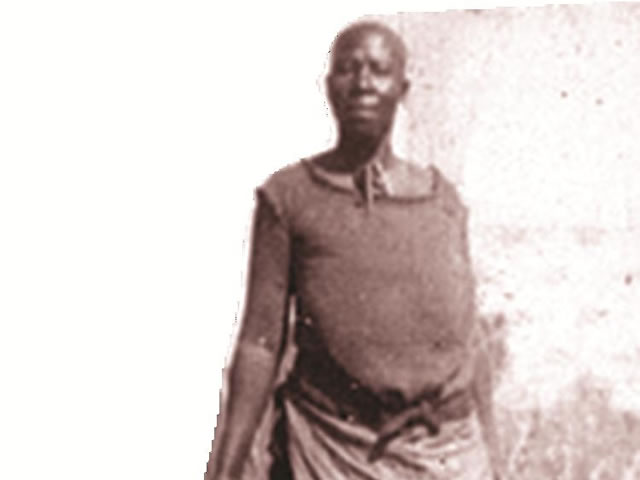

Yoliswa Dube
THERE is no woman under the sun who was respected like a Ndebele woman. Bulawayo today is known as “komfazi utshaya indoda” among some of its other African names.It was in the literal sense of the word that it was called this.
“Bulawayo”, the capital of the Ndebele state, is where Queen Lozikeyi Dlodlo, one of King Lobengula’s senior wives lived.
She was as powerful as any man in the Ndebele state.
MaDlodlo was firm, tough and aggressive and often referred to as “umfowabo ka Lobengula” and not his wife.
After Lobengula’s disappearance, Queen Lozikeyi remained a power house in the land and took it upon herself to speak for the Ndebele people.
She inherited a strong constitutional position.
But for years, the role of women in the Ndebele society and the nation at large has been interpreted as dominated by men.
Women have continued to play second fiddle to their male counterparts and perpetually clamour for equal rights, opportunities and representation yet history shows they were a powerful group which was never oppressed.
“Women are their own worst enemies. They make decisions that sometimes oppress them. At the end of the day you find them crying at maintenance court,” said Eunice Ndlovu of Northe nd suburb.
“Over the years, many laws have been enacted to protect and empower women but they continue to find themselves in difficult situations.
“There are laws now, a significant number of them, that are useful to women. Laws such as the Domestic Violence Act, there are inheritance laws, the right to franchise, age of majority, so many statutes out there now but you still find women crying. They continue to waste police time and effort by pressing charges and withdrawing the cases,” she said.
Another Bulawayo woman, Tatenda Masuku said women no longer needed to fight for equality as many notable women had fought for the rights of women that many females in the country enjoy today.
“I proudly hold a post-graduate degree now because there is a woman who fought on my behalf at some point. I don’t need to fight the same battles. The sky is the limit really.
“What is important though is to acknowledge these women who have done well for other women. Some of them have gone unnoticed and have not received due honour. It’s necessary that we acknowledge and thank them.
“The country is on the right track in terms of gender equality. Women just need to rise to their full potential,” said Masuku.
In the words of Yvonne Vera, an acclaimed author, Queen Lozikeyi was a “conspicuous and commanding figure, she was a big, bold and beautiful woman of ample proportions and clearly the leading spirit among the Ndebele queens. With quick intelligence and ready wit, she was also remarkable among Ndebele women.”
“What we need are lasting solutions to our problems. Industries continue to close and people are left jobless. A number of social problems are coming from economic challenges.
“I believe that a lot of domestic issues emanate from the unavailability of money in the home and failure to provide adequately for the family.
“Egos are bruised after questions are asked about failure to take care of one’s family. I think women should also be resourceful and not rely entirely on men to provide for them,” said Nomvuyo Sibanda, a vegetable vendor in the city.
“I don’t know why women want to be equal to men in other areas yet they don’t want to work as hard to meet their own needs and the needs of their families,” she said.
Socialite and playwright Cont Mhlanga said it was industrialisation and Christianity which made women second to men.
“King Lobengula didn’t stay in present day Bulawayo; he lived a few kilometres out of town in the direction of the airport. He only came to Bulawayo for ‘government’ business. Queen Lozikeyi is the one who stayed in Bulawayo. She was firm, very tough, aggressive and respected.
“Queen Lozikeyi oversaw battalions. People would actually say asambeni koBulawayo, komfazi utshaya indoda because wayetshaya literally. She didn’t believe in male domination. But now, because of industrialisation and Christianity, women have become second to men yet they were once conflict resolution managers.
“The beginning of education also caused this because the people who went to school were those who were working in the industries and those working in the industries were men because whites wanted male labour,” he said.
Mhlanga said in response to the call for education which had initially sent men, communities followed suit and sent boys and not girls to school.
“Our history shows that we don’t have a culture that oppresses women. That’s why when referring to someone’s house we don’t say koSekaCont but we say koNaCont for example. Let’s follow and celebrate our history. We’re under honouring our queens.
“We need to celebrate Bulawayo from its beginning and not from when Leander Starr Jameson (Rhodes administrator) declared Bulawayo a town. It’s also wrong to say Bulawayo is the City of Kings, which kings? There was only one king, Lobengula,” he said.
Bulawayo this year celebrates its 120th anniversary and celebrating its queens is necessary.
Queen Lozikeyi was trusted by the king to the extent that she was given control over the sacred state medicines. She was the head queen and led other queens in dances during crucial national ceremonies.
MaDlodlo played a crucial role in the resistance of 1896 through making war medicines and became a focal point of Ndebele opposition to British rule. She didn’t believe in male domination.
The place known as Nkosikazi in Matabeleland North province was named after this woman.
She was consulted by the Ndebele Chiefs as a woman of considerable importance and large influence.
Also of good repute was Queen Nyamazana.
Mncengence, Lobengula’s sister also reflected power and authority from her brother. She stayed in the capital and possessed a lot of cattle, just like men.
Mncengence was consulted on Lobengula’s matrimonial affairs and had a privilege of advising the king on state politics.
Princess Mfamona — Lobengula’s daughter, after which Famona suburb is named, was also a formidable woman.
She fought against the prohibition of racial marriages. Mfamona also fought against black segregation, which denied blacks access to supermarkets. She wanted black people to be allowed to buy from inside supermarkets and not from outside as was the case.
Bulawayo is the first capital established by King Lobengula in 1870 when he emerged as successor to King Mzilikazi, his father and founder of the Ndebele state.
Contrary to popular belief, Bulawayo should not be the “City of Kings” but rather the “City of Queens”, after King Lobengula’s queens — powerful women — who stayed at what is known as Makokoba today and cultivated at the site of present day City Hall.


 Online Reporter