Precious Manomano
Herald Reporter
WOMEN and young people with disabilities must move beyond attending public consultations and conferences to actively influencing policy formulation and national development decisions, Deputy Minister of Women Affairs, Community, Small and Medium Enterprises Development, Kiven Mutimbanyoka has said.
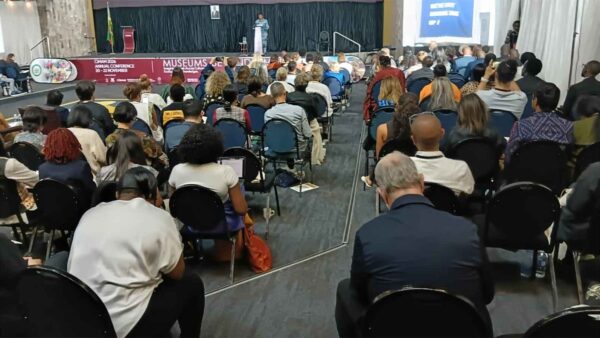
Addressing delegates at the first annual learning conference in Harare on Wednesday, Deputy Minister Mutimbanyoka said meaningful inclusion required the participation of persons with disabilities at every stage of the policy-making process, from identifying national priorities to implementation, monitoring and evaluation.
The conference, held at Cresta Oasis under the theme: “Closing the Inclusion Gap — From Attendance of Women and Youth with Disabilities to Influence in Policy Formulation”, brought together Government representatives, organisations of persons with disabilities, development partners, academia and other stakeholders.
The Deputy Minister said being invited to public engagements was not enough if the views and recommendations of persons with disabilities were not reflected in decisions and national development priorities.
“There is a world of difference between being afforded a seat at the table and having a voice in shaping the decisions made around it.
“We must move beyond the appearance of representation towards the substance of participation,” she said.
She said persons with disabilities were not merely beneficiaries of development but had valuable experiences, skills and capabilities that could contribute to national progress.
Zimbabwe had established a constitutional, legislative and policy framework to advance disability rights, including Sections 22 and 83 of the Constitution, the National Disability Policy and the Persons with Disabilities Act, 2025.
However, Deputy Minister Mutimbanyoka said the effectiveness of these commitments should be measured by the opportunities created, barriers removed and improvements in the lives of persons with disabilities.
She called for disability inclusion to be integrated into national planning, policy formulation, budgeting and service delivery, saying the responsibility should be shared across Government institutions and society.
Deputy Minister Mutimbanyoka said women and girls with disabilities continued to face multiple challenges arising from discrimination based on both gender and disability, including limited access to education and healthcare, economic exclusion, vulnerability to gender-based violence and underrepresentation in leadership positions.
She said the Ministry was committed to ensuring that women and young people with disabilities benefited from empowerment programmes, entrepreneurship development and cooperative initiatives.
“Access to finance, productive resources, skills development, markets and economic opportunities must be pursued in a manner that leaves no one behind.
“As a Ministry, we must champion the economic inclusion of women and young persons with disabilities, opening pathways for them in cooperatives, MSME development and community initiatives,” she said.
She said persons with disabilities should be involved from the conception of development programmes rather than only being considered when opportunities were being distributed.
The Deputy Minister also called for public institutions to make consultation processes accessible through appropriate communication formats, sign language interpretation, assistive technologies, accessible infrastructure and reasonable accommodation.
She urged Government and development partners to strengthen organisations of persons with disabilities, recognising them as important partners in governance and national development.
Quoting Article 4 (3) of the United Nations Convention on the Rights of Persons with Disabilities, she said States Parties were required to closely consult and actively involve persons with disabilities through their representative organisations in decisions affecting them.
Deputy Minister Mutimbanyoka challenged delegates to ensure that the conference produced practical commitments, with clear responsibilities, designated focal persons and realistic implementation timelines.
She said the discussions should translate into concrete action that would strengthen the participation of women and young people with disabilities in decision-making.
The conference was organised by Leonard Cheshire Disability Zimbabwe and six partner organisations of persons with disabilities — ALCOZ, ZPHCA, CDO, DWSO, ZWIDE and DRAFT.
She commended the organisations for their work in advancing disability inclusion and civic participation, while acknowledging the support of CBM Global Disability Inclusion, the European union and CBM Global Ireland.
Deputy Minister Mutimbanyoka said Zimbabwe’s ambition of attaining Vision 2030 should include every citizen, regardless of gender or disability.
“Our ambition must be a Zimbabwe where disability does not define destiny, where gender does not limit possibility and where every citizen has the power to shape the nation’s future.
“Let us not merely invite people into the room; let us entrust them with a place in history,” she said.