


 admin
admin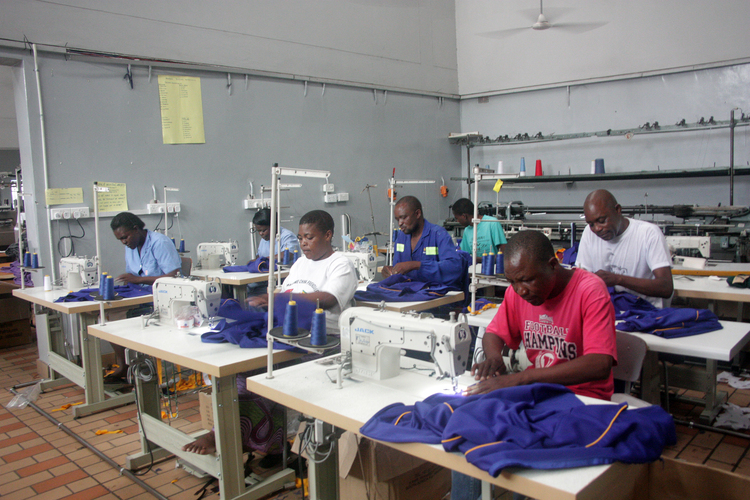
Business Reporter
LOCALLY-owned knitwear manufacturer Navidale Textiles Ltd is planning to invest in a $10 million cotton spinning factory that will cater for both the domestic and export markets.
Spinning is the first stage in the industrial transformation of raw cotton into an intermediate textile (yarn).
It significantly adds value to the commodity.
Navidale Ltd founder and chief executive, Mrs Mary Madzima said the company will engage an Indian firm for technical expertise.
Negotiations with the prospective partner are at an advanced stage and are expected to be finalised by August 2016.
According to Mrs Madzima, funding is likely to be provided by the African Development Bank (AfDB).
The company presently supplies the uniformed forces, Enbee Stores and several schools countrywide with knitted clothing.
“My dream is to open a cotton spinning mill, and we have already identified an Indian (firm) with the technical expertise. We want the right partner for this project and (we) will also look at partners in the Far East,” said Mrs Madzima in an interview.
India is a world leader in cotton farming, ginning and spinning.
Navidale Ltd believes that it has identified loopholes in the cotton-to-clothing value chain, particularly among small-scale farmers who lack market access, which it intends to exploit.
“I saw women in Murehwa struggling to sell their cotton and I realised there was a way to assist them. If we spin our cotton, we contribute to economic growth through value addition and employment creation,” she said.
Zim-Asset considers value addition as one of the major deliverables that are key to driving economic growth and ending poverty.
According to a United Nations Industrialisation Development Organisation (UNIDO) feasibility study on cotton spinning in Sub-Sahara Africa (SSA), only 15 percent of the cotton produced on the continent is processed locally while the bulk is exported as raw material.
According to the global industrialisation body, at least 25 percent of the cotton produced in (SSA) must be processed locally.
“We have the cotton here, all we need are the right partners so that we can produce quality yarn that competes on the global market,” said Mrs Madzima.
Cotton yarn is an industrial commodity that is widely traded on the world market.
Unlike finished textile articles, yarn is not influenced by changes in fashion and style because it is an intermediate product in the textile production chain and can be stored for long periods.



 Online Reporter