

 Online Reporter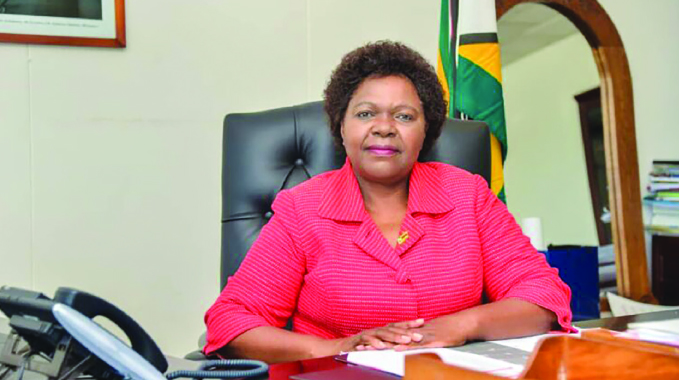
Rutendo Nyeve, [email protected]
GOVERNMENT has begun rolling out special Women’s Desks at border posts and unlocking revolving funds to protect female traders from harassment and illegal charges, a senior official has revealed.
Speaking at a Public Private Dialogue held recently at the Victoria Falls–Livingstone Border Post, Permanent Secretary for Women Affairs, Community, Small and Medium Enterprises Development, Dr Mavis Sibanda, said the interventions are aimed at dismantling non tariff barriers (NTBs) that have long constrained small scale agrifood trade within the COMESA region.
“The ministry has been actively promoting formalisation of cross border trade through awareness campaigns on the Simplified Trade Regime and collaboration with border agencies to improve trader experiences. In addition, Government has been working to establish and strengthen Women’s Desks at border posts to provide support, information, and protection to women traders,” said Dr Sibanda.
She also disclosed that financial inclusion programmes targeting women and youth entrepreneurs are being rolled out, including improved access to microfinance, savings schemes and business development services.
“We are implementing revolving funds and establishing incubation centres to support value addition and innovation,” she added.
However, the need for such interventions remains urgent. Dr Sibanda acknowledged that women and youth traders continue to face significant challenges, including complex customs procedures, inconsistent sanitary and phytosanitary standards, limited access to trade information and, most critically, informal fees and harassment at border points.
“The constraints increase the cost of doing business, reduce competitiveness, and discourage formalisation,” she said.
Women account for between 50 and 60 percent of the agricultural labour force and more than 70 percent of informal cross border traders in the region, yet many operate in an environment that increases transaction costs and undermines productivity.
Dr Sibanda said cross border trade costs in Sub Saharan Africa, including the COMESA region, are among the highest globally, at more than double those recorded in East Asia.
The agrifood sector contributes between 20 and 35 percent of gross domestic product (GDP) in most COMESA member States and employs more than 60 percent of the region’s labour force.
Despite its economic significance, intra COMESA trade in agricultural products remains below potential levels due to persistent NTBs.
“Addressing Non Tariff Barriers is not merely a trade facilitation issue. It is a development imperative. It’s about creating opportunities for women and youth, strengthening food security, and advancing regional integration,” Dr Sibanda said.
The two day programme in Victoria Falls combines capacity building with a structured Public Private Dialogue, bringing together traders and border authorities to jointly identify NTBs and agree on practical, implementable solutions.
Key corridors targeted include Victoria Falls–Livingstone, Chirundu, Mchinji Chipata, Mwanza and Dedza. Stakeholders from COMESA, the COMESA Federation of Women in Business (COMFWB), Zambia’s Ministry of Commerce and development partner AGRA are participating.
“Together, we can build a more inclusive, efficient and competitive agri food trade system – one that works for women, youth and all citizens of our region,” she said.


 Bongani Ndlovu