admin
admin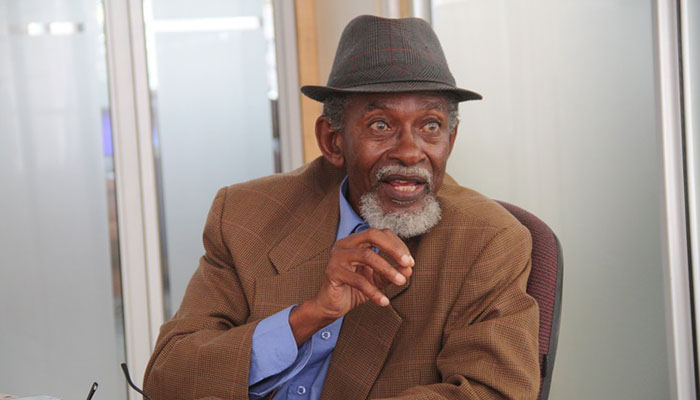
Chief Donald Kamba….Tracing African Roots
LAST week we spoke about the role of a woman in African Traditional Religion (ATR), and we looked at the person of Mbuya Nehanda.
She was clearly appalled by a belief system that was intolerant to other beliefs, and, offended against the principles of her belief system that advocated peace, and, promoted good neighbourliness with members of different faiths.
The rare bravery and resilience of Prophetess Nehanda before the white firing party was crowned when she warned that her bones would rise in protest, and, sponsor a war from the four corners of her unmarked grave.
Indeed the Second Chimurenga, fought from 1966 to 1980, put on pedestal the spirit of Prophetess Nehanda, and freedom fighters sought her guidance in their bid to attain Independence.
The war was won in 1980, and Zimbabwe became the independent nation it is today.
It is thus pertinent to note that the African struggle to recover the African personality employed the indigenous belief system, and, not the foreign religions that have since relegated the African religion to negatives found in paganism, backwardness, awkwardness, emptiness.
In ATR, a confluence of male and female forces operate in complete harmony, complementarily as opposed to equality, celebrated as a rare strength that exudes rare wisdom.
The flagship of ATR resides in the complementary roles in every sphere of human activity.
Rewind to the Chindunduma days, Mbuya Nehanda’s prophesy was not without cause, noting that two years before her demise, King Chingaira Makoni had died a brave death on September 4, 1896.
He was convicted, and sentenced to death for insurrection against white rule.
He declared before a white firing party: “It is all very well to call me a rebel, but this land belongs to me and my forefathers …”
And turning to his close aides who could not answer to his instructions for fear of the white firing party, he burst into anger, charging: “When I was your king, you jumped at my smallest command, but now, you cannot even answer me.
May the gods curse you forever, if you do not see to it that I am given proper burial, in accordance with traditions of the Makoni royalty.”
Only then did he signal to the white party to execute their mission.
What is significant is the complementary roles in operating as one between male and female towards a collective good, with the element of life after death clearly emphasized as core to African religion.
The two examples of Prophetess Nehanda and King Makoni epitomise, in dramatic terms, the sanctity of African religions that harness diversity of roles, and diversity of ethnic landscapes as areas of cooperation, and not areas of conflict.
Health, wealth, and procreation concerns constitute the core of African religions.
African religions have constantly reacted to shifting influences as wrought by modernity, technology and old age.
Accordingly, institutions that seek to take care of core values of this religion have been established in Zimbabwe, with Zimbabwe National Traditional Healers Association, an upgrade of traditional midwives, and commercial activities to package herbal medicine proving popular and highly desirable.
In all these activities men and women operate together to achieve a collective benefit to society, in line with the genesis of this religion.
The place of the woman in African tradition is as secure as it is guaranteed, with commonality of interests, and convergence of vision nurtured to satisfy the desires, hopes, aspirations, and, goals of the male and female genders.
It is pertinent to state that in our culture as African people, women occupy a key role in the practice of traditions that have been passed from generation to generation.
The sustainability, and resilience of African Religion has its roots in the fact that unlike Christianity or Islam, this religion does not believe in converting people.
African religion is tolerant, and is guided by strict adherence to morals, ethics, decency, and common courtesy.
The concept of celibacy and chastity for those not married, whether male or female, and faithfulness in a marital relationship, depicts the high moral bar attached to the African culture as informed by the indigenous religions.
In African tradition, marriage was as permanent as death, noting that payment of lobola was mandatory for someone to be accepted by society as married.
The few and far between cases where a couple would operate in cohabitation were condemned as behaviours perpetrated by the outcasts of society.
Cases of infidelity, wife or husband bartering, divorce were as rare as finding a pin in haystack.
The woman’s word, given her special place as guarantor of continued genealogy was treated as sacred, and it made odd sense to come across delinquent women with the few that operated thus condemned as outcasts of society.
It is interesting to note that where paternity was in dispute, and a woman sought recourse with the village court, all she needed to do was to show her undergarment to the accused man as an indicator that he was solely responsible for the pregnancy.
Once the woman showed the moral courage to do so, the case would be closed as having been substantiated.
We are talking of upright people who were guided by high moral, and ethical values called Hunhu, Ubuntu, and whose world portrayed the deed.
In today’s society, with the loss of our traditional values, one woman would visit five different village courts, removing her undergarment, and unashamedly accusing wrong persons for the pregnancy, all the easier because celibacy or chastity are no longer being treasured as a passport into entering a sacred and permanent institution that marriage is supposed to be.
African culture embraces a married woman as married to the clan, and a child as belonging to the community.
To be continued…



 Online Reporter