Tawanda Musarurwa in VICTORIA FALLS
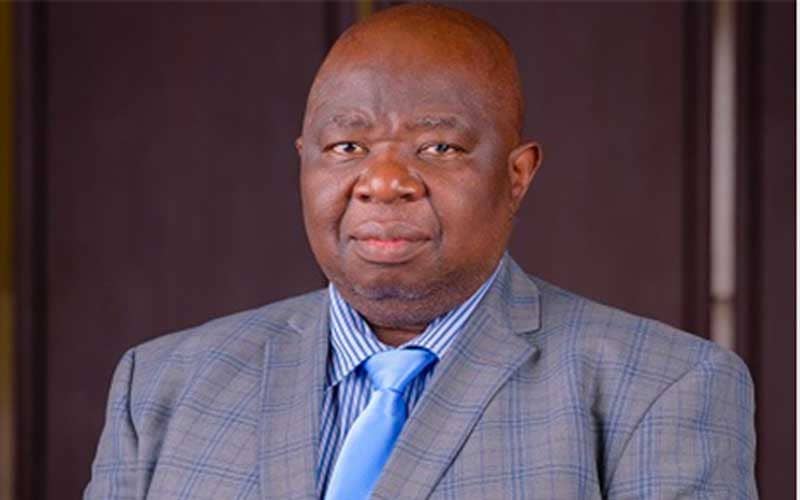
THE country’s Occupational Safety and Health Bill, nearly three decades in the making, now needs only the President’s signature, and when it takes effect it will bring informal traders, farm workers and Government employees under a single workplace safety regime for the first time, National Social Security Authority managing director Dr Charles Shava said.
Speaking at the 63rd National Safety and Health at Work (SHAW) Conference, he said the legislation had cleared both houses of Parliament and was in its final procedural stages.
“Any time now, we can’t give the exact date, but I can assure you this is now just basically an administrative process at that level,” Dr Shava told delegates.
The Bill is being checked by the Attorney-General’s Office for drafting errors before going to print.
Dr Shava said NSSA had already completed most of the structural groundwork to implement it, and was “just waiting for us to operationalise” the law once it is signed.
The Bill’s most consequential feature, Dr Shava said, is its reach. Existing safety laws have focused largely on formal industrial settings.
The new law applies to every workplace in the country.
“It applies to all workplaces,” he said. “So when we talk about all workplaces, we are talking about the informal sector, we are talking about the Government that we have not been enforcing, we are talking about agriculture.”
The principle was echoed by Dr Elizabeth Lungu-Nkumbula, president of the Africa Vision Zero Network, who delivered the conference keynote.
“We cannot build a culture of Vision Zero, while leaving large sections of the workforce outside our safety system,” she said.
“A worker’s right to safety should not depend on the size of the company employing them.”
For informal workers, who make up the bulk of Zimbabwe’s workforce, from market vendors to artisanal operators, this means formal legal recognition of a right to a safe and healthy workplace.
For public servants, it ends an anomaly in which the state set safety standards it did not itself enforce.
Dr Shava acknowledged that this breadth was politically difficult and helped explain the Bill’s slow passage.
“That has been one of the contentious issues which actually caused this bill to delay,” he said, noting that some sectors had not wanted to be covered. He thanked legislators for allowing it through.
How inspectors will reach thousands of scattered, unregistered informal workplaces is not yet clear.
Dr Shava said detailed rules on running each provision would be set out in statutory instruments, which NSSA has been drafting.
The Bill replaces two outdated laws with a single Act, writes into domestic law the International Labour Organisation safety conventions Zimbabwe has ratified, and establishes the national safety council in statute.
That council has run for about 60 years without a legal footing. NSSA will administer OSH matters, with its OSH function elevated from an administrative department to a statutory body under its own director.
The Bill also moves away from prescriptive rules towards a risk-based model.
Hazard identification and risk assessment become mandatory for all workplaces, and OSH committees will give workers a formal voice.
Dr Shava said many employers already do much of this, adding that “now it’s just that they are now properly legislated.”
He signalled that NSSA will push hardest on reporting.
The Bill requires registration and notification of workplace accidents, injuries, fatalities and occupational diseases, and creates a Bureau of Occupational Disease.
“This is a key point for us. We really are going to be enforcing this piece very heavily, because there is a lot of under-reporting and we want to make sure that every disease and incident is reported,” he said.
He sought to reassure employers worried about liability. “When you report a problem at work, an incident at work, you are not actually admitting guilty,” he said.
“It’s simply reporting. Whether there is some guilt, some culpability, it’s a different matter altogether, but it’s important to report.”The Bill also requires management to allocate budget and resources to safety.
Dr Shava argued that neglecting safety is the costlier choice, a theme echoed at the conference, where the Minister was due to launch a “Vision Zero” campaign. He said that philosophy would be embedded in the legislation.
Dr Lungu-Nkumbula, who is based in Lusaka, said responsibility for safety rests at the top. “Leadership must demonstrate through action, not speeches, that no production target is worth a human being,” she told delegates.