Farirai Machivenyika
Senior Reporter
PRESIDENT MNANGAGWA’S leadership has been credited with transforming the country’s agricultural fortunes, with wheat, tobacco and maize production recording significant growth under the Second Republic.
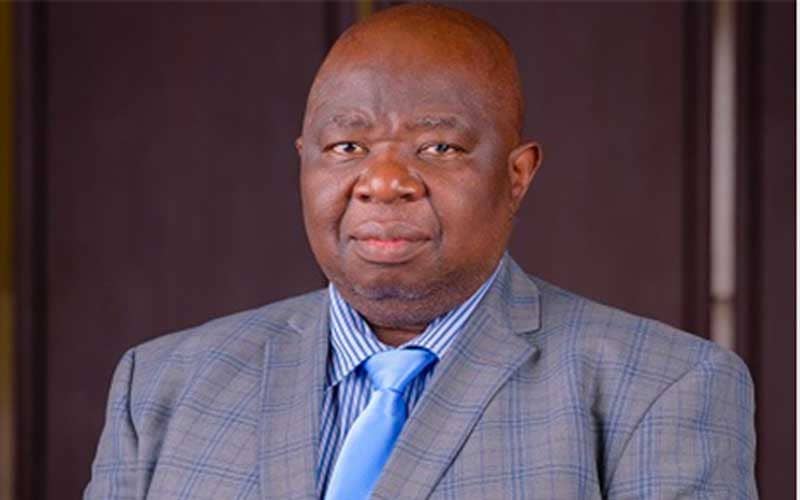
Newly-appointed Senator Cde Godwills Masimirembwa made the remarks in his maiden speech in Senate, while debating President Mnangagwa’s State of the Nation Address (SONA), delivered in Parliament last week.
President Mnangagwa also officially opened the Fourth Session of the 10th Parliament during the address.
Cde Masimirembwa, who was appointed Senator recently in terms of Constitutional Amendment Act Number 3, said the President had honed his leadership style during the liberation struggle and embraced servant leadership.
“A liberator who knows and he knew then, that the true meaning of leadership from a revolutionary context within the people is about servant leadership,” he said.
“Servant leadership means fulfilling the wishes of the masses.
“The legislative agenda before us is for that purpose and that purpose alone, to fulfil the wishes of the masses.”
Cde Masimirembwa said the successes recorded across various sectors of the economy were evidence of President Mnangagwa’s leadership, describing him as the “Joshua of our time”.
“He has been able, through legislation, through working with us all and this august House, to pass the necessary laws emanating from Bills brought by the Executive to ensure that this nation is food self-sufficient.
“Let us start with wheat. Zimbabwe was a perennial importer of wheat, requiring about 300 000 tonnes of wheat per year but producing 162 000 tonnes in 1980, 158 000 tonnes in 2017 and then the President comes in and what do we witness? Wheat production is catapulted to over 640 000 tonnes,” he said.
He said such growth had not been witnessed in the country before.
Cde Masimirembwa said similar record-breaking growth had been recorded in tobacco production.
“You move to tobacco and the numbers again are astounding. From 125 million kilogrammes in 1980 to 189 million kilogrammes in 2017, when His Excellency assumed power in November, to a record of 355 million kilogrammes in 2025.
“That is over 88 percent increase in production. Most importantly also is the fact that this figure is achieved by 135 000 growers. That means every Zimbabwean has an opportunity to participate in the growing of tobacco as opposed to what used to happen yesterday.
“It means over 135 000 families in this country participated in the over US$1,2 billion raised from tobacco sales,” he said.
Cde Masimirembwa added that maize production had generally increased since the inception of the Second Republic.
“The fact is, our figures are going up and His Excellency continues to urge us to increase production per hectare with the necessary support from Government.
“Those who come from Harare and have been to Mbare Musika would know that before the Second Republic, you would get potatoes being imported from other countries, onions being imported from other countries. That is a thing of the past,” he said.
He said President Mnangagwa had also moved to empower A1 and A2 farmers through the issuance of title deeds.
“The President has set agriculture on a firm pedestal of irreversibility of food security in this country.
His Excellency, in the State of the Nation address, whilst admitting that the weather conditions may not be favourable, says that, through our chiefs, headmen in villages, communities are being prepared to withstand future shocks,” he said.
Cde Masimirembwa also said the construction of dams such as Tugwi-Mukosi, Kunzvi and Gwayi-Shangani would go a long way in boosting food security through irrigation development.