admin
admin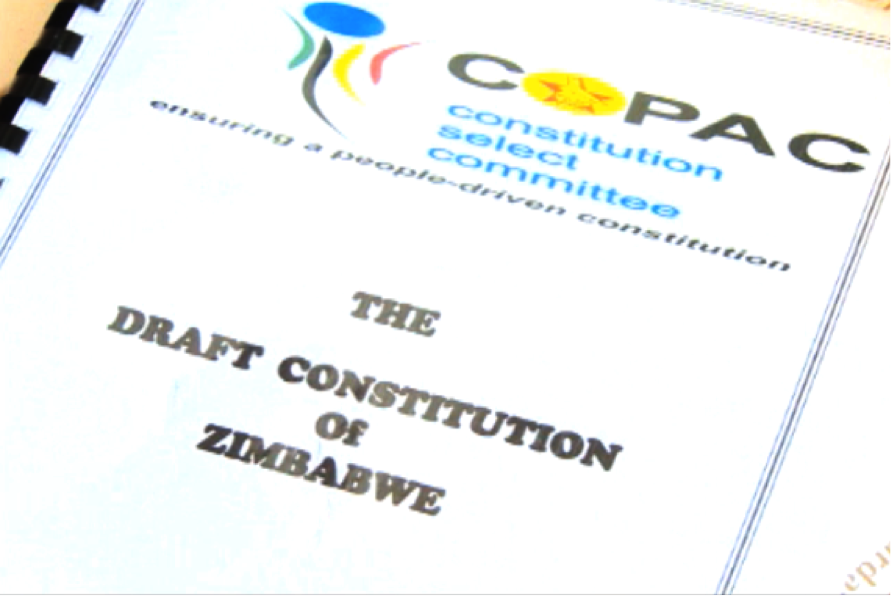
 Privilege Murimi
IN Zimbabwe most people living with disabilities are not accorded equal opportunities to access employment, education and other facilities that can help them attain their full potential. Disability is defined as “any impairment that when combined with environmental and societal barriers, limits the person’s functional ability to perform major life activities.”
From the definition, it is evident that environmental and societal factors are the major barriers to employment of persons with disabilities, not the so-called disabilities themselves.
The negative attitudes against people living with disability are constructed on the medical model which views persons with disabilities as “charity objects”. It is not a problem of people living with disability, but society itself because it does not accommodate them as normal human beings with the same rights.
In terms of the Constitution it is a fundamental human right for persons with disabilities to work and fend for themselves and allowing them to live in dignity.
Chapter 2 Section 22 (1) of the Zimbabwe Constitution says: “The State and all institutions and agencies of government at every level must recognise the rights of persons with physical or mental disabilities, in particular their rights to be treated with respect and dignity.”
Section 24 (2c) points to the need for the State and all institutions and agencies of Government at every level to secure vocational and training programmes including those for persons with disabilities. Upholding this principle would limit the situation which has seen persons with disabilities being segregated and discriminated against in society.
Among the plethora of challenges they face is the issue of financial and educational support. Lack of this has limited their prospects of acquiring basic education. Without formal education and other enablers, most of them were quarantined into segregation areas such as Jairos Jiri Vocational Training Centre for rehabilitation and other centres across the country, but surprisingly, they were not being rehabilitated.
Their other challenge is that employees perceive employing people living with disabilities as costly and thus are reluctant to employ them. This goes against the fundamental rights of employees in terms of the Labour Act 28:01 and the Disabled Persons Act 17:01 of 1992.
In general employers do not take measures to facilitate a working environment appropriate for people with disabilities. As a result, most workplaces in Zimbabwe are no-go zones for people with disabilities. For instance, a disabled person may have the qualifications but the structure and accommodation at the workplace does not have wide enough doors and hallways for those that are on wheelchair. Most escalators in multi-storey buildings do not work. As such, they fail to negotiate their way into most company offices.
More so, some office set-ups are not structured in ways that accommodate people with disabilities. This includes lack of equipment with basic software. This is required for people with visual impairments when required to use computers.
According to Mr Abraham Mateta, a lawyer and activist with the Zimbabwe National League for the Blind, the other challenge is that job advertisements are placed in inaccessible media such as newspapers and television yet persons with visual disabilities are also expected to access them as well. Radio is a problem too for those with hearing impairments. There is also implied discrimination when employers mention a “clean class four driver’s licence” as a must. This creates an employment barrier to people with disabilities like the blind and those with hearing impairments even when they are willing to apply for the jobs.
The deputy chairperson of the National Disability Board Ms Florence Mokwena said that disabled persons are generally given low-grade jobs and are usually looked down upon by employers.
However, some employers employ disabled persons not because they want them but in order for their companies to enjoy tax benefits and evade other government legislation.
Radio presenter, producer and disability activist Soneni Gwizi argues that women living with disability are the worst affected in this. This is so especially if society does not recognise that disability rights are human rights.
Therefore, particular attention must be put on women to help them overcome the artificial barriers to their advancement. Among other forms of support, disabled women need financial support especially under the Government’s indigenisation policy. Measures must be put in place to accommodate them in other facets of life.
Additionally, the other challenge is that there is a strong stigma attached to disability which is exhibited by some able-bodied people. This complicates work relations when it comes to information sharing and communication with colleagues, for example between people with visual or hearing impairments. Most able-bodied people are not prepared to embrace the learning of sign language which is highly considered in terms of the new Constitution..
Privilege Murimi is a mass communication student at a Bulawayo college. She can be contacted on e-mail [email protected]



 Online Reporter