Chronicle Editor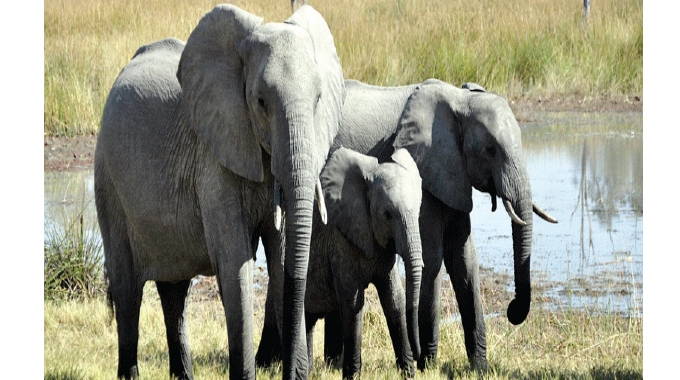
Emmanuel Koro
In May 2019, a report issued by the Inter-governmental Science-Policy Platform on Biodiversity and Ecosystem Services (IPBES) noted that the current global response towards restoring ecosystems was insufficient.
Compiled by 145 scientists from 50 countries, worldwide – the IPBES Global Assessment Report on Biodiversity and Ecosystem Services recommended the need for transformative changes to restore and protect nature.
Sadly, the destruction of the world’s ecosystems on the land and the seas continues worldwide.
Therefore, the United Nations Environment Programme (UNEP) has chosen ecosystem restoration as the theme for the June 5, 2021, World Environment Day.
An ecosystem is a group of living organisms that live and depend on one another in a specific environment. Ecosystems provide valuable services for human socio-economic wellbeing. The services range from the soil in which we grow plants and crops, the water we drink, the fish in it, the forests that give us timber and wild resources, and the air we breathe.
The laws to protect our ecosystems are in place and are being enforced by all the law enforcement agencies worldwide, working together with Interpol.
However, law enforcement is not enough to ensure that wildlife and other related natural resources are not poached.
As we commemorated World Environment Day on June 5, it is sad to note that the giants of Africa’s ecosystems [rhinos and elephants] continue to be poached. Also, the illegal trade in wildlife products such as rhino horn and ivory trade continues. We read it in the media almost daily that elephants and rhinos, as well as lions, are being poached and their products are being traded illegally.
Why? The number one culprit for failing to stop wildlife poaching and the ongoing illegal trade in their products are the Western animal rights groups. They have Africa’s wildlife blood on their hands because they continue to deny people the opportunity to benefit from their resources. When Africans are denied such benefits, there is no incentive for them to stop poachers from poaching wildlife.
The animal rights groups have sadly hijacked the UN international wild trade regulating agency CITES.
Formed in Washing DC to regulate and not to restrict or stop trade international trade in wild fauna and flora species about 46 years ago in May 1975, CITES is now being influenced by animal rights groups that fund it, partially. The greater chunk of CITES funding comes from Western superpowers such as the USA, the UK, and European Union. Mindful, of the need to win political elections from animal rights groups that command a huge following these governments traditionally support the anti-use movement and by implication work against incentivising ecosystem conservation in African countries.
They prohibit elephant culling, yet if elephants overpopulate their ecosystems as is the case in Botswana, Namibia, South Africa, Zambia, and Zimbabwe; they, in turn, collapse it.
Therefore, by protesting Zimbabwe’s intention to cull and control its elephant population within the carrying capacity of Hwange and Gonarezhou National Parks, Western governments and the animal rights movement are working against the UNEP call to restore the ecosystem.
Why UNEP has called for ecosystem restoration without publicly stating that this will not work if we don’t incentivise that initiative, defies logic. Why UNEP and CITES don’t publicly support elephant culling in elephant over-populated SADC countries also makes many people wonder whether or not they are there to save Africa’s ecosystems. Have they been immensely influenced by animal rights groups to the extent of not publicly speaking in support of international wild trade, in order to incentivise ecosystem conservation?
At a time when we expect the Western superpowers to allow trophy hunting imports, the British Government is showing very dangerous signs of introducing a trophy hunting imports ban Bill. This will further disincentive ecosystem restoration in African countries.
The truth is that when the continent’s rural communities sharing the land with wildlife don’t benefit from it; they see no incentive to conserve it. They would rather poach it. Even if it means poaching wildlife to extinction and start using the wildlands for crop and livestock production; they would do it as long as they don’t benefit from wildlife. No wonder why SADC countries use the argument “use it or lose it” in support of wildlife conservation.
Also, wildlife-rich SADC countries are beginning to wonder why the people who voted them into office should continue paying tax that goes to support wildlife wellbeing while the people continue to suffer. Why should they as sovereign states continue to be dictated to by their colonial masters on how to manage and trade their wildlife and its products? This is eco-colonialism. Absolute hidden modern-day Western wildlife management dictatorship over the continent.
Africa, I dare say today and forever; will never be free until it starts trading in its wildlife legally, fully, freely, fairly, and sustainably, without being dictated to by Western superpowers, including Western animal rights groups. It’s a violation of human rights as these Westerners continue to do, to exclusively focus on animal rights without addressing Africans’ rights and needs to benefit from wildlife.
Therefore, be it known to the animal rights movement that the most practical way towards ecosystem restoration is to grant local communities their constitutional and democratic rights to benefit directly from ecosystems. When that happens they will begin to appreciate ecosystems’ values and help restore them. They will become the strongest defenders of ecosystem restoration.
Accordingly, if southern African countries were allowed to trade in their stockpiled rhino horn and ivory it would not only result in an economic boom but overwhelmingly incentivise ecosystem conservation. It would most importantly generate enough money for wildlife conservation, including the protection of the most poached and valuable species such as rhinos and elephants. Our wildlife departments would never beg for conservation funds from anyone, neither would they accept support from the animal rights groups.
The UN international wild trade regulating agency CITES, member countries are the ones who permit international wild trade through a two-thirds majority vote. Sadly, pro-wild trade African countries have continued to get a no-trade vote from animal rights groups influenced CITES member countries.
Therefore, for how long should sovereign African states such as the wildlife-rich SADC countries wait for CITES’ member countries to vote in favour of international trade in ivory and rhino horn trade? We have already witnessed numerous times that Western animal rights groups and Western superpowers have continued to rig the CITES’ voting system. They buy votes against international wild trade.
The evidence exists in WhatsApp messages exchanged in Geneva at the August 2019, 18th CITES meeting held in Geneva Switzerland.
Some West African delegates admitted to having their airfares, food, and accommodation paid for by the animal rights groups. When it came to voting, they voted against all wild trade proposals. I remember a troubled Namibian villager saying, “I don’t know what I am going to tell my Chief.”
He had probably left home thinking he would come back with good news. It was not only him. All SADC community representatives were angry and called upon their governments to pull out of CITES.
He had probably left home thinking he would come back with good news. It was not only him. All SADC community representatives were angry and called upon their governments to pull out of CITES.
Accordingly, there seems no hope for wildlife-rich SADC countries to ever get a yes-vote for international wild trade, including ivory and rhino horn trade as well as trade-in live elephants.
Therefore, if African leaders, particularly those from Southern Africa really want to incentivise ecosystem restoration, they should form a SADC International Ivory and Rhino Horn Marketing Agency and trade in their billions of United States dollars, worth of wild-wealth to nations that want to buy it.
Under President Donald Trump, the United States recently made an economic argument for escaping the strictures of the Paris Climate Accord. Why shouldn’t Southern African nations do the same with regard to rhino horn and ivory? What are they waiting for? Who are they afraid of?
Japan is being viewed as a possible future SADC ivory and rhino horn trading partner. So is China whose relations with the USA are not rosy and could be persuaded by wildlife-rich Southern African nations to resume international trade in ivory. What other better signals do SADC nations need to know that China might now be a ‘long-hanging fruit’ for the ivory trade? With the next CITES meeting about 12 months away in 2022 in Geneva, Switzerland again, following Costa Rica’s pull-out as the next host country for lack of funds – SADC countries can expect another emphatic no-vote for wild trade.
Therefore, they must seriously consider forming the much-talked-about but yet to be implemented SADC International Ivory and Rhino Horn Trade Agency.
Legal, sustainable, and international trade in ivory and rhino horn has never been given a chance to prove that it can reduce both elephant and rhino poaching through legal supplies of ivory and rhino horn.
Perhaps out of these frustrating international wildlife trade restrictions for SADC countries, comes a realisation that this is the appropriate time to start the implementation of a SADC International Ivory and Rhino Horn Trade Agency.



 Online Reporter