Online Reporter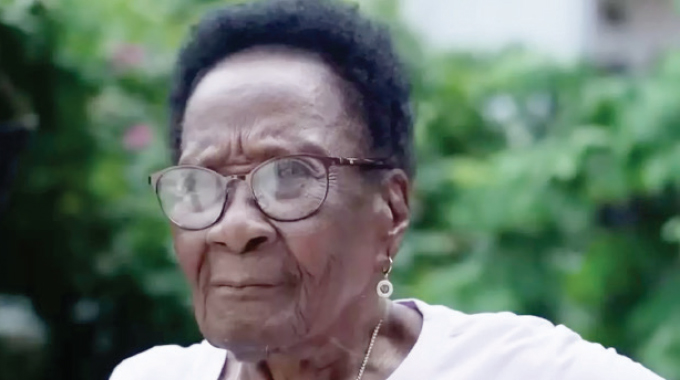
A woman shared two foods she believes have helped her to reach the grand old age of 123.
María Antonia Cuero’s identity card states she was born in October 1901 — some 13 years before World War 1 had started. This would make her the oldest person in the world, beating a Guinness World Record held by French woman Jeanne Louise Calment who lived to 122.

However, her card has not yet been officially authenticated, meaning she has not been recognised for it as of yet.
However, in Colombia, her most recent birthday celebration attracted friends, family and even the National Police of Cali, who all wanted to mark the incredible milestone.
Her age has captured huge interest and she spoke on the TV programme Los Informantes about how she achieved such extraordinary longevity. And although routine, exercise and philosophy on life played a part, she also said two foods were key.
Fish
Speaking about growing up in a big family of 10 siblings in Mayorquín, Buenaventura, Maria explained how she caught her own food. “Good fish. I would fry the fish and then mix it with coconut and rice,” she told a reporter.
And the health benefits of fish, a source rich in omega-3 fatty acids, have been proven over the years. A study by the Harvard School of Public Health and the University of Washington, conducted over 16 years involving 2 692 senior adults, found in 2023 that a diet with plenty of fish predicts longevity.
The research found people with high levels of omega-3 lived two-and-a-half times longer on average than those without it. It also concluded that a specific omega-3 known as DHA (mainly found in oily fish but also white fish and sea food) had links to a 40 percent decrease in death by coronary heart disease, something backed up by the British Heart Foundation.
Omega-3 also has its benefits when it comes to mental health, with Dr Jacob Teitelbaum saying: “Getting enough omega-3 is critical for helping depression and other emotional disorders.”
Bananas
After she spoke of her fondness for fish, Maria was also asked if it was true that she ate plenty of bananas. Replying, she said: “The bocadillo bananas. The small ones.”
They are also known as sugar bananas or lady finger bananas and they are also common in Venezuela. It has a sweet taste and a texture people find desirable.
Speaking on the documentary, the reporter added: “Until a few years ago, she used to say that the key to living a long life, at least in her case, was to laugh a lot and worry little, live outdoors, walk a lot and sit little, eat fresh fish, and hopefully swim and row. What are you afraid of?” Maria simply replied: “I am not afraid of anything anymore.”
Over the years it has been claimed that regularly eating bananas can boost your life expectancy. This is at least according to dietitian Juliette Kellow and nutritionist Dr Sarah Brewer who say the potassium protects against high blood pressure. The experts also said it counterbalances the hypertensive effects of sodium in the body while reducing chances of developing kidney cancer.
Writing in their book, Eat Better Live Longer — Understand What Your Body Needs To Stay Healthy, they said:
“Whether you like your bananas slightly green or freckly, they all come with triple levels of mood-boosting powers.
“They are good sources of carbohydrates (fuel for the brain and muscles), and of tryptophan and vitamin B6 (both of which are needed for production of feel-good chemicals). What’s more, bananas improve digestion and may help regulate blood pressure. Bananas will ripen at home — if you want to speed up the process, keep them in a bunch or with other fruits.”
They also recommended people eat between three and four a week.
María, who has spent most of her life in Buenaventura, has eight children, 26 grandchildren, 24 great-grandchildren and 54 great-great-grandchildren. And as well as her two favourite foods, she also explained how laughing, not worrying, living outdoors, walking, swimming and rowing have helped her to reach well over a century.
Dr Juan Manuel Anaya, clinical immunologist and director of the Centre for Research and Innovation in Health of Coosalud (CIISA), spoke with newspaper El Tiempo about the remarkable woman. And she said:
“She is not yet in the Guinness World Records because the work has not been done for the world to know about this case.” However, she added efforts were under way to change that. — Surrey Live