Online Reporter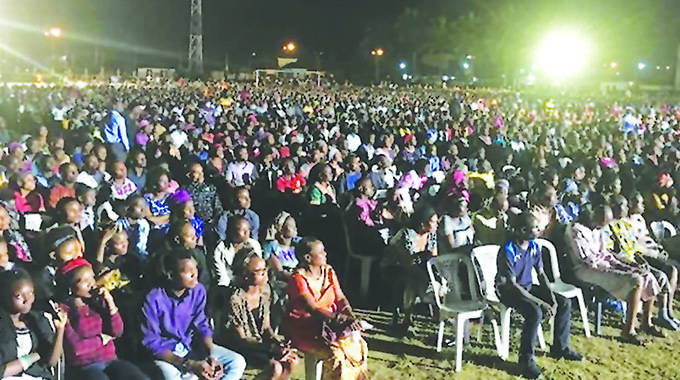
Miriam Tose Majome, [email protected]
MANY residents in towns are growing increasingly restless over noise that masquerades as worship. Every weekend, residents’ WhatsApp groups fill with complaints. Some councillors have raised the issue in council meetings, highlighting noise from places of assembly and events, and acknowledging that residents want sleep — not sermons broadcast at midnight.
In 2024, Harare City Council announced plans to clamp down on illegal places of assembly, explicitly listing churches among the offenders. This is not an attack on faith. It is a reminder that the right to worship ends where a neighbour’s right to peace begins. There is nothing sacred about trespassing on others’ ears at 95 decibels with booming and screeching sound systems.
Zimbabwe’s planning and by-law framework never promised churches a free pass. Municipal by-laws regulate noise in residential areas, and the Regional, Town and Country Planning Act empowers councils to zone land, consider objections, and prevent inappropriate land use.
If a congregation operates without a permit or converts a suburban house into a hall with industrial speakers, residents have the right to object, seek enforcement, apply for interdicts, and, where loss is proven, claim damages.
The issue is not a lack of legal provisions — it is weak enforcement and public reluctance to confront churches for fear of being labelled as persecutors or anti-Christ. Councils are aware of the problem. Harare has threatened closures of illegal places of assembly, citing persistent complaints about churches and similar venues.
Other cities have issued warnings and proposed fines, sometimes requiring soundproofing for halls and tented churches. The pattern remains the same: many promises and threats, but little action.
Residents also contribute to their own suffering by remaining passive when aggrieved.
South Africa treats noise as a technical and municipal law issue, not a theological debate. Provincial noise control regulations incorporate SANS 10103, the national standard for measuring and rating environmental noise.
Municipal by-laws authorise officials to order music or amplified sound to stop immediately and even to seize equipment if necessary. While enforcement varies, the framework is clear: decibels matter, after-hours matter, neighbours matter.
Nigeria’s Lagos State goes even further. The Lagos Environmental Management and Protection Law sets specific decibel limits and empowers the environmental agency, Lasepa, to seal off violators.
In the past year, authorities have shut down hundreds of facilities, including churches and mosques, primarily for noise violations. Lagos publicly states its limits: 55 dB by day and 45 dB at night in residential areas, with stricter limits for schools and higher thresholds in commercial and industrial zones.
You do not argue with a prayer line — you show a reading on a meter. It is not implemented perfectly, but at least the framework exists.
What should happen here?
First, councils must publish and enforce practical, measurable limits.
Residents need clear numbers and straightforward steps. Set day and night thresholds for residential zones and require every place of assembly to submit a basic acoustic plan. If you want to amplify sound, you must soundproof.
If you breach the limit, the show ends.
Second, apply permits strictly. A tent in a yard is not a church. Nor is a residential dwelling that moonlights as a church on Sundays. If an area is not zoned for a public place of assembly, it should not be sanctioned by turning a blind eye.
Municipalities must show more bite than bark and actually use their closure powers to set examples. Where necessary, they should obtain orders to seize equipment until compliance is achieved. South African by-laws contain these mechanisms.
Third, publish an enforcement scoreboard. If residents report, they should see action within a specific timeframe. Transparency builds trust and improves behaviour.
Residents must also be proactive in their communities. It is important to read the Government Gazette and local newspapers and stay alert for local notices.
They should lodge objections to unsuitable sites before they become entrenched. If a church is operating without the proper permit in a residential area, report it to the local authority and insist on a written response.
Keep a log of dates and times, record short clips from inside your property, and, where possible, capture indicative decibel readings using a phone app to show consistency. Approach the clergy respectfully but firmly in writing, then escalate to council compliance and the police if necessary.
Where the nuisance persists and harm can be demonstrated, seek an interdict and, if quantifiable loss is evident, claim damages.
Worship need not be a war on the senses. If churches truly love and serve their communities, they should strive for harmonious relations with them.
There is a mistaken belief that noise attracts new members — but the opposite is true. No one ever joined a church because they were drawn in by its noise.
Churches should obtain proper use permissions, invest in soundproofing, purchase sound systems appropriate to their needs and size, and conduct and conclude services at reasonable hours. The loudest church in the neighbourhood is not the most spiritual — it is simply the loudest.
While residents must be proactive in their environments, they cannot carry this burden alone.
Municipal authorities must also be proactive. They should implement existing by-laws and inspect premises, including on weekends and at night when abuse peaks. They must issue compliance orders and follow through with penalties. They should start with the worst offenders and publish the results.
Harare has already acknowledged the surge in complaints and promised action. We are still waiting for delivery.
Zimbabwe does not need new laws to solve church noise. It needs consistent, measurable enforcement and a culture that values both freedom of worship and the right to quiet homes.
Faith thrives where consideration for others is respected and prioritised.
l Miriam Tose Majome is a lawyer and a Commissioner with the Zimbabwe Media Commission. She writes in her personal capacity and can be contacted on [email protected]