Chronicle Editor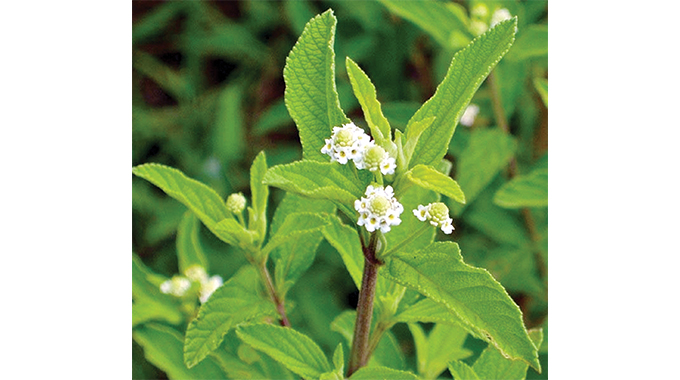
Pathisa Nyathi
THE rains have been unusually good this season. When I spoke to one man recently, he claimed they visited several known rain shrines in Zimbabwe’s various provinces at the start of the season. He thus attributes the good season of promise to the gods who are answering their requests. I will most likely do that story at a later date. However, the story is relevant to my Covid-19 series in the sense that it brings out African beliefs regarding nature prior to the advent of whites and their proselytising religion.
I am in the company of my son Butho who has little rural background. He was born in Bulawayo and has not lived in a rural setup. As a result, he has had very limited knowledge of our indigenous trees. Suddenly, he finds himself inundated by names of some plants and trees being much hyped these days.
Umsuzwane, isihaqa and many others have found relevance and currency in the difficult times of the coronavirus. There is a craze, a revolution as town folks, ever crazy about wealth accumulation, are taking chances to gather hay while the sun shines. Remember the previous crazes about the African potato and chihuta? Men are always keen to heal their bodies.
There are some in our midst who are very innovative, creative and enterprising. When the craze begins, they take the lead and make money before the efficacy of their wares is discredited. Well, they will have lined their pockets thickly with green bucks. There is talk about lorries transporting loads and loads of umsuzwane (zumbane) for sale in Bulawayo. It is lucrative business which is raking in the much-needed US dollars. By the time the cyclone of craze goes away, they will have smiled all the way to the bank, if at all they bank after the previous rude awakening when their money was siphoned out.
So, I take the lead as we walk about identifying and harvesting umsuzwane. A friend in Bulawayo asked me to bring some for him. He seems to have jumped on to the bandwagon. In IsiNdebele we say we may not be sure or certain about what got a pig that fat! I identify the plants to him as we go along. There are many umsuzwane shrubs where we are. As we walk along and trample on some, they produce that distinctive . . . hmmn, aroma, not quite! The name of the shrub suggests otherwise. It’s the typical smell from the deep recesses of the alimentary canal. Farted matter!
But I like the perfume all the same.
After a while we have harvested a few plants to give to my friend. The next tree he enquires about is isihaqa. He is informed that the nearest tree is a short distance away.
Perhaps he has heard about its use too. Those growing up in rural areas know the tree and its uses. Indigenous knowledge is fast disappearing. It is our fault. Not so long ago I was asked if and how Africans dealt with pandemics. Some out there in the UK do not appreciate that the Spanish Influenza killed man people in Zimbabwe.
My paternal grandfather was a victim in 1918 when my father was two years old. Queen Lozikeyi Dlodlo was equally a victim in 1919. They imagine the African just sat down and waited for the influenza to promote him to glory. Then the African had not been stupefied. He took measures to deal with the pandemic.
The big story is that of Africans who abandoned their traditional medical practices in preference to those from the West. Medicine has always gone together with religion. It was true in Europe as much as it was in Africa. When African religion was supplanted, so were their medical traditions.
Some denigrated and despised everything African. Civilisation came to be judged in terms of distance from ways that once were their own. Paganism was glued tightly to the use of African medicine and it is an indicator of backwardness to be seen using traditional medicine. As a result, for some the practice has been pushed underground where there are no prying judgemental eyes.
Courtesy of Covid-19 there seems to be some respite, albeit short lived. The virus kills, many have now painfully accepted the reality. The vaccine is still far away in physical and figurative terms. All the vaccines developed to date have been confined to outside of Africa. But, don’t we have our own great minds here? We hear stories of some of our people being part of efforts to develop vaccines on foreign lands. Are we short of medical technology in Africa or we are short of something else?
So the plants that were relegated to the peripheral and subterranean zones are getting the sunshine they have been denied for very long. It is welcome. The Chinese do not feel embarrassed when they use their natural medical remedies. It is not so in Africa where natural medicine is labelled primitive and demonic. Did it have to take Covid-19 for some Africans to remember at this hour of need, panic, fear and desperation resulting from a virus gone mad and berserk?
The other day a ZBC television crew visited me to get a story about umsuzwane in particular. They were interested to know how it was used, that is the methods of its administration. I did point out that steaming was one of several methods of administering medicines in Africa. Umsuzwane was a multi-purpose remedy, ranging from spiritual cleansing to mosquito repellent.
Hardly do some people believe that Africans have been, for centuries ahead of Louis Pasteur, been engaged in vaccination as a measure to develop immunity. Some will know that snake poison has been administered to individuals so that they develop antibodies. The whole head of a snake, including the poison in its sacs, is burnt into black material which is then introduced into the body of a healthy individual through incisions made on the skin.
When a snake of the same species bites the individual, they are resistant as their bodies would have developed immunity. But Africa does not tell the world.
Even if he did, they will be asked to extract the active ingredient, which their technology is incapable of doing. It is then the large pharmaceuticals that patent the products as they will come up with active ingredients. It’s all about protecting the economies of multinational corporations.
My dismay with European universities located on the African continent is well known. African medicines ought to be part of their academic engagements. There they would make some impact which they will not make as long as they pursue medical research along Western lines. Time will come when the universities Africanise, indigenise and apply academic research to what the African ancestors were doing and build up from there, instead of starting on new ground.
Therefore, as the craze for indigenous solutions on the medical front takes root, let it not be something ephemeral but one that is sustained and give new impetus and respect to Africa indigenous medical formulations and practices.
The coronavirus might turn out to be a blessing in disguise.
The revolution might be around the corner. Umsuzwane was used against colds which are caused by a virus. The coronavirus may be a more resistant variety but one day a new variety of umsuzwane might be the solution. Let Africa stand up and walk with pride in full respect and acknowledgement of their histories and legacies.
Umsuzwane, the revolution smells sweet!



 Online Reporter