Tichaona Zindoga
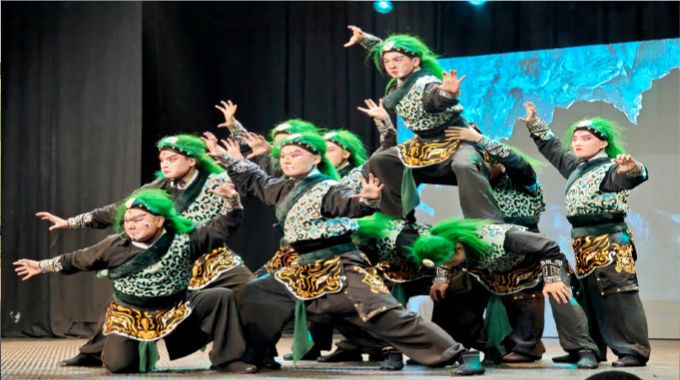
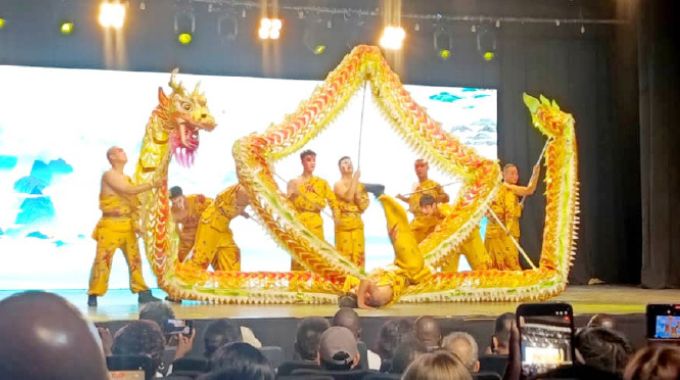
THE celebrated Wu Opera, one of China’s most famous cultural groups, opened a new chapter of civilisational dialogue with Zimbabwe as they put polished acts during their show at 7 Arts Theatre in Harare on Monday.
The group, which hails from Jinhua City, Zhejiang province in China, is one of the country’s finest cultural exports.
As China and Africa mark the China Africa Year of People to People Exchanges designated for 2026, the show in Harare brought together Zimbabweans and Chinese people to celebrate art and cultural heritage.
Chinese culture is unique – part of a civilisation of over 5000 years – but some of its stories are universal and relatable.
The Wu Opera’s repertoire represents this.
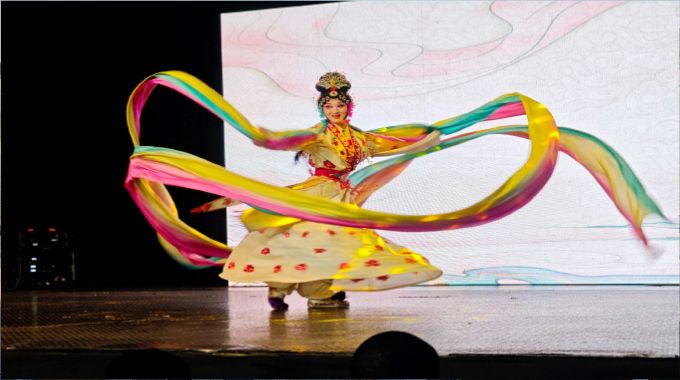
From the “The 9-Pieced Segmented Dragon” which is a depiction of the sea dwelling dragon, which is the ultimate symbol of China representing strength and good fortune, to mellow musical in “Hui Hu”, the enchanting “The Goddess of Heaven Scatters Flowers”, the epics of “Lyu Bu Tries the Horse” to the “Three Fights Against the White Bone Demon,” the acts bear an impressive range of storytelling.
Some of the stories are uniquely Chinese and esoteric to Zimbabwean audiences, but there are also parallels in such themes as romance and chivalry.
Outstandingly and perhaps not surprisingly, the opera drew much appreciation for infusions of Kung Fu martial art, a trademark Chinese physical exercise that has connected African audiences to Chinese culture mostly through film since the 1970s.
As Zimbabwe and China seek to forge stronger relations through cultural ties, events like the Wu Opera give a front row experience of people to people exchanges – and these ought to be expanded and made accessible to a wider community to achieve more impact and fruitful results.
At the same time, there are strides being made in exporting Zimbabwean art and culture to China, with Shona sculpture guru, Dominic Benhura having made inroads into China in recent years.
Deputy Chinese Ambassador to Zimbabwe Mr Tang Xiaoping underscored that cross-cultural communication more has become essential in furthering people to people relations.
He said the diversity of civilisations is a defining feature of our world adding that civilisations grow through communication.
“Going forward,” the envoy said, “China will keep working closely with Zimbabwe and all African partners. We will carry out more exchanges covering cultural performances, youth engagement, educational cooperation, think tanks and people-to-people interactions, organise more inclusive, accessible and high quality events to deepen mutual learning between Chinese and African civilisations, so as to further enrich our bilateral friendship and contribute to building a community with a shared future for mankind.”
Well before Zimbabwe and China engaged in modern times, ancient kingdoms of the respective countries were interacting over 600 years ago and there have been archaeological findings at Great Zimbabwe of Chinese pottery.
Modern times should make bonds stronger, not weaker.
The presence of Chief Fortune Charumbira, a traditional leader and deputy president of the Chiefs Council of Zimbabwe perhaps made an even stronger case for cooperation steeped in common values, deep historical bonds and dialogue among civilisations that were once the defining features of the diplomacy of Great Zimbabwe.
Zindoga is journalist and expert on China-Africa-Zimbabwe affairs.