admin
admin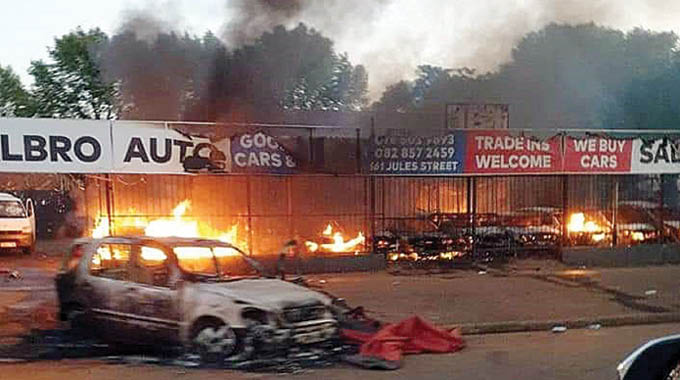
Leroy Dzenga, Features Writer
South Africa is in smoke and the nation smells of burnt human flesh.
The smell of a country burning her soul has become familiar in a rainbow nation that has gone colour blind.
Again our southern neighbours have plunged thousands of foreigners into anxiety as they do not know if they are not the next ones.
Next ones to die violently!
Living in constant fear because citizens of a country may decide to blame you for failing to feed themselves in a country considered to be a citadel of opportunities.
It brings into questions about the whole concept of brotherhood which has been pushed by African founding fathers with proponents like Kwame Nkrumah.
The idea was that Africans because of their vicious encounter with colonialism has been romanticised but difficult to operationalise.
Ubuntu as it is widely known, the Bantu term which speaks to accommodative humanity has for long worked in the benefit of some countries at the expense of others.
If nations are truly siblings, why do some pinch others repeatedly with no reprimand?
Xenophobic news is slowly become part of the news cycle and the outrage over such is waning with each gruesome episode.
Maybe it is time for difficult conversations among states, now that Zimbabwe is chairing the Sadc organ on Politics, Defence and Security Cooperation it is well-placed to leave the conversation.
Africa, especially states in the Sub-Sahara should fix its geopolitics.
There should be diplomatic consequences to the harm of foreigners within countries.
What is being witnessed in South Africa cannot be ignored without passing off subtle nuances of condonation.
There is a pattern in most xenophobic attacks in South Africa.
Before, during or after a public official gives an inflammatory speech which either incites or justifies the inhumane treatment of foreigners.
In March 2015, right before perhaps the most vicious xenophobic attacks since 2010, one of the most prominent traditional leaders in South Africa publicly made inflammatory remarks.
In addressing Pongolo community members Zulu monarch King Goodwill Zwelithini said; “As the king of the Zulu nation, I cannot tolerate a situation where we are being led by leaders with no views whatsoever. We are requesting those who come from outside to please go back to their countries,” Zwelithini said.
As is with most South Africans they feel like they are being held at ransom by other African states that helped them during apartheid and Zwelithini did not miss the chance to cast aspersions on that special part of history.
“The fact that there were countries that played a role in the country’s struggle for liberation should not be used as an excuse to create a situation where foreigners are allowed to inconvenience locals. “I know you were in their countries during the struggle for liberation. But the fact of the matter is you did not set up businesses in their countries,” he said.
In 2017, Johannesburg Mayor Herman Mashaba also used strong xenophobic language against foreigners.
“Illegal immigrants are holding our country to ransom and I am going to be the last South African to allow it,” said Mashaba.
A few days after, raging violence against black foreigners followed in cities including Johannesburg.
When a man running the biggest economic city in South Africa expresses hate against foreign nationals, who happen to be more concentrated there, should there be surprises when some are burnt alive?
In the same year, 2017 then South Africa’s Deputy Police Minister Bongani Nkongi said the increasing population of foreigners should be a cause for concern for South Africans.
All these instances where influential figures have used an abrasive tone towards foreigners, the South African government has not done much to show their disapproval.
When foreign nationals are in a country, it is the duty of the Government to ensure their safety.
There has not been any strong show of intent by way of policy from South Africa through all the xenophobic attacks beyond cosmetic statements by their leaders, usually ministers.
Should South Africa feel Zimbabweans are a burden to their precious country?
They should, like in the words of one of the most prolific music writer in Zimbabwe Isaac Chirwa, send them home.
There is a legal way of reducing numbers in any state, deport them but do not drap their necks with flaming tyres.
Fortunes oscillate for African republics trying to find their feet, those are growing pains for any country and Zimbabwe, Mozambique and Malawi are going through them.
Citizens from this country are currently bearing the brunt of seeking better prospects.
We hope South Africa does not find itself in a position of need, but if they do, we should treat them different.
It has been done before, they enjoyed the warmth of Zimbabwe during apartheid.
We should show them how citizens of a country in need are accommodated.
Feedback: [email protected]


 Online Reporter