

 admin
admin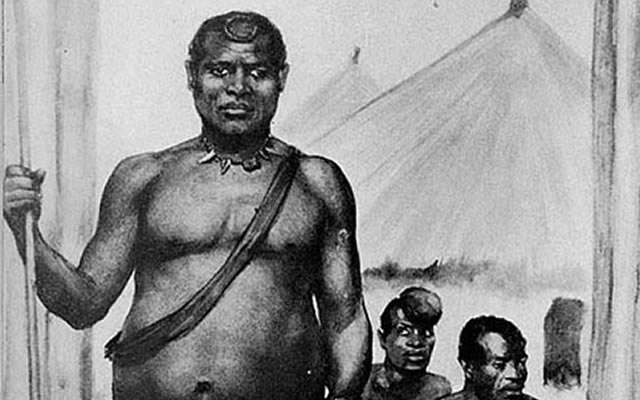
 Donald Dumisani Mphazima Khumalo
THE mighty and all conquering Ndebele kingdom fell at the hands of the erstwhile settlers and colonisers in the late 1890s. To be precise, it was on December 4, 1893, when King Lobhengula Khumalo okaMzilikazi disappeared after a protracted dreadful encounter with the settlers at Pupu in Lupane District.
Research reveals that after the demise of the great king, the elders in their astuteness did not allow the kingdom to remain unguarded and unguided. Mlugulu Khumalo who was the “chief priest was entrusted by Lobhengula with the task of restoring the monarchy” as he was already within the governance system.
This was achieved on June 25, 1896 when one of the King’s sons was installed. The fact that Mlugulu was accorded such a noble and honourable eminence suggests that he was a man of valour, unparalleled wisdom and integrity.
Research has been kind even to disclose some of the prominent Ndebele chiefs who constituted the council of elders who presided over the installation at Mzilikazi’s grave at Entumbane in Matopos. They included Babiyana Masuku, Sikhombo Mguni and Mlugulu Khumalo.
The settlers resented the installed king and antagonised his operations and deliberately reduced his role and function to that of a ceremonial chief of Bulawayo and banished him to the periphery of the city.
They feared that if left alone, the new King would remobilise the people and pre-engage in war thus disrupt the code of their newly found tranquility. It is important to note that then the nation was still smarting from a bruising and gruesome war that had altered their administrative structure and pushed the whole nation to the periphery, living them highly vulnerable while the triumphant coloniser moved to the core and echelons of power.
This state of affairs exacerbated the Ndebele nation’s susceptibility to all forms of abuse given the weakened position of the King and his muzzled subjects. The traditional Ndebele king selection and installation was always well guarded so as to ensure that the rightful Prince (umntwana) assumed the position upon the passing on of the sitting King (ukudilika kwentaba).
Often in Nguni culture, the King would make an indication as to who of his children would succeed him. The matter of inheritance is generally not contestable unless otherwise, the first born son was destined to ascend to that position.
Seldom does the first born son assume both the role of heir to kingship (ubukhosi) and heir to the inheritance (ilifa). It was therefore not surprising that the king would choose an unexpected umntwana to succeed him largely dependent upon the leadership skills bequeathed his eligible son. When the King has made a choice the nucleus family and the inner circle entrusted with the execution of the duty of installing the King would be made aware and would almost always follow the instruction to the letter. This indeed seems to have been the case when King Lobhengula wamawaba was installed.
Several factors influenced the choice of successor to the King, one of which was the socio-royal status of the son’s mother. A son begotten by a daughter of a King, for example, superseded every other child regardless of age in claiming the King’s seat. The mother, because of her royal linkage, overtook the other elder wives to the king and claimed the foremost position as the queen mother (indlunkulu).
It is very important at this juncture that I demystify the universal claim to the King’s throne by all and sundry among the Khumalo.
True indeed every Khumalo in the traditional set up had a role to play in the palace, hence the collective identification of every Khumalo as abantwana beNkosi.
Khumalos generally fall into five prominent houses namely: Inzonda, commonly known as indlu kaMdamba, Abesikhosini commonly referred to as indlu kaMzilikazi, indlu kaDonda wesiziba, indlu kaDunge kaMamba lendlu yaManyangane.
The traditional set up accorded each house an apt and non-conflicting eminent role. This ensured harmony, the elimination of conflict in the palace and made the function of the king assume more prominence rather than houses and individual names.
In that light therefore, not every Khumalo has a legitimate claim to the seat of the King other than the house of Mzilikazi, better referred to, for the avoidance of any confusion in this regard, as the house of Lobhengula for the purpose of easy connection to this generation.
It is therefore the sole responsibility, based on roles, to identify the actual house among them that must present the heir to the throne.
People from all walks of life have from one way or the other been seized with the matter of the Ndebele King and the prospects of resuscitating the same. The concerned citizens have in search of answers believed all sorts of oramedia presentation and often the presentation has not been backed by any empirical evidence, this author has taken all the trouble to make this presentation based on wide ranging documented research findings.
The Zimbabwean constitution in Chapter 2 (16) 2 is very clear about the need for the preservation and protection of Zimbabwe’s heritage.
The matter of the Ndebele king is in many people’s views central to the preservation and protection of the rich Ndebele culture as part of the Zimbabwean heritage.
On that regard, the onus is upon the Ndebele people to painstakingly and analytically engage on this subject so as to determine their contemporary position. At some point this subject must find closure it can significantly do so only after the nation candidly shares its views so as to influence decision and action or non-action.
As the year draws to an end and that we are in December is of symbolic importance for the Ndebele nation as this marks 121 years since King Lobhengula disappeared. It will be most fitting if as a nation we resolve to embark frantically on this subject with the sole aim of giving life to the long cherished Ndebele legacy.
I am persuaded to suppose that the nation at large and without a doubt the King Lobhengula family seconded by other Khumalo family houses will within the year 2015 resolve the matter at hand and present a fitting umntwana from King Lobhengula direct descendants, soon to be installed as King.
This, in my unassuming analysis, is the most befitting New Year resolution for the people within the would be king’s Domain. What a deserving closure to the celebration of the establishment of the City of Bulawayo which has been ably led by the City Fathers and celebrated in various ways across the City of Kings, all year this could be. Bayethe!
The writer is of the house of Inzonda and can be contacted on 0713 389892 or via email [email protected]


 Online Reporter