admin
admin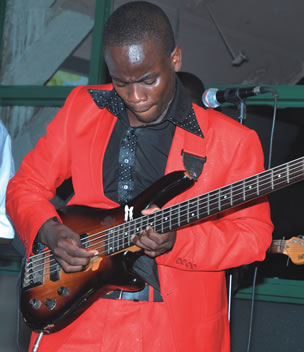
with some praising the upcoming musician as the best thing to have happened since Leonard Dembo.
Without pouring cold water over these views, it will not be wrong to say that Gasa used other musicians’ templates as a launch pad for his musical career, particularly on his latest album.
Apart from his vocal ability, which seem to be his biggest strength, Gasa and his Extra Valembe Band, forgot the cardinal rule of music by using both Alick Macheso and the late Tongai Moyo’s rhythms.
One cannot, however, doubt the high level of ingenuity the young man displayed when he wrote the lyrics for his songs.
But he destroyed all that craftsmanship when he heavily relied on Macheso and the late Moyo’s beats to edify a number of songs from his latest album.
In an interview with a local daily early this month, the affable young musician denied being a copycat, but said he had a soft spot for the late Moyo as well as Alick Macheso and Sulumani Chimbetu.
As a result of this he “adopted and adapted certain aspects and qualities” from the musicians, an assertion that I find baffling, to say the least.
“I must admit that I used several beats from Macheso’s songs notably Petunia,” he revealed.
In his opening song titled “Sarura Wako”, “Ndaremerwa” and another titled “Mwari Wenyasha”, his beat sounds exactly just like Macheso’s.
He was daring enough to even use Moyo’s “Officer” chant to introduce the same song.
By the time you finish listening to his album, “Simbi Hombe”, you are left wondering whether Macheso or Utakataka were not heavily involved on this project.
It boggles my mind, why such a reputable and big company like Diamond Studios went ahead to record the young man, having realised that there was no originality
in his musical project.
Although no local musician can lay claim to the sungura beat, which has become the bedrock of Zimbabwe’s music sector in the last 20 years from the time Ephraim Joe and Sungura Boys sought to popularise the genre, musicians have since modified the same beat to create their own rhythm.
It is the same sungura that gave birth to music from the likes of Nicholas Zakaria, the late System Tazvida, the late Moyo, Gift Amuli and sungura ace Macheso.
All these musicians dared to be different because they wanted to add value to the local music sector in the process creating a new dimension to the arts sector.
Naturally, people loved that and rewarded them for being creative and innovative, something that young Gasa needs to learn.
It was a novel combination of ideas that propelled these musicians to stardom, earning themselves respect in the process.
Of course, there are no original ideas in music but creativity, innovation, and an alert mind is what separates the grain from the chaff.
Local music fans value originality highly.
It was for this reason that First Farai quickly moved away from Moyo’s beat, when people expressed reservations over his type of music.
Even the late Moyo learnt the hard way when he tried to sing like the legendary Dembo.
All hope is not lost for young Gasa, who can still use his good vocal skills to catapult himself to stardom.
Gasa is a product of Chibuku Road to Fame talent search show, after he came first with his group, Extra Valembe, in 2007.
The group went on to win the Mathias Bangure-directed Music Crossroads finals.
To date Gasa has three albums to his name, namely “Sungura Compressor” (2007), “Mufaro Kwamuri” (2008) and the latest “Simbi Hombe”.
His latest offering carries six tracks, namely “Sarura Wako”, “Nherera Nyarara”, “Nguva”, “Mukoma Kosie”, “Ndaremerwa” and “Mwari Wedenga”.



 Online Reporter