admin
admin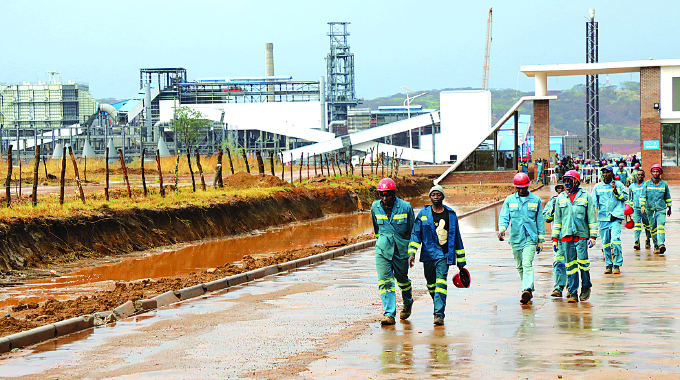
Elliot Ziwira Senior Writer
At the confluence of Chirumhanzu, Chikomba and Mhondoro districts, in the Midlands, Mashonaland East and Mashonaland West provinces, respectively, about 200 kilometres south-east of Harare, with the famed Manhize-Chikapakapa mountain range a gaze to the north-west and south-east, and dazzling rock domes in either direction that takes the eye’s fancy, lies a storyteller’s cache of dreams.
Snubbing the harness, the tale unhooks itself from the foot of the eminent Chikapakapa Mountain and the banks of Manhize River in Mashonaland West to spread itself on the riverbed of the roaring Munyati River, whose womb straddles Chivhu and Mvuma, in a 12 000-hectare avalanche of youthful aspiration.
It is a story inspired by the philosophy that a nation’s future shines as bright as its young people, who are the seed it germinates from, the soil in which it is rooted, and the water that nourishes it.
In this inspirational account, in which young people between the ages of 18 and 35 are given wings to fly to boundless horizons regardless of level of formal education, Dinson Iron and Steel Company (Disco) features prominently. Cautious not to steal the limelight from the major characters of the story—the youth— who in all essence own the dream, Disco, in the fashion of Fortuna, the Goddess of Fortune, simply plays an intercessory role.
It is up to the young people to cherish that shared meaning, hold on to it or let go!
Disco’s vision is in recognition of the crucial part that this key constituency plays in driving the fortunes of any progressive country forward as embodied in the Southern African Development Community (SADC) Declaration on Youth Development and Empowerment (2015), enshrined in the African Union Youth Charter, and epitomised in Zimbabwe’s heritage-based Education 5.0.
Recognising that young people below 35 years fall under a vibrant “demographic window of opportunity”, constituting 76 percent of the population in the region, in 2015, SADC reaffirmed, committed and declared to invest in policy frameworks aimed at developing and empowering youths through participation of the private sector and other stakeholders.
The Declaration acknowledges that empowered youths play a significant role in consolidating, defending and maintaining democracy, security and stability as well as sustainable socio-economic expansion in the region through regional integration.
The newly formed Ministry of Youth Empowerment, Development and Vocational Training, led by Tino Machakaire, speaks to the Declaration’s clarion call, and testifies to the Second Republic’s commitment to empowering young people.
A recent tour of the plant in Manhize by The Herald revealed how Disco, which is one of the three subsidiaries of Chinese metals behemoth, Tsingshan Holding Group in Zimbabwe, has taken young people under its wing, and embarked on imparting life-changing vocational skills on them as a way of empowering youths beyond merely offering employment.
It is a Monday afternoon as the October sun glares from a sheet of rain bearing cumulonimbus clouds following a previous downpour to unleash a momentary scorcher on the community whose hoard of aspiration The Herald crew has decided to glimpse into.
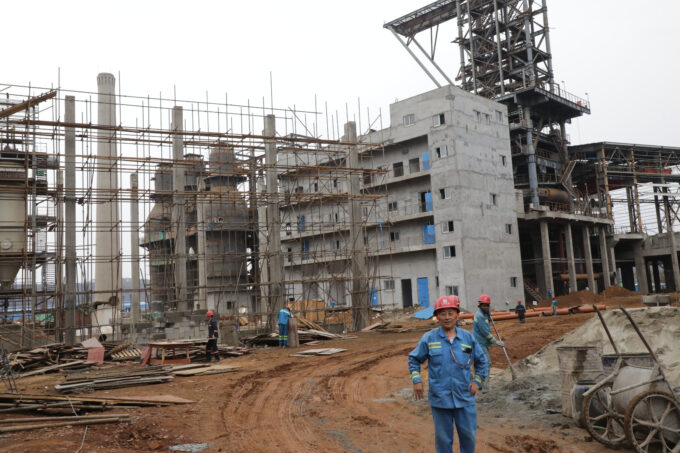
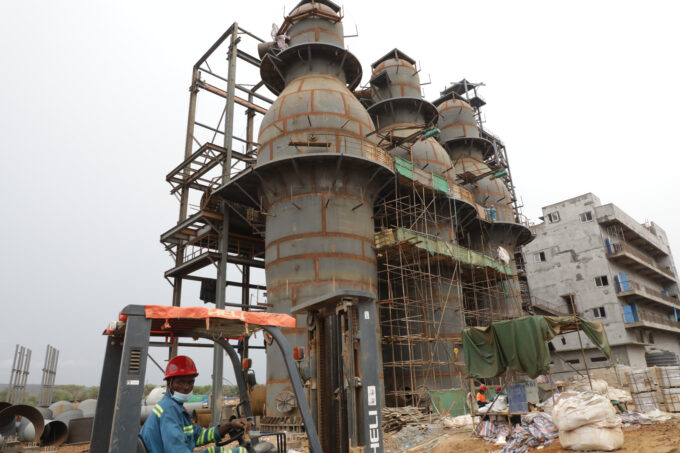
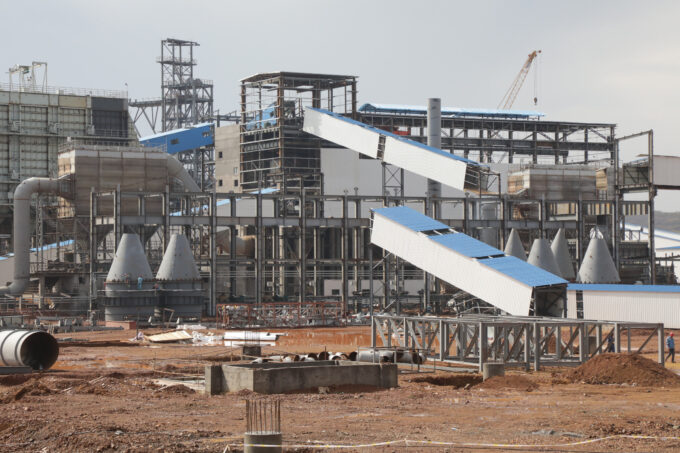
From this vantage point facing the guarded entrance to the temporary staff dormitories and office block, the US$1,5 billion edifice, at close to 80 percent completion, as we eventually learn, magnificently graces the eastern horizon in a towering white, blue, grey and whatnot mass of steel. Another blue building gleams a distant southward, behind some steel pillars under whose feet steel poles and pipes are strewn about.
Behind us, in the direction from which we came, perched on a stretch of land sloping into the Munyati River, north-west of the newly constructed Manhize-Munyati Bridge, an expanse of blue roofs peeps from the luxuriant foliage shielded by the western rise of the Chikapakapa-Manhize mountain range. This, we are told, is an ultra-modern local staff residence under construction, thus putting our speculative musings to rest.
The discerning visitor is immediately consumed in the serenity of the underlying environs, a vastness spreading out to the eye’s limit, creating a feeling of déjà vu that only comes with familiarity. It is that kind of peace and tranquil which lingers on in the heart, and is therapeutic to the soul.
Above, the pregnant clouds interact and merge as they boogie and whisper in a dark conspiracy threatening to eclipse the seemingly relentless, but capitulating sun.
“Here everyone has an equal chance to make it irrespective of academic qualification. What is only required is passion and keenness to learn. There is no skill that cannot be acquired if one puts his heart to it,” says a young man, who introduces himself as Engineer Munashe Chihambakwe, humbly.
He is holding the fort for our contact person, Mr Joseph Shoko, the company’s public relations manager.
“Mr Shoko has gone to Mvuma. He will soon be here,” Eng Chihambakwe informs us, smiling, “meanwhile, I will take you around the plant, if you are agreeable.”
We enthusiastically take the offer.
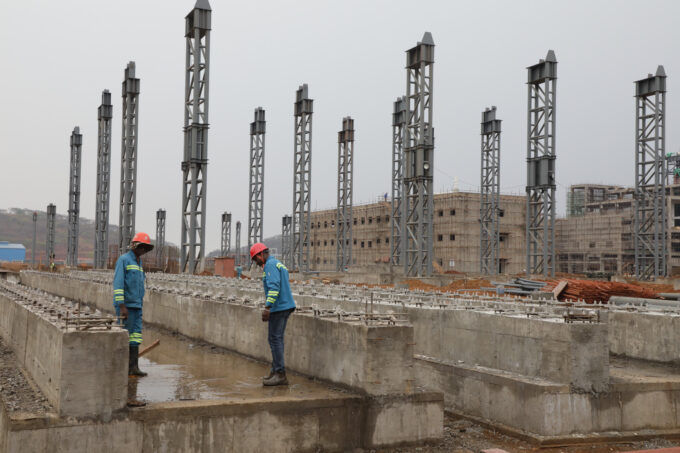
The young engineer, whom everyone here affectionately calls Munashe, is clad in a teal blue work suit top with double reflective straps around the lower arm and breast segments, red helmet, black pair of jeans and black safety shoes.
He is joined by another young man, Ordain Shoko, a security officer, who cannot have hit 23. He is our safety escort. He, like all others around here, save for a sprinkling, is wearing a teal blue work suit, red helmet and black boots.
Insisting that we should keep our helmets tight and tread cautiously, Ordain, a student on attachment, kicks his motorbike into motion, and leads the way. The drive to the plant is muddy smooth as the newly rain pounded red soils splatter the body of our already reddish white twin cab vehicle.
Upon inquiry; you know how inquisitive scribes are, our tour guide opens up: “I am the local resident engineer of Dinson Iron and Steel Company, aged 26.”
It is at this point that one realises that age is but a number, and that opportunity comes clothed in many garbs.
Indeed, the future is young!
He continues: “I joined the company two months ago as the head translator. On the strength of my technical and educational qualifications, I recently got promoted to be the local resident engineer.
“I attended university in Sanming, Fujian Province, China, where I graduated as the valedictorian (best student) in the mechanical design, manufacturing and automation engineering class of 2017. I furthered my studies to advance in humanities by doing an International Masters in Public Administration.”
Fascinatingly, born in Harare, Munashe grew up in Redcliff, Kwekwe District, in the Midlands Province, where his father was employed at the Zimbabwe Iron and Steel Company (ZiscoSteel). His father would later venture into granite mining and polishing in Mutoko.
Surely, the gods of Mwanesi Range and Manhize-Chikapakapa Mountain are with this young Iron Man. With Disco, tacking him firmly under its wing, he is certainly destined for greatness. Unfortunately, Munashe’s father, who died in 2009, could not live long enough to witness his incarnation styling an iron vision into steely determination.
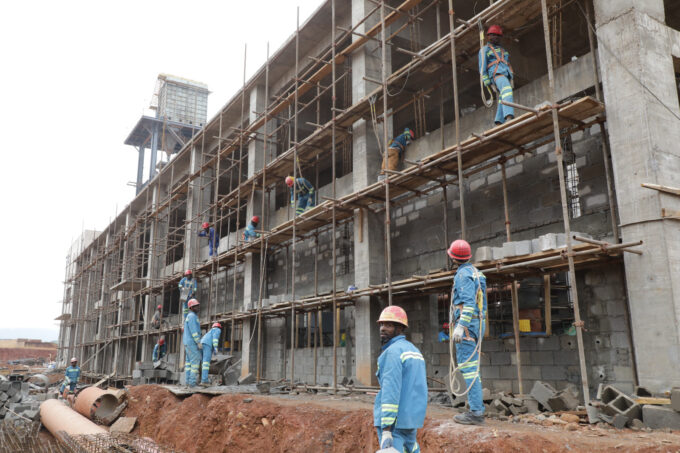
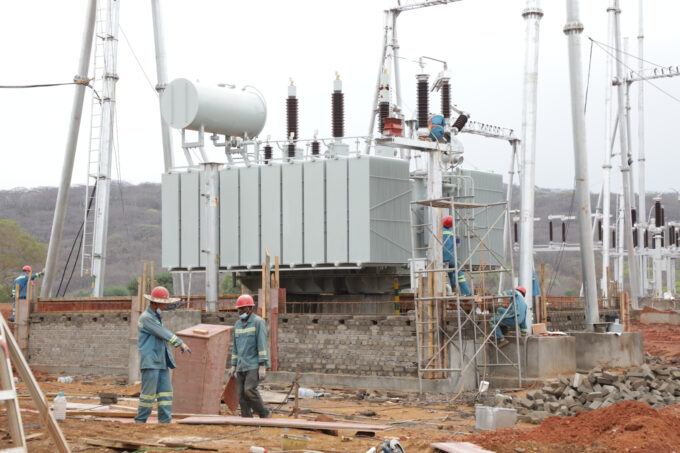
Meanwhile, forever curious, the never satiated eye is soon captured by man’s ability to fashion out his world through sheer workmanship. The whirring, swishing and whispering of both machinery and man testifies to work in progress as steel, cement, water, soil, stone, pebble and boulder are turned into infectious beauty.
Making all this possible is a workforce comprising 400 Chinese experts and 1 400 Zimbabwean citizens, the majority of them below 35. However, one gets the feeling that 1 800 people cannot possibly be working here, until, of course, they either break to lunch and take a siesta (11.30am-1.30pm), or knock off at 5pm, or when they troop in at 7am. They will be engaged at their workstations around the plant and beyond.
“It is the language of work at play,” Eng Munashe says, as if reading our thoughts on how the teams comprising locals and Chinese nationals communicate.
For every 10 locals, there is a Chinese expert to take them along their chosen path of trade proficiency. The eagerness on the young men’s faces, and their close attention to detail as their patient mentors show them the way is an indicator of how passion and patience on both student and tutor goes a long way in the realisation of shared dreams.
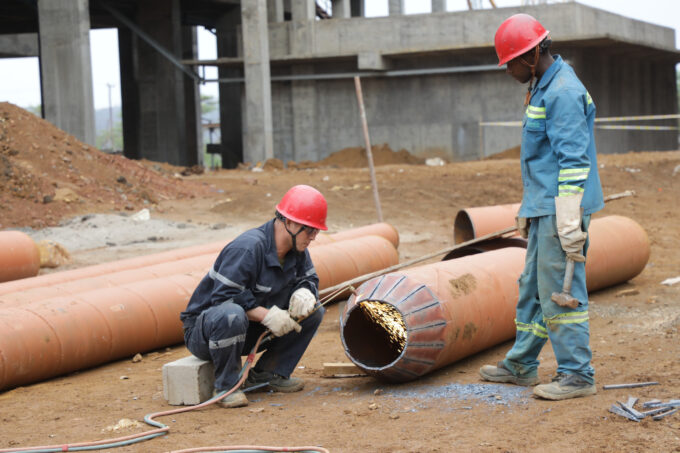
Oblivious to all else, a young man in his occupational gear: a teal blue work suit with double reflective straps on the arm, back, breast and leg segments, now soiled, red helmet, brown leather gloves and muddied boots, attentively looks on as his Chinese mentor, in a black work suit and red helmet guides the flame of his welding machine on the tapering mouth of the steel pipe they are working on.
Around them, with varying set ups, similar tutorials and team workmanship are going on as the relationship between tool and man is cemented for the good of humanity.
Amid the combination din of humming and swishing sounds of earthmoving equipment, lorries, concrete mixers, forklifts, welding machines, drills, grinders and pumps complementing the harmonious music of both soul and machine, reverberating in the vicinity as the earth silently trembles under the weight of collective dreams, Eng Munashe explains how the integrated iron and steel manufacturing plant is designed.
It is designed to manufacture carbon steel through the chemical reduction of iron ore using an integrated process in which limestone and coking coal are added. From the sintering plant, which is now 80 percent complete, the compacted solid mass is then conveyed to the blast furnace area behind, also at 80 percent completion, where the ore is converted to steel in a basic oxygen area (BOF) and electric arc furnaces (EAF). From there it is moved to the steel manufacturing plant.
At full throttle, the project, believed to be the largest in Africa in terms of size and futuristic projections, is anticipated to employ over 6 000 people from the three converging provinces and yonder, while in excess of 20 000 will reap from cascading upstream, midstream and downstream activities.
ArcelorMittal of South Africa and Egypt’s Al Ezz Dekheila Steel are currently the first and second biggest steel producers on the continent, respectively.
Commissioned by President Mnangagwa in October 2022, following the granting of a Mining Special Grant Certificate (SG7126) in March 2021, allowing the company to explore and mine ore along the Mwanesi Range, phase one of the Manhize project is envisaged to have an annual turnover of US$600 million, and a capacity of 600 000 tonnes per year, which will be enough to meet local demand.
Annual production will be increased to 1,2 million tonnes in the second phase, and 2,4 million in the next before hitting five million in the final phase, depending on demand.
The project includes a carbon and steel plant or industrial area situated in the Midlands Province, an iron ore mine, the first point of which is located about seven kilometres due west in Mashonaland East Province, spreading out to Mashonaland West and a ferrochrome plant.
Our tour takes us to the gleaming blue building that took our fancy earlier, across the snaking road that leads to the iron ore mine, past the power station to the left, and the imposing office and laboratory block on the right. To our awe, the building, which has four entrances, turns out to be a large workshop packed with top-notch fabricating machines.
The company’s secretary, Zhang Shu, takes us along, with Eng Munashe translating. The 200mx150m steel fabrication workshop is said to be the biggest in Zimbabwe. All the pipes, as big as 1,8 metres in diameter and pillars used at the plant are fabricated here. More young men are engaged in different tasks here in which steel is the protagonist. Machinists, electricians, welders and engineers are all groomed here.
The steel sheets used here come from Afrochine Smelting (Pvt) Limited in Selous, Mashonaland West Province, another subsidiary of the Tsingshan Group in Zimbabwe. The coking coal for the project will be provided by the Hwange-based Dinson Colliery, while the limestone will be outsourced, thus consolidating the value chain.
Our last port is the Chinese residence; just to satisfy the eye.
True, travelling is seeing, and seeing is learning. A man who has never gone beyond his backyard believes that he owns the largest garden.
The dreamy feeling is only interrupted by the chirping birds in the foliage yonder, and the passionate whispering of both machinery and man, as the conspiring clouds completely subdue the sun in a chilling deluge reminiscent of Noah’s days.
We drive through the rain back to base, as they say. The downpour is reduced to a drizzle, then finally it calls it off, probably for now, leaving in its wake a wintry chill.
A sea of blue, and sprinkling of black, greets the eye from the direction of the plant, as the youthful workforce makes a beeline, either to the three canteens on site, ablution facilities: comprising washrooms and toilets, or any of the 10 blocks making up 150 units of their temporary dormitories.
We engage some of them for a chat.
Clayton Magogo (20), from Twin Tops, Mhondoro Ngezi, Mashonaland West, says he got wind of the glad tidings at Disco from friends through social media platforms and word of mouth.
“I completed my Ordinary Level in 2020, and was not gainfully employed. So, when they were recruiting builders here, I couldn’t miss the chance. Even though I do not have requisite papers, I did Building at school, and got some mentoring from my father, who is a bricklayer,” Clayton says.
After joining as a bricklayer late last year, he says he later got training in tiling and ceiling designing, which has empowered him to support his parents and siblings.
“I bought tools, so I can now do side hustles when off-duty,” he adds.
Elisha Muparuri (28) of Dzinoyera Village in Chief Charumbira’s realm of Masvingo Province says he joined Disco in November last year.
He says: “I decided to follow my dream, and was recruited into the Safety and Health department, although I had neither qualifications nor experience in the area. I started here. I did two courses in Safety and Health through NSSA (National Social Security Authority). I was open to learning and guidance, now I am a supervisor.
“We ensure a safe and healthy environment for workers to prevent illness and injuries. We also protect other local partners who may be exposed to safety and health risks.”
Elisha says he is looking forward to professional growth through more training with the assistance of the company.
For Tawanda Chitera (35), a welder, from Village 63, Baru, Mvuma District in the Midlands Province, Disco afforded him the opportunity to sustain himself and his family.
“I am married and have five children, four of whom are in school. Disco helped me in a big way, since I am now able to provide for my family, and keep my children in school,” he says.
Desire Kambanga aged 26 is a forklift operator. He comes from Chegoto Village, Selous, Mashonaland West. He says after qualifying as a forklift operator in 2018, he worked at a tile manufacturing company in Norton, before moving on to Afrochine, where he worked as a crusher.
“Although I have worked as a forklift operator before, the difference is that the machines, pillars and containers that I am lifting here are new to me. The machinery is heavy and fragile.
“Therefore, one has to be careful about checking and balancing weight. Any misjudgment or miscalculation can render equipment acquired and transported over six months worthless in seconds,” says Desire.
Heavy raindrops have assumed their chorus on the corrugated iron roof of the office we are sheltered in, threatening to drown our conversation, as Allen Machokoto from Mupatsi Village, Mhondoro Ngezi, Mashonaland West shares his experiences.
He joined Disco on November 1 last year. He is married and has three school-going children. He fires the boiler that provides power to the geyser which provides workers with heated water for bathing.
Concerning the training of youths, Mr Shoko says their approach has always been to bridge the gap between knowledge acquired through bookish learning and skills.
“We mainly recruit youths between 18 and 25, and up to 35. For those above 35, we will be looking at critical skills. We do not insist on academic qualifications when recruiting. We do not tell them that we will train them; we just recruit them as general hands then we train them, depending on their passion. We attach them to experts, mainly Chinese,” he says.
The recruited youths are trained in building, welding, scaffolding, tiling and ceiling designing.
“Last week, we recruited 20 young people who were never exposed to building at whatever level. They started training this week. They are now attached to experts to be trained in bricklaying and plastering,” says Mr Shoko.
“In my view, we have no more general hands here. Almost all our employees are skilled or semi-skilled, because they have acquired some training in various disciplines,” he adds.
On certification he says they are negotiating with the Ministry of Higher and Tertiary Education, Innovation, Science and Technology Development for the testing and certification of their trainees through Higher Education Examinations Council (HEXCO), where they could be given trade tests, even by some vocational training colleges.
“They are now developing a concept for a MOU, so we are waiting for their concept paper,” he reveals.
Disco has also engaged a private company, which specialises in different facets of welding, and is certified to certify.
“They certify in coded welding. There are eight guys here who joined us with welding certificates, and we trained them in coded welding. We already have specialised welders here, but they are not certified coded welders, a special requirement for some players in the industry. There are some areas where only coded welders are required. So, we have agreed with them to have our welders trained in sophisticated and specialised welding certified,” says Mr Shoko.
Scaffolding is a certified skill as well, where youths are trained in, with some of them leaving soon afterwards.
“We have no problem with that,” Mr Shoko says.
Making reference to Munashe, who joined as a translator, he says the sky is limitless when it comes to the heights young people can scale through Disco’s support.
“NSSA regulations stipulate that there should be a local engineer representative on site when a project such as a power plant is being built. So, I have introduced Munashe to the Chinese management building the plant as the local resident engineer responsible for communication with NSSA outlining all the requirements as the responsible engineer for the project,” he reveals.
Mr Shoko says in view of SADC’s Declaration on Youth Empowerment and Development (2015), the company is open to partnerships with local and regional universities and colleges for attachment and training of students in various disciplines.
“The National Defence University enrols students from SADC Member States. They came for a look-and-learn here at SADC level,” he says.
Disco also offers attachment opportunities to students enrolled at other local tertiary institutions, thus playing a vital role in the synchronisation of Education 5.0.
Mr Shoko says the benefits which accrue to local communities and the nation at large will cascade to the SADC bloc as well.
“The coming in of Disco is not only beneficial to the local communities and at the national level. It is also beneficial at regional level. We will be able to complement ArcelorMittal of South Africa’s efforts, which is the only company producing steel in the region at the moment. Considering the production levels that we are aiming at, the whole of SADC will be self-sufficient in terms of steel,” he says.
Some of the potential markets for export steel for Zimbabwe, according to ZimTrade, are Zambia, Botswana, Angola, the Democratic Republic of Congo, Malawi, Mozambique, and Namibia, which all rely mainly on China and South Africa for their requirements.


 Online Reporter