
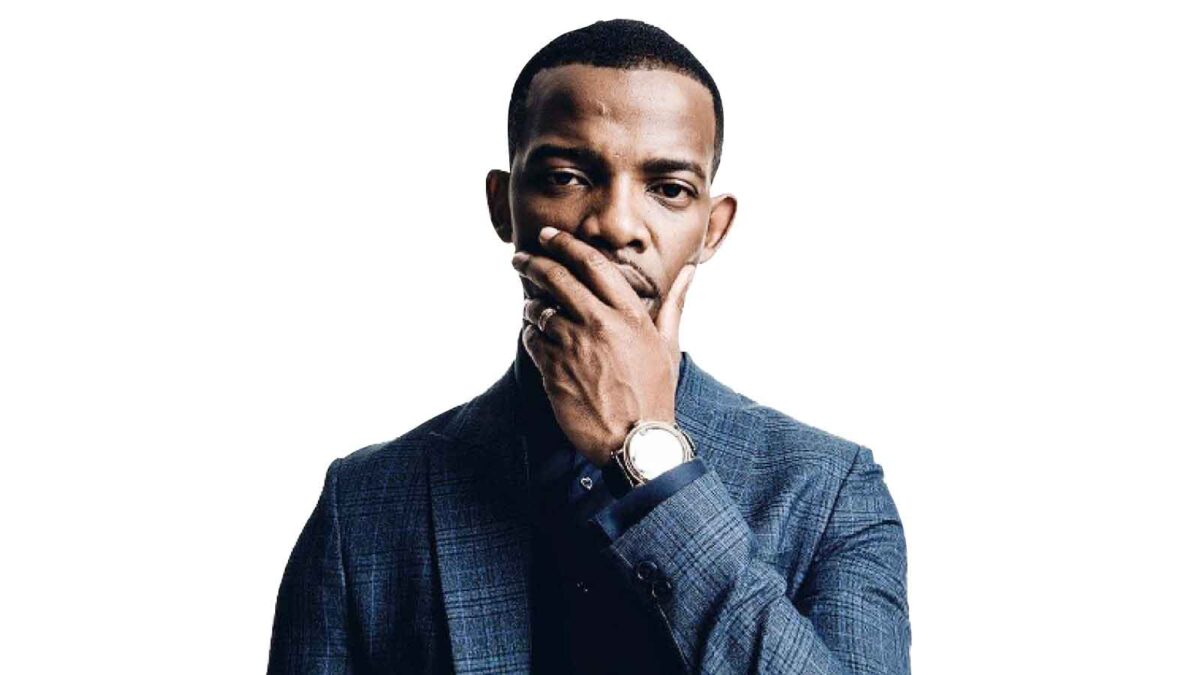
Zakes Bantwini wants African companies to own more of the business behind African music’s global success. With a Grammy Award, chart-topping records and an international audience behind him, the award-winning producer is increasingly focused on something bigger than the next hit song.
For Bantwini, the conversation has shifted to ownership, building a sustainable business and ensuring that African music does not simply travel the world but also benefits from the infrastructure and commercial opportunities that come with its global success.
It is a philosophy that has taken him from South African dance floors to Harvard Business School, where he began thinking more strategically about the future of his company, Mayonie Productions, and its place in the international music industry.
During a recent press interview, Bantwini spoke candidly about his ambitions, the gaps in South Africa’s music business and why producing successful artists is only one part of building a lasting industry.
Why Harvard was a calculated move
Bantwini’s decision to attend Harvard Business School’s Business of Entertainment, Media, and Sports programme was not simply about adding an impressive qualification to his CV. It was about putting himself in rooms where he could build relationships and learn how to scale his business internationally.
He describes his approach to decision-making as one based on probabilities, weighing up the opportunities that could bring him closer to his ambitions.
“For me, I think in probabilities, and I also take decisions and do anything that I do based on probabilities,” he explains.
His reasoning was straightforward. If he wanted to build a global company, he needed to position himself among people who understood how global businesses operated.
“Most global companies, where are they? They are in America. Which is the most prestigious university known for producing amazing people who are leading in business? It’s Harvard. So the probability of me, with my thinking of having a global whatever, is that I’m probably going to meet like-minded people at Harvard.”
The experience also gave him something he felt had previously been missing: a practical roadmap.
Before Harvard, he says, Mayonie Productions had ambitions of expanding beyond South Africa, but those ambitions were not backed by a clear strategy.
“Before Harvard, Mayonie has never been an ADE (Amsterdam Dance Event). Our idea of going global was a dream, but there was no mapping. Now there’s a mapping.”
His ambitions are not modest. When asked what kind of international company he would like to build, Bantwini points to Roc Nation, the entertainment company founded by Jay-Z.
“If I were to be a company in America, which company would I be? I’d like to be Roc Nation. That’s the company that I’d like to build.”
The business behind the music
One of Bantwini’s biggest concerns about the international success of African music is whether the continent is benefiting from the business opportunities that accompany its growing influence.
Amapiano, Afro House and other African sounds have found audiences far beyond the continent, with South African artists increasingly performing at international festivals and venues.
But Bantwini believes there is an important distinction between exporting music and owning the businesses that make those international opportunities possible.
He recalls performing in Portugal, where the South African presence was unmistakable backstage.
“When I was performing in Portugal, you smell South Africa. Backstage it’s isiZulu, Sesotho. You are in South Africa,” he says.
But there was a contradiction. Despite the South African talent on display, the company responsible for bringing the artists there was based in the United Kingdom.
“You ask: as we are projecting it from South Africa, is this a South African vehicle that brought us here? No. The company that brought us there was a UK company. There was no South African that owned any equity.”
For Bantwini, this is where the industry needs to start asking difficult questions.
Artists may be travelling internationally, selling tickets and introducing their music to new audiences, but without ownership of the businesses and structures behind those opportunities, the long-term financial benefits may continue to flow elsewhere.
“Nobody could guarantee that a South African family will always benefit from this,” he says.
“The day we all die, when you’re not on stage, nobody is going to get paid. The money will always go to the UK because there’s no South African that owns this thing.”
It is a concern that goes beyond individual artists and speaks to the future of the African entertainment industry.
Why the industry needs more managers, not just musicians
Bantwini believes one of the biggest problems facing South Africa’s entertainment industry is the lack of investment in the people working behind the scenes.
While there is no shortage of aspiring singers, producers and performers, he argues that the same energy needs to go into developing managers, lawyers, publicists and talent representatives.
“Everybody wants to be an artist. There’s no one that says, ‘I wanna be a manager like Scooter Braun or I wanna be like this guy who represents LeBron James,’” he says.
“We don’t have the right managers, right lawyers, right PR people. We don’t have.”
It is an issue he hopes to address through a partnership with Wits Business School, which is developing a programme focused on executive talent representation.
Importantly, the initiative is not designed to train performers but the people who will manage their careers and negotiate their commercial interests.
“That programme that we are doing with Wits that they are developing right now, it’s not for talent. It’s not looking at talent at all. It wants to create people that represent talent,” he explains.
It is a different way of approaching talent development, one that recognises that a successful music industry needs more than people who can make and perform music. It also needs people who understand contracts, intellectual property, business development and the value of owning creative assets.
Changing perceptions around record deals
Bantwini’s views on ownership also extend to the relationship between record labels and artists.
Through Mayonie Productions, he says he has been working towards licensing arrangements that give artists a more favourable share of the business.
However, he admits that offering what he considers better terms does not necessarily mean artists will view the arrangements positively.
“We are giving probably plus what I would call a standard percentage, doubling plus, actually, what should be paid normally to an artist,” he says.
“We are giving licensing deals, the best licensing deal to an artist. But still, artists will still feel that they are being robbed. This thing is the issue of perception. There’s nothing you can do.”
His comments touch on a longstanding tension in the music industry, where the relationship between artists and record labels has often been shaped by mistrust and questions about who benefits financially from a successful release.
For Bantwini, changing the structure of the business is one thing. Changing how artists perceive it is another challenge altogether.
The formula behind “Osama”
Although his attention is increasingly focused on business, Bantwini’s analytical approach has always been part of his music-making process.
He is not someone who relies solely on inspiration when creating records. He studies trends, looks at what is working and uses that information to inform his creative decisions.
That thinking played a role in the creation of his international hit “Osama”.
Recalling his time working at Sony, Bantwini says he had studied the production tools being used by successful producers and noticed that a significant number of popular records were being made using Fruity Loops.
“At that time, 70% to 80% of the best 100 songs produced that year were done through Fruity Loops,” he recalls.
His conclusion was that if so many successful records were being made using the software, it was worth incorporating it into his own process.
“So I was like, ‘Okay, I need to make my next album on Fruity Loops because it means there’s a 70% probability that I’m gonna make a song.’ And guess what? ‘Osama’ is on Fruity Loops.”
It is a fitting example of how Bantwini approaches both his creative and business ambitions: identifying opportunities, studying what works and making calculated decisions.
That desire for control also dates back to his younger years, when he walked away from professional soccer to pursue music.
“The day I stopped putting the fate of my dream into another man’s hand, I started living,” he says.
He recalls disliking the idea that a coach could determine whether he played or not, something that ultimately influenced his decision to pursue a career where he could have greater control over his future.
Family is the real measure of success
For all his international ambitions, business plans and career milestones, Bantwini’s definition of success is surprisingly personal.
He says his accountants have even suggested that relocating to Europe could save the business money on flights, given his demanding international travel schedule.
But it is a calculation he is not willing to make.
“My accountants are spending a lot of money on flights. They say, ‘If you can just live in Europe, this is how much we save.’ I would save the money, but I would lose my family,” he says.
At this stage of his life, being able to return home to his wife and children means more than another international milestone.
“For me, my success would be just not to worry and be at home. Success means to me is to walk in my house and see my wife and my kids.”
He is particularly clear about the difference between having a successful career and having a fulfilling life.
“If I come back to spend all this money alone, for me, that’s not success. That is a highlight. That’s a highlight, not success.”
It is perhaps the most revealing part of the conversation. For someone whose career has taken him around the world, the ultimate reward is not necessarily being recognised in another country, but having the freedom to return to the people who matter most – IOL.