Online Reporter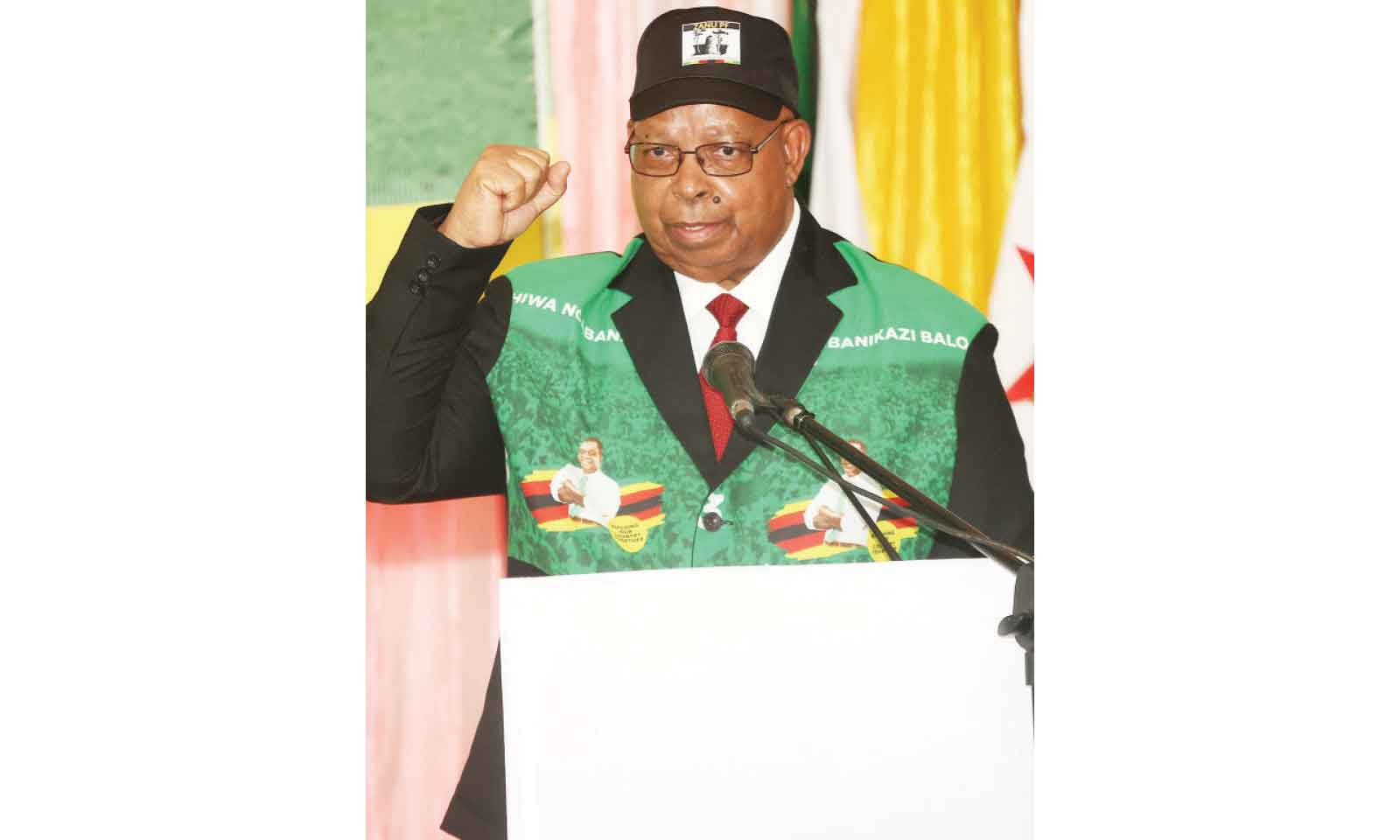
Alexander Rusero
Ranga Mataire
ZIMBABWE’s political landscape has, for decades, been defined by the power of liberation memory, ideological slogans and mass mobilisation. These historically significant elements now offer a strong foundation to enhance policy clarity and governance efficiency in a rapidly changing global environment.
In this context, the recent drive within ZANU PF towards structured intellectual engagement through the convening of seminars for key party organs signals a potentially transformative moment.
Since assuming the role of Secretary General, Cde Jacob Mudenda appears to be steering the party toward a more deliberate fusion of political authority and thought leadership, a move that could recalibrate how policy is conceived, debated and implemented.
In his comments soon after the holding of the 22nd National People’s Conference in Mutare, Cde Mudenda said there was need to deepen ideological consciousness within the rank and file of the party including at leadership levels.
He said; “Through this extensive reporting-back process, the party reaffirmed its character as a mass-based people’s party that values continuous engagement within its structures. The initiative has strengthened internal cohesion, deepened ideological consciousness and enhanced collective ownership of the resolutions adopted at the 22nd National People’s Conference.”
The introduction of seminars at the level of the Central Committee and the Politburo marks a departure from tradition. ZANU PF has never been devoid of intellectual capital.
Indeed, its historical composition includes scholars, technocrats and ideologically grounded cadres who contributed to the liberation struggle and the post-independence state.
However, the institutionalisation of intellectual engagement through formal seminar platforms represents a new layer of organisational culture, one that prioritises structured dialogue, evidence-based reasoning and collective learning.
This development is significant not merely because of its novelty, but because of what it suggests about the evolving demands of governance. Zimbabwe, like many African states, operates within an increasingly complex policy environment.
Global economic shifts, technological disruptions, climate change and shifting geopolitical alignments require responses that are nuanced, informed, and strategically coherent.
In such a context, reliance on rhetorical mobilisation or historical legitimacy alone is insufficient. Political decision-making must be anchored in knowledge systems that can interpret complexity and generate viable solutions.
Seminars, by their very nature, create a space for reflection, interrogation, and synthesis. They allow political actors to move beyond reactive postures and engage in anticipatory thinking.
When effectively designed, they bring together diverse perspectives — academics, practitioners, policymakers, and party leaders, into a shared intellectual space.
For a ruling party, this is particularly important, as its internal deliberations have direct implications for national policy and governance.
The sequencing of a Central Committee seminar followed by a Politburo seminar is instructive. It suggests an attempt to cascade knowledge across different levels of the party hierarchy, ensuring that strategic insights are not confined to a narrow elite but are disseminated more broadly within the organisation.
This approach has the potential to enhance policy coherence, as decisions taken at the highest levels are informed by a shared understanding of issues across the party structure. It also helps to reduce the disconnect that often exists between policy formulation and implementation.
Moreover, the emphasis on seminars reflects a subtle but important shift to knowledge-driven governance.
By contrast, a seminar culture encourages depth over brevity, analysis over assertion, and dialogue over monologue.
It compels political actors to confront the intricacies of governance and to justify their positions through reasoned argument.
This shift also has implications for the broader political culture in Zimbabwe. If sustained, it could contribute to the professionalisation of politics, where leadership is evaluated not only on its ability to mobilise support but also on its capacity to generate and implement ideas.
It may also create opportunities for greater interaction between political institutions and the academic community, bridging a gap that has often limited the application of research to policy.
Universities, think tanks, and independent scholars could find new avenues to contribute to national development through structured engagement with political actors.
Effective political parties use constant internal dialogue to bridge gaps between different factions, align their membership with long-term strategies, and ensure consistency in their platforms. Strategic planning helps parties transition from focusing only on short-term crises to developing sustainable, long-term goals.
ZANU PF has been a dominant player on Zimbabwe’s political scene since the country attained independence. With the changing political dynamics evolving from a ballooning younger population, the party needed to devise strategies that align with the post-independence generations of millennials, Generation Alpha and Generation Z.
ZANU PF has found it imperative to continually exchange, evaluate and refine policy ideas to offer practical solutions to societal problems. This process includes fostering “intellectual capital” through think-tanks, expert consultations, and internal debate.
Maintaining relevance in changing landscapes, parties often adopt a “catch all” approach, constantly updating their messaging to appeal to a broad section of the population. This requires monitoring public opinion and adapting to new social and economic trends.
The First Secretary of ZANU PF, President Mnangagwa was very clear on the ultimate goal for members to constantly hold workshops. He said the strategic seminar must enrich the revolutionary party “with the requisite skills, knowledge and orientation to effectively discharge our duties.”
In doing so, the President said the party would be able to reflect on the party’s role, in the context of the new complexities affecting mobilisation and organisation, such as the youth demographic and shifting socio-economic patterns in our communities.
The success of this initiative will depend on its outputs feeding directly into policy processes.
Creating an environment where ideas can be freely exchanged, challenged and refined is essential for fostering genuine thought leadership.
There is also a need to ensure continuity. A single seminar, or even a series of seminars, is insufficient to transform organisational culture. What is required is a sustained commitment to learning, embedded within the routines and structures of the party.
This could involve regular thematic seminars, partnerships with academic institutions, and the establishment of internal research units that support evidence-based policymaking. Over time, such measures could institutionalise a culture of inquiry.
Embracing knowledge-driven approaches to decision-making is a critical part of this process. It signals a recognition that the challenges of the present and the future cannot be addressed through the paradigms of the past alone.
At the same time, there is an opportunity to root this emerging seminar culture within African intellectual traditions.
Thought leadership need not be imported or externally defined; it can draw on indigenous knowledge systems, historical experiences, and local realities.
In this sense, the fusion of political authority and intellectual engagement can be seen as part of a broader project of epistemic renewal, where African perspectives are central to the production of knowledge and the shaping of policy.
Ultimately, the move towards seminars within ZANU PF reflects an awareness that governance in the 21st century requires intellectual legitimacy.
Decisions must be informed, strategies must be coherent, and policies must be grounded in a deep understanding of context.