Gibson Mhaka Zimpapers Politics Hub
AS ZANU PF delegates continue their deliberations in Chinhoyi, Mashonaland West, following the opening of the party’s 23rd National People’s Conference yesterday, attention is also turning to Harare, where Zimbabwe will host the 25th Summit of the Common Market for Eastern and Southern Africa (COMESA) from October 19 to 22.
The two gatherings differ in purpose and scale, but both offer Zimbabwe an opportunity to demonstrate its capacity to organise major engage Zanu-PF conference provides a benchmark for the coordination and attention to detail required as the country prepares to receive regional leaders, government delegations and business executives.
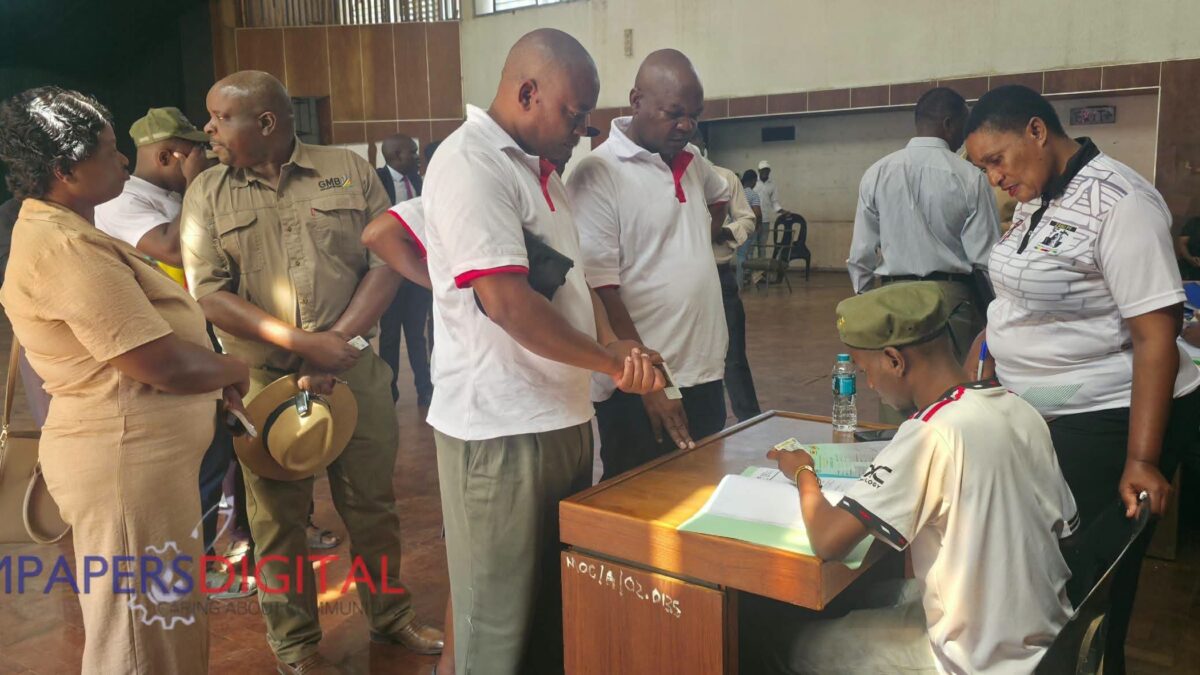
The conference at Chinhoyi University of Technology was preceded by work involving party structures, Government departments, security services and other stakeholders.
Infrastructure improvements, accommodation, accreditation and logistical coordination have been central to preparing the host town and venue.
The challenge is to sustain that level of organisation as the COMESA Summit approaches.
Hosting a regional gathering of this significance requires clear responsibilities, effective communication, reliable transport, suitable accommodation and close coordination among all institutions involved.
More than seven Heads of State and Government had confirmed their attendance ahead of the summit, with further confirmations expected.
Their participation underlines the diplomatic importance of the gathering and the responsibility that comes with hosting leaders entrusted with advancing regional economic cooperation.
For Zimbabwe, the summit is more than an event on the diplomatic calendar.
It offers an opportunity to deepen regional partnerships, attract investment and advance President Mnangagwa’s foreign policy objective of reintegrating Zimbabwe into the global economy through engagement and re-engagement.
The Zanu-PF conference is being held under the theme, “From Resolutions to Results: Consolidating Economic Development and Deepening Economic Empowerment Towards Vision 2030”.
Its emphasis on translating commitments into practical outcomes is also relevant to the COMESA meeting, whose theme is, “One Market, One Future: Advancing Inclusive Industrialisation,
Investment and Regional Integration in COMESA”.
Although their mandates differ, both gatherings depend on effective planning and implementation.
The party conference focuses on turning resolutions into development outcomes, while COMESA seeks to advance regional integration, industrialisation and investment.
Government departments, the COMESA Secretariat, local authorities, security services and private-sector players all have important roles in ensuring that the summit proceeds smoothly.
Technical readiness is particularly important.
Digital connectivity, transport logistics, venue facilities and arrangements for the movement of delegations must work together seamlessly, allowing participants to focus on the substance of their discussions.
This includes ensuring information reaches delegates promptly, venues are accessible, security arrangements are proportionate, and schedule changes are communicated in good time.
Operational failures can distract from the summit’s broader economic and diplomatic objectives.
Clear communication also helps delegates, organisers and service providers respond quickly when arrangements need adjustment locally.
Zimbabwe’s experience hosting major regional gatherings, including the 2024 SADC Summit, provides a foundation. Arrangements for COMESA must reflect the importance Zimbabwe attaches to its regional responsibilities, with coordination and contingency plans maintained throughout the event.
The summit also comes at a significant point in Zimbabwe’s foreign policy trajectory.
Since the advent of the Second Republic, President Mnangagwa’s administration has pursued an engagement and re-engagement policy intended to rebuild international relations, broaden economic partnerships and create opportunities for trade and investment.
The principle of being a friend to all and an enemy to none has provided an overarching framework for this approach, with regional cooperation serving as an important avenue for expanding Zimbabwe’s economic relations.
COMESA brings together 21 member states and provides a platform for cooperation in trade, industrialisation, investment and economic development.
Zimbabwe’s forthcoming assumption of the bloc’s chairmanship will place the country in a position to contribute to the direction of its regional integration programme. Hosting the summit, therefore, represents both a diplomatic responsibility and an economic opportunity.
The arrival of regional leaders creates an occasion for Zimbabwe to demonstrate hospitality and organisational capacity while strengthening relationships that can support investment, technology transfer, industrial development and access to regional markets.
These benefits depend on the quality of discussions and the willingness of participating countries to turn agreements into practical cooperation.
The COMESA Business Forum, scheduled for October 20, is expected to bring together business leaders, investors and policymakers to discuss regional value chains, financing, digital transformation and industrial competitiveness.
The accompanying exhibition will provide a platform for companies and institutions to showcase products, innovations and investment opportunities. These activities should connect high-level political discussions with the practical needs of businesses.
Zimbabwean producers need access to wider markets, while manufacturers require reliable supply chains, investment and technology to expand production.
Farmers and agro-processors can benefit from stronger regional value chains, while the mining sector has opportunities to deepen mineral beneficiation and develop industries around locally available resources.
A well-organised summit can facilitate these conversations, but its lasting value will depend on investment commitments pursued, trade barriers addressed, partnerships developed and regional programmes implemented.
Efficient organisation creates the conditions for meaningful engagement. Delegates should be able to move between venues, communicate reliably and conduct business without avoidable difficulties.
Harare’s readiness will be judged by its conference facilities, transport, accommodation, public services and general organisation. The objective should be to reinforce confidence in Zimbabwe as a destination for business, investment and international co-operation.
Such confidence is built through consistency, professionalism and the ability to deliver on commitments.
As the Zanu-PF conference continues in Chinhoyi, the lessons of its preparations should inform the final stages of work in Harare. Both gatherings require planning, coordination and a clear understanding of the outcomes they are intended to achieve.
Zimbabwe’s engagement and re-engagement policy will gain greater economic substance when diplomatic relationships lead to stronger trade, productive investment and mutually beneficial partnerships.
In the end, COMESA Summit’s success will not be determined solely by the smooth running of proceedings or the number of leaders in attendance. It will also depend on whether the gathering advances regional cooperation, strengthens economic partnerships and opens new avenues for investment and trade.
The benchmark set by the Zanu-PF conference should be reflected in the organisation of the summit and in the seriousness with which its resolutions are implemented. For Zimbabwe, the opportunity is clear, prepare meticulously, host professionally and turn regional partnerships into tangible development results.