

 Online Reporter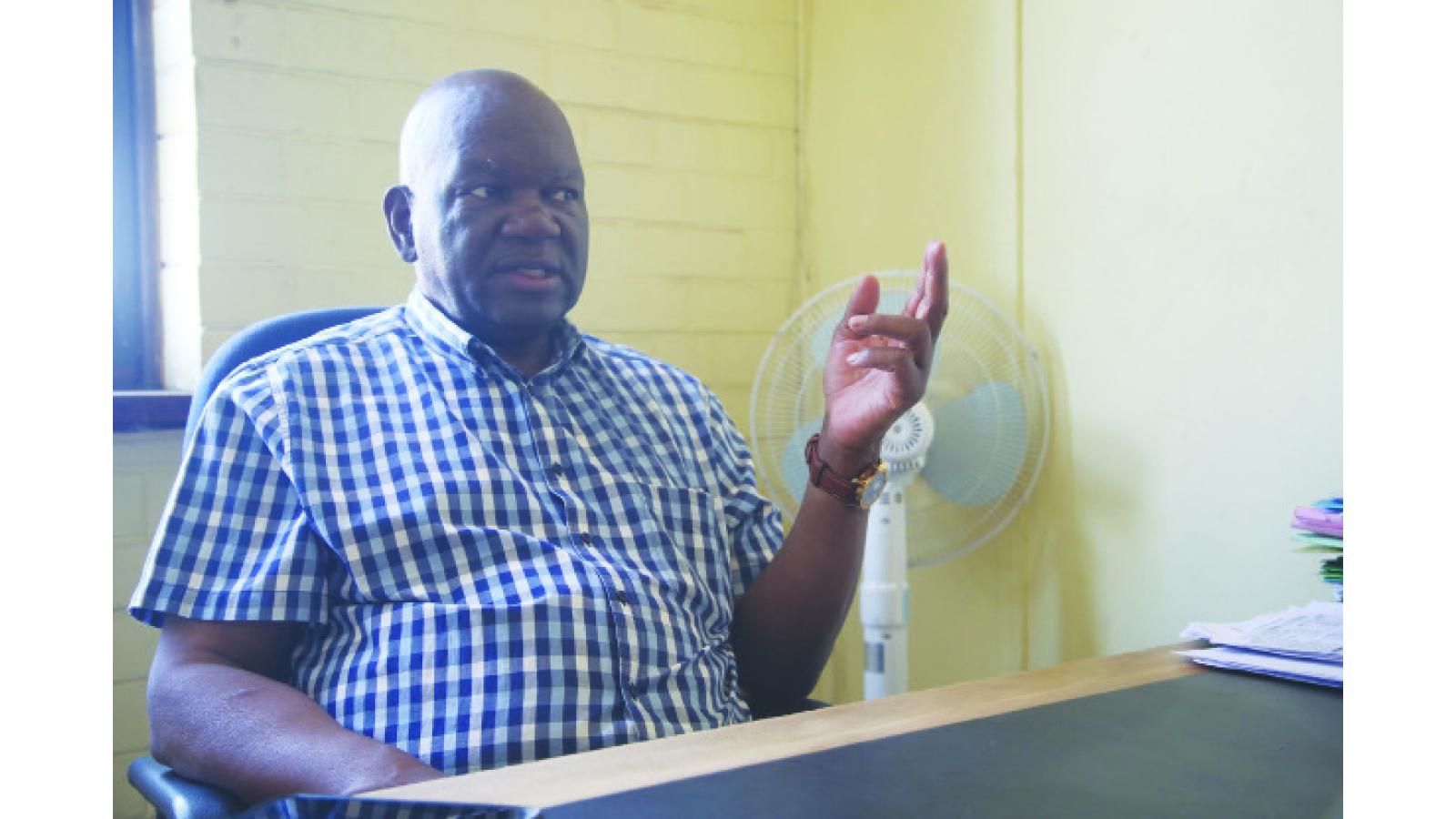
Joseph Madzimure
Zimpapers Politics Hub
AS the ruling party Zanu PF prepares for its 22nd National Annual People’s Conference at Mutare Polytechnic College next month, Zimpapers Politics Hub Reporter Joseph Madzimure (JM) met with the party’s Harare Provincial Chairman, Cde Godwills Masimirembwa (GM), to discuss the state of preparedness, level of discipline among members and achievements scored since the last conference.
Below are excerpts from the interview.
JM: The party is heading towards its Annual People’s Conference in Mutare next month. How far have you gone in terms of preparations?
GM: We have fulfilled our responsibilities by drafting our resolutions, which we are now submitting to the national chairman of the party for onward transmission to the national secretary for legal affairs. As a province, we have made our statutory contributions to support this important National People’s Conference.
Last weekend, we conducted our provincial inter-district meeting, inviting leadership from the district level to collaborate on draft resolutions.
JM: Can you give us some of the highlights of the draft resolutions discussed at the provincial inter-district meeting?
GM: On the political front, the key resolution passed in Bulawayo last year to extend the term of office of President Mnangagwa beyond 2028 was a major talking point.
In recognition of his sterling work under the Second Republic, there has been a lot of talk from the party, including Harare province, calling for its implementation. We are yet to see it being implemented. As Harare province, we reiterate our support for resolution number one passed at the Bulawayo National People’s Conference in 2024 and are calling upon the Government and the Parliament to ensure that the necessary constitutional amendments are made to give effect to this resolution.
JM: What other issues were raised during the provincial inter-district meeting?
GM: As Harare province, we are prepared to engage in upcoming debates, particularly on the issue of drug and substance abuse. It is crucial for the nation to strongly oppose drug and substance abuse and to formulate clear resolutions on this issue. We are expecting committees to discuss this extensively. The whole nation must say no to drug and substance abuse and come out with clear resolutions so that our law enforcement agents go out there knowing the party is in full support.
On social issues, as an urban constituency, we are concerned about the dithering of the Harare City Council on the issue of granting title deeds to their long-term tenants. People have been renting houses for more than 20 years.
The Harare City Council at one point said they were coming up with a home ownership process, but then reversed it and preferred to get rentals.
So, as a Harare metropolitan province, we have come up with a resolution that an urban title deed facilitation committee be established, particularly targeting houses which are owned by municipalities to ensure that people who have been tenants for many years are now given title to their houses.
JM: I understand last year you came up with a number of resolutions. Were they implemented?
GM: On the developmental resolutions, most of them have been implemented or are in the process of being implemented. All the projects being carried out in Harare Metropolitan province are issues which first came out as resolutions of the party.
JM: Can you outline some of the success stories made during the course of the year?
GM: During the 2023 harmonised elections, we made significant gains, winning four constituencies in Harare province, an increase from our usual one in Harare South. Previously, we consistently won two wards in Harare: Ward 4 in Mbare and Harare South. Following the elections, we participated in by-elections and now have approximately 16 councillors across Harare, Chitungwiza and Epworth.
In terms of parliamentary elections, we successfully won the Glen View South constituency, as well as the Mt Pleasant, Mabvuku-Tafara, and Harare East by-elections.
So, every by-election, let me say, we have won it. It is noteworthy that the last by-election, Ward 6 in Epworth, we won it with over 3 000 votes.
That is the highest number of votes ever received in this country for a by-election at a ward level. The turnout was fantastic and our candidate won with almost 99 percent of the vote. I can say that our mobilisation efforts in Harare are paying off. The party is doing very well.
JM: What do you think is the major cause of these recent victories during the by-elections?
GM: These successes are occurring during the Second Republic. It is because of the sterling work of President Mnangagwa. The remarkable achievements of President Mnangagwa have greatly enhanced food security.
People are saying goodbye to hunger. Although Harare is not a rural province, it depends heavily on food produced in rural areas. Food shortages in these provinces directly affect Harare, the most populous province. Our wheat production has increased from 300 000 to 400 000 tonnes, with a target of 600 000 tonnes.
Harare, as the largest consumer of bread and confectionery, stands to benefit significantly from this increase.
Agricultural products, particularly maize, flow into Harare for both production and direct consumption by its over three million residents. The President’s commitment to food security has had ripple effects throughout the city.
On the infrastructural front, improved roads are essential for transporting agricultural products into Harare.
Significant upgrades have been made to routes from Manicaland, Mashonaland East, Bulawayo, and Masvingo, including key highways like the Harare-Masvingo-Beitbridge, Harare-Bulawayo and Harare-Mutare. These developments facilitate trade and the movement of goods. The Trabablas Interchange is now operational and work has commenced on the Mabvuku Interchange and other smaller interchanges within Harare.
JM: Harare province is now a hotbed of drug and substance abuse. At the party level, what are you doing to address the menace?
GM: The Government is committed to creating a drug-free environment, with a particular focus on Harare province.
This vision emphasises the need for collective action against drug and substance abuse, recognising the city as a pivotal area where these issues often begin.
The First Lady, Dr Auxillia Mnangagwa, has been instrumental in spearheading efforts to combat drug abuse. Notable achievements include the establishment of a rehabilitation home facility in Mbare, along with plans for additional rehabilitation centres throughout the greater Harare area. These initiatives aim to provide support and recovery resources for those affected by substance abuse.
Harare province is actively supporting the Government’s anti-drug initiatives.
Community members are encouraged to report instances of drug abuse, particularly in sports settings. This proactive approach helps ensure that offenders are held accountable, reinforcing the message that drug abuse will not be tolerated.
The stance against drug abuse is clear: any member of Zanu PF found engaging in such activities will face consequences, regardless of their position. This policy underscores the party’s commitment to integrity and accountability.
JM: Of late, there was a high level of indiscipline within the party structures in Harare. What is the situation now?
GM: The province is now fairly stable, with instances of indiscipline virtually disappearing. Members understand that any lack of discipline will be addressed appropriately. We are pleased with the stability and unity of purpose within the province.
JM: We are observing a positive structure emerging outside. What is that?
GM: When we took office, we acknowledged that this province was once home to the Rhodesian Front. After independence, Zanu PF took over this space, which has been our base since then. However, the facilities have been inadequate.
With our Provincial Coordinating Committee (PCC) membership nearing 300, the existing space was no longer sufficient.
Given the limited available space, we aimed to create a structure that would meet our needs. We started the construction, but faced challenges due to resource constraints.
Fortunately, we approached Cde Kudakwashe Tagwirei, who generously stepped in to assist, and we are pleased with the progress.



