admin
admin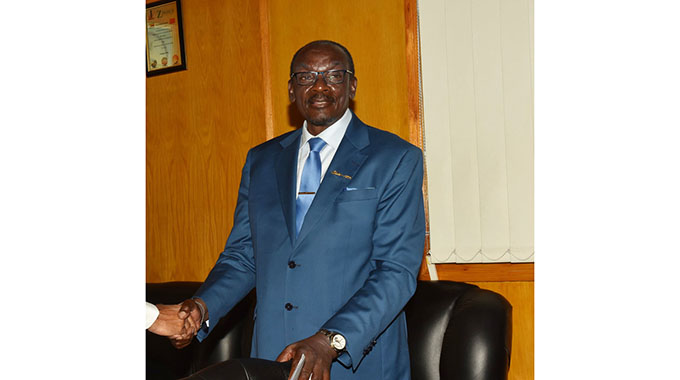
Dr Clever Chirume
Correspondent
The following is a conversation between Vice President and Second Secretary of the ruling Zanu PF party Cde Kembo Mohadi (KCDM) and Dr Clever Chirume (CC) covering a range of issues including Zanu PF’s efforts towards economic recovery.
*******
CC: Comrade Mohadi, kindly tell us about your re-assignment to the Party.
KCDM: Thank you for creating the platform for this conversation. Oh yes, His Excellency, the President, Comrade Emmerson Dambudzo Mnangagwa recently assigned me the responsibility of overseing the affairs of our revolutionary Zanu PF party.
CC: Cde Vice President and Second Secretary for Zanu PF, some people are becoming sceptical of the Zanu PF Government’s capacity to recover the economy. What are your views on this?
KCDM: Uhmm . . . where do I start? I guess being sceptical is a normal thing, is it not?
I will try to explore the nature of the dynamics that have given rise to the scepticism you are alluding to, before I turn to some of the measures we are undertaking as Government. The sceptical view that our administration has failed to recover the economy is hyperbolic in my view, if not arising from manipulative amnesia. It is undoubted that people are disappointed by the pace of economic reforms since we took over as the Second Republic.
The concern with the speed at which reforms are taking place is understandable, given the terrible economic situation our people have been under for an extended period of time.
However, as leadership, the understanding of the nature of the issues involved in healing the economy gives us comfort in the progress the Zanu PF Government has made to date. As a party we appreciate people’s heightened desire for quick recovery of the economy following the November 16 revolution. However, this has presented us with a crisis of expectations which in some instances acquiesce to parochial thinking.
If you check most analysis on economic reform under the Second Republic overlooks the odds which the administration of Cde Mnangagwa has had to dutifully grapple with for a better economy.
CC: Cde, can you tell us of the specific measures the Zanu PF Government has engaged to recover the economy and whether your administration has satisfactorily monitored and evaluated the implementation of such measures
KCDM: That is exactly where I am coming to.
Regarding the economy, we have not reached that moment which in psychology they refer to as the “Ahaa” moment. We are still far from crossing the Rubicon but we are greatly satisfied that the fundamentals are now in place for economic take-off. Yes, there might be contradiction here and there but these are mainly small issues that do not warrant alarm.
Our economy is out of the intensive care of the constrained performance of the past two decades which curtailed the nation’s development, in turn also inhibiting the prosperity of our people. Gradually, we have overcome some of the challenges to the economy that for a long time appeared impossible. What is most pleasing about the current economic transformation is that it is taking place in a pleasingly sustainable way.
As a party, we are enthused that the measures we undertook during the initial two years of the Second Republic have yielded expected results. We realised that before we could talk of a development strategy, a stabilisation programme would be necessary, hence the introduction of the Transitional Stabilisation Programme (TSP) from October 2018 to December 2020. The most successful TSP contained and expressed the aspirations of our people as driven by vision 2030, by which projected time we hope to have attained an upper middle income society for our country. As a result, our administrative and institutional systems have been re-engineered for performance and productivity.
The Zimbabwe Investment and Development Agency (ZIDA) is now fullay operational, providing a one-stop investment solution. This has removed the cobwebbed and untidy investment climate that existed before. The honour is now with those in charge of ZIDA to ensure the country benefits. We appreciate that foreign direct investment (FDI) has not been forthcoming partly as a result of the global political economy in which the entire world is under siege by Covid-19, with resources being thin on the ground everywhere.
At global level, the mistrust between China, Russia and the United States of America has not been helpful either. It has blocked positive response initiatives to emerging global challenges.
The Zanu PF Government has put in place an environment conducive for economic take-off under the TSP. Our financial sector has become increasingly stable, with the Zimbabwe dollar slowly finding its place in the market place of currencies, thanks to the auction floor exchange rate instrument. Yes, we are reeling from the negative effects of Covid-19, but surely our crops, flora and fauna have received enough rains and so are our water bodies filled.
I wish our people could see the quantum improvement of this administration to the medical sector, agriculture, roads and so on and so forth. With the medical sector for instance we have green and red zones in line with international standards for our hospitals, and you might say modestly equipped within our current capacity.
Our Wilkins is no longer the same and so is Parirenyatwa Hospital. Under the Zanu PF lead Government of Cde Mnangagwa, Zimbabwe now boasts of producing oxygen for our hospitals which we used to import. The collaborations between local research entities and other nations on the production of vaccines speak of a nation moving forward. All these things are difficult to see because we are in the middle of a crisis.
Our success with TSP paved way for the National Development Strategy (NDS 1) which runs from January 2021 to December 2025. Zanu PF’s intention is to redouble efforts in generating growth through intentional mobilisation of domestic growth vectors whilst continuing to seek support from those who wish to partner us in our development efforts as a country.
Borrowing from His Excellency the President and first secretary of the ruling Zanu PF’s words, allow me to say that together, harnessing the collective energies of all our people, from across the length and breadth of this uniquely blessed country, we should be able to achieve vision 2030 for an empowered and prosperous upper middle-income society. The attainment of financial stability during TSP is an admirable milestone for the Second Republic. It comes with a predictable economic environment that allows for planning. Financial stability is the foundational base for the country’s economic take-off.
We have successfully dealt with the loss of value issues that relegated our country into a cash economy. You will further realise that in the cash economy, pricing was a matter of three odd factors which are fear, the black market rate and speculation. Our people can now lend and borrow without being concerned about the value issues.
On the institutionalisation of our democracy, the creation of the Political Actors Dialogue (POLAD) is a huge transformation in our politics, something that has never been done before on the continent. Anyone is free to join POLAD because of its inclusive nature.
From a Zanu PF perspective despising POLAD is an affront on the new political consciousness of the Second Republic as well as a counter-productive negation of the political values of plurality and co-existence characterising the new dispensation.
Further, the creation of the Presidential Advisory Committee (PAC) is a major achievement toward the deepening of our democracy. This reflects the new kind of politics after the transitioning into the Second Republic. It is another enabler through which Zimbabweans have the opportunity to engage their leadership and potentially help shape the direction of the governance of our country. We should appreciate that think-tanking models such as POLAD and PAC are signifiers of advanced political best practice hinging on the merits of mature democracy. It is in my view the future brought forward, or should I say history in future-tense.
Political Actors Dialogue as a concept signifies the plurality of voices harnessing engagement platforms for mutually beneficial conversations and dialogues amongst different sectors and groups in our community including, amongst others, the church, the youth and women.
Buoyed by the success of TSP, we are now as Zanu PF Government geared to transform the country into a comparable economic powerhouse. In a sense, I would say ours is an economic transformation similar to the Revolution of Deng Xiaoping of China.
We are revamping our education, agriculture, energy, transport, roads, health and the general inbuilt environment. New policies such as the National Human Settlements Policy are part of the current governance environment. Yes, the reforms we are undertaking face challenges just like any other processes in life.
They say Zanu PF is paying lip service to corruption. Oh well, it is not a crime to see things differently is it not so. Sometimes people forget that law has to follow due processes to which a person may be acquitted. That is the nature of law. We cannot hasten arrests and prosecutions; that is wishful thinking.
What we may be debating as thinking men and women is how we can strengthen our laws where we see loopholes and ensure the institutions responsible for justice are in place and fully equipped for their job. We must appreciate that this is a process. As the sun rises, we will surely arrive in terms of our centenary goals of achieving an upper middle income society by year 2030.
The Zanu PF led Government of Cde Mnangagwa is taking a systemic approach to issues. We cannot short-circuit procedures; by that, I mean democracy and development are processes.
We are democratising as a nation in order to ensure the future of our people. Obviously, this does not entail opening up our country to floodgates of interests harmful to our people.
The Zanu PF led Government is realigning the civil service to adapt thrift and judicious use of resources, although sometimes old habits are difficult to shed off. We are, however, determined. There is demand for greater sacrifice by all and sundry. This is essential if we are to create the Zimbabwe we want.
A word of caution though, is that it is our responsibility together (great or small) to be vigilant in the protection of our fledgling economy, ensuring that it does not slip into an abyss again. This is not a Zanu PF responsibility alone. The motto should be for everyone to say never shall we allow our economy to fall sick again whether you from the Movement for Democratic Change (MDC) or any other party for that matter. It is our responsibility together to maintain and sustain the current exchange rate which is stable. Our past has taught us that maintaining a stable exchange rate is a matter far beyond the free-hand of the market economy.
CC: So then Honourable, if the country’s economy is on mend as you say, where does the allegation of failure arise from and why the preponderance with negative portrayal of your efforts?
KCDM: I will start off addressing the last part of your question in that order.
The preponderance to consistently portray Zimbabwe and its leadership as being consistently portrayed hopeless and lacking in unity is familiar to some of us, given that our enemies are now running scared of the reforms and achievements we are making under the Zanu PF led Government of Cde Mnangagwa. As a result, they will try to invent and spin scandals to black paint the leadership.
Not to be outdone are information peddlers of falsehoods who would try to sow seeds of hatred among us. They recycle bad narratives about the country’s leadership. It is my hope that our people see through the vainness of this ‘new but old’ deadly weapon of pitying the leadership and its people against each other. I say ‘old weapon’ because such tactics were part of the propaganda machinery during the liberation struggle, sowing disunity and inhibiting progress. We lost many of our fine comrades to this strategy of disinformation.
The ZAPU and ZANU were set on each other’s throat and it took the decisiveness and boldness on the part of our founding fathers, Cdes Robert Mugabe and Joshua Nkomo, to say enough was enough. Let us unite and move forward through taping into the wisdom of our founding fathers, being aware that the divisive politics of ‘kuzvidira jecha’ which means spoiling the food to spite everyone affects even those who are not interested in politics if ever there is such a thing.
All what I am trying to say is that His Excellency the President and First Secretary of Zanu PF Mnangagwa would wish for is the collective development and capacitation of the people of this country. We are building our roads and dams, resuscitating our agriculture on our own, using our own financial resources. Yes, the process might appear slow because we don’t have external support, but if the truth be told, we are getting somewhere. We are putting in place institutions for a strong Zimbabwe geared to take off. Zimbabwe is surely a giant rising.
No matter our differences, I think this is the time we need to support our leader the President in the good work he is doing for this country to move forward and where there are differences of opinion in the way we view issues, we need tolerance. This is why I personally emphasise the African common sense in resolving conflicts. From the upheavals of Mfecane to date, there have been conflicts among us and these were resolved amicably using our home-grown peace building methods.
Regarding the part of your question on the allegation that we have failed as the Zanu PF led Government to recover the economy, I have already explained that when we took over there was a crisis of expectations which is difficult for some analysts and critics to comprehend. Maybe I should add that the future of Zimbabwe is in a peculiarly unique position politically following the birth of the Second Republic on November 16, 2017.
One of the reasons for this is that our founding father, Mugabe, had been in power since 1980 to 2017. This meant that people had become accustomed to his leadership and believing and fearing that any change to the country’s leadership might be cataclysmic and detrimental. It is against this psychological shackle that the new consciousness shapes the transformational leadership, sustaining the context that drove operation restore legacy.
It is now clear through the success we are making that never again will Zimbabwe move out of the culture of the liberation struggle. Restore legacy was a foundational basis toward the search for a new consciousness. The current transitional political landscape, combined with the rich mineral inheritance of those whose ancestors have claimed the region as home since the time of King Solomon (eighth century BC), provokes the sense that a unique analysis is required in evaluating this country’s obstacles to a prosperous future.
I also wish to state that under the TSP we have further institutionalised governmental operations to steer clear of the red tape of bureaucracy. We realise that this is the way in which a solid democracy is created. Far from being ivory towers, our schools and universities are no longer famed for theories but also for the ideas that are critical for the production of goods and services for the people.
It is an undoubtedly axiom that proper tertiary education ought to focus on the exploitation of local content, resources and solving of contemporary problems to society. Rather than being a mockery of our education, Our Chinhoyi University is now the proverbial bull of the nation, advancing of learnership that provides cheap insemination services to grow our national herd among the country’s farmers.
The same level of innovation occurs across our universities. The new dispensation demands of its universities accountability toward the provision of solutions to the challenges faced by our people. This is in line with the aims and objectives of education 5.0 which we introduced at the dawn of the new dispensation. If you visit our universities’ industrial hubs you will be surprised, if not shocked, by the amazing innovations you will see. It is only unfortunate that people mistake our silence for foolishness. We are doing what we can. What is lacking in our developmental matrix as I said are the organic intellectuals to tell the world the real story about our country and the new consciousness.
The departure from the previous populist politics is another major achievement of the leadership of President Mnangagwa. We have resolved that it is better to err on the side of correctness than adopting a populist thrust that will have future generations judge us harshly all for cheap political and temporary benefits. We would rather be unpopular today for the future good of the country.
That is why leadership is entrusted to a few. The bold and decisive decision to compensate former commercial farmers whose land was acquired for the resettlement of the landless majority is one bold historical decision that typifies the nature of this administration’s consciousness.
The popular saying of the President that “zvipopi zvinosvinura mazuva akasiyana (puppies gain eyesight at different times after birth) gives us comfort that with time most people will realise that this decision, although currently despised as ill-conceived, in some quarters bodes well for the future. Apart from being one of the promises that the president made during his inauguration speech, this decision brings to finality the land question in Zimbabwe. Legally, this measure is consistent with the constitution, and it ensures that there will be no conflicts in future over this issue. The compensation of former farmers also speaks to the country’s re-engagement programme.
Approximately, US$3,5 billion is set to be paid in compensation to former white farmers whose land was acquired for the resettlement of the majority of our people. You don’t want to postpone and keep in abeyance potential crisis situations for future generations. Leadership is about boldness in confronting challenges as they arise
The introduction of performance appraisals for Permanent Secretaries is part of the broader aim of the institutionalisation of accountability within the civil service. This is part of a broader objective of reforming the civil service.
CC: Honourable, I can see you are passionate about the future. Any possible misgivings?
KCDM: Misgivings yes, as Zanu PF Government we feel let down by you, academics. We lack organic intellectuals who can tell the world the real story of what we are doing. It is either you the academics do not understand the matrix of our leadership style which is simple in nature or you chose to be aloof.
I recall His Excellency being falsely maligned of commissioning a ‘water tape’ (that is how they put it) inini navaChiwenga pane anosara. I recall I was at one time maligned for commissioning a metre bridge. The irony around these so called small projects which they view as too small for the weight of the presidium is that these are the projects so critical to the lives of the generality of our masses. Also ironic is that the real story behind the piped water system by the President, as well as the socio-economic benefits of the two metre bridge to the community and the net effect of these small projects to the US$80 billion economy we intend to achieve by 2030 is lost completely. Completely lost also is that as a party it is through such projects deemed small that we have maintained our relations with the people at grassroots.
I must, however, acknowledge that the images of a nation without a future, whose people live under conditions of mere nature, will dominate our thought processes and media landscape for some time to come, given the psychological bind on the thought processes of some of our people. It is not something you can simply wish away. Some of us are stuck in the views of one European philosopher Hegel, who dismissed Africans as perpetually living under the conditions of mere nature. Hegel’s reading of Africans is very influential in view of us as Zimbabweans.
This is aggravated by uninformed scepticism about ourselves which we dutifully recycle to our own peril. Such visions constitute a vein that goes through much of our conversations as a people built upon issues of identity and cultural essentialism, via politics, which oftentimes strives to resurrect a putative pre-colonial past, to our current circumstances. I must acknowledge, however, that our media has greatly transformed; it has come of age.
You can now enjoy a balanced appraisal of the Zanu PF Government programmes from the privately owned media, apart from isolated screaming headlines without a cause. Mature analysis on Zimbabwe’s economic recovery shows the need for thinkers ordinarily referred to as ‘organic intellectuals’ who can dissect the aims and objectives of the current Government. The good thing is that we now have a Presidential Communication Department to engage our strategic communication at the highest levels of state.
CC: Your views on the renewal of sanctions as Zanu PF
KCDM: Sanctions must go. They are not good for anyone. We are no longer deterred by them anymore. They have taught us to create local economies to fund our Public Sector Investment Programs (PSIP) from our own resources. Look at the progress made as a result. It is painful I know, but His Excellency the President and First Secretary of the Party has shown that that is the way to go. We have learnt to mobilise the domestic growth vectors for our development.
For two years on a roll we have mastered the capacity to fund our development programmes such as road construction, health sector, building of universities, mitigating drought and other calamities such as disasters with minimal external support.
The Zanu PF led Government has put in place conditions for budget surplus. This has seen an increment on the funding for Public Sector Investments Projects (PSIP) from which we are building roads, constructing dams, developing irrigation infrastructure for food security and reviving industry among other responsibilities.
We remain hopeful that Western countries and America will not miss the opportunity to reset relations with Zimbabwe as this is the correct thing to do at both the diplomatic and economic levels. Zimbabwe is one of the mineralised countries in the world- perhaps the biblical Ophir of the bible – whose gold is said to have built King Solomon’s temple. As one of the mineralised countries of the world, we stand ready to reset relations with the world. If sanctions were removed, we would easily leverage on our minerals for a quicker economic recovery
CC: What do we need to do to embrace the future?
KCDM: The future is there for us all. We now need to learn to listen to each other and not ourselves. We need to hearken to the duty of growing our economy so that we can enjoy the benefits collectively. We now need patriots to defend the noble cause of our President to grow the economy.
Let us endeavour to pay our scientists well to keep them home; after all, a nation with a scientific inclination attracts FDI simply because investors want to invest where there is a creative community. We are seeing that already in Zimbabwe. I saw it at Copa Cabana during a walk about tour, where a small to medium factory is producing clothes and bags for export, yet the irony is that our women travel to South Africa to procure the same merchandise using scarce foreign resources. The question is: where lies our problem?
CC: Any last words you would want to leave for your readers in your new role Zanu PF party
KCDM: Let me thank the generality of the masses that make the Zanu PF party be what it is as a party.


 Online Reporter