Chronicle Editor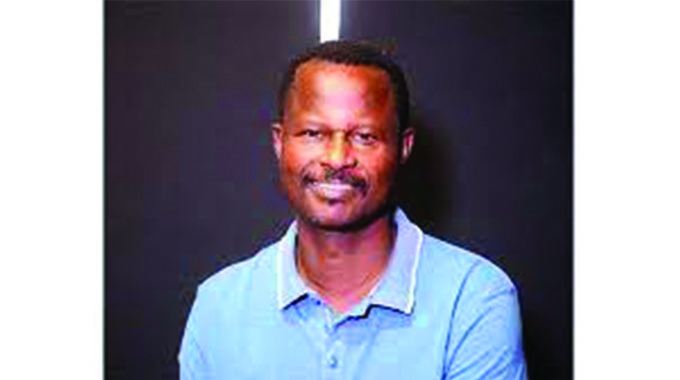
Chronicle Reporter
AGRICULTURE is one of the key drivers of the country’s economy and Zanu-PF’s Gwanda South National Assembly candidate Cde Omphile Marupi intends to come up with programmes to assist people in his constituency to boost production once elected into office.
Cde Marupi (52) is one of the 12 candidates from Matabeleland South who will be representing Zanu-PF in the coming elections.
His constituency has three major irrigation schemes which are Sebasa Irrigation Scheme, Guyu-Chelesa and Rustlers Gorge Irrigation Scheme.
Cde Marupi said if fully utilised the irrigation schemes can be instrumental in ensuring rural industrialisation in Gwanda.
President Mnangagwa’s rural industrialisation programme will see industrial activity being launched in rural areas based on factor endowments in each rural space. Such endowments become the definers and drivers of the industrial activity envisaged in any one area.
Guided by the Second Republic’s devolution focus, a key component of the National Development Strategy (NDS1), which seeks to ensure “no one and no place is left behind” in terms of development, the Government is facilitating several socio-economic projects in different parts of the country, which are aimed at assisting communities to generate own incomes and be self-sufficient.
The projects cover agricultural production, both animal and cropping, water, small to medium enterprise industry and commerce development, housing development, social amenities, road rehabilitation and construction, education and information communication technology, among others.
Government has already laid the preparatory groundwork for the transformation through, among many other things, establishing tertiary institutions, including vocational training centres in rural areas and intensifying the rural electrification programme.
Cde Marupi said his target is to ensure that families improve food production using local resources.
“One of my major development areas I wish to address once I get into office is to improve food production. We have a lot of resources such as irrigation schemes in the constituency, some have been rehabilitated while some need rehabilitation. We have Sebasa and Guyu-Chelesa Irrigation Scheme which were rehabilitated and then we have Rustlers Irrigation Scheme which is yet to be rehabilitated. These irrigation schemes have to operate at full capacity,” he said.
Cde Marupi said people must understand that the irrigation schemes belong to them and not Government or those that funded the establishment of the schemes.
“We should not just grow crops but also value add so that we get good returns. Communities must get real value from their natural resources in line with the National Development Strategy 1. In order for us to realise Vision 2030, we have to be productive,” he said.
Cde Marupi said improved food production was key in eradicating poverty within rural communities.
He said he also intends to improve the education system.
Cde Marupi said development of education infrastructure and Information and Communication Technology infrastructure is crucial in ensuring learners have access to an improved education system. He said the population in his constituency has significantly increased over the years which means there is a need for more schools.
“The schools that we have are no longer enough because of the ever-increasing numbers of learners and as such there is a need to construct more schools. We have a number of schools that were built before independence and they need to be rehabilitated as the buildings have outlived their lifespan. Some of the structures don’t meet the modern day requirements. If we want our learners to perform well they need to have access to ICT facilities such as computers and the internet,” said Cde Marupi.
He said the new curriculum requires a lot of research and pupils need network coverage in order for them to conduct research.
“Education 5.0 emphasises the need for research and innovation and we want students at our vocational training centres to be part of this innovation.
We want to establish our own innovation hubs in our communities,” said Cde Marupi.
He said he will also ensure improved access to health services.
Cde Marupi said he wants to inculcate a tradition of being proactive in his constituency so that people are not dependent on donors.
“In order for our communities to develop, the people have to take the first initiative and not be dependent on donors, partners or Government. We have to take ownership of our own development,” he said.
Born on 18 September in 1971 at Manama Mission in Gwanda, Cde Marupi did his education at Buvuma and Bethel primary schools. He did his secondary education at Zezani High School in Beitbridge and later moved to Tennyson Hlabangana High School in Bulawayo.
From 2009 to 2012 he obtained a Certificate and Diploma in Travel and Tourism with the Victoria Falls Commercial Training Institute. During the same period, he also obtained a Degree in Applied Language Studies from Lupane State University. In 2014 he obtained a Masters in African Languages and Culture from the Midlands State University.
In 2019 he obtained a PHD in English Philosophy Linguistics with University of Fort Hare.
He is studying a Masters in Strategic Communication with the National University and Science and Technology (Nust) and a Special Honours in Communication and Media Studies with the Zimbabwe Open University.



 Online Reporter