Online Reporter
Gibson Nyikadzino, Zimpapers Politics Hub
IN the next 10 years, statistics indicate that at least 100 million people in Africa will register as first-time voters. These new voters will come from one significant group in the post-modern or post-millennial era — centennials.
The natural presence of this group, born between 1997 and 2012, has shifted global security dynamics, increased national voter numbers, and introduced new dimensions and disruptive ideas that demand attention.
This generation is regarded as the most restless in the Global South, hence the need to help them understand the dynamics shaping the nations they belong to.
Of all continents, Africa is the youngest, with an average age of around 19 — a stark contrast to other continents that are ageing.
To appreciate this, consider countries such as Hungary, Poland, Italy, Spain, China and Russia, which have become pronatalist states, incentivising their populations to have more children in response to declining birth rates.
They are on edge because an ageing population impacts the economic and social well-being of their states. In Africa, however, population growth remains a natural historical and present progression of society.
Africa’s road to independence was characterised by the efforts of two key generations of leaders: liberation fighters and politicians. During the continent’s independence trajectory, pan-Africanists and nationalists maintained ideological, moral, humanitarian and logistical bonds that advanced the right of black people to self-determination.
It did not matter which region these pan-Africanist or nationalist leaders came from; their relations were cross-cultural and transcended colonial boundaries.
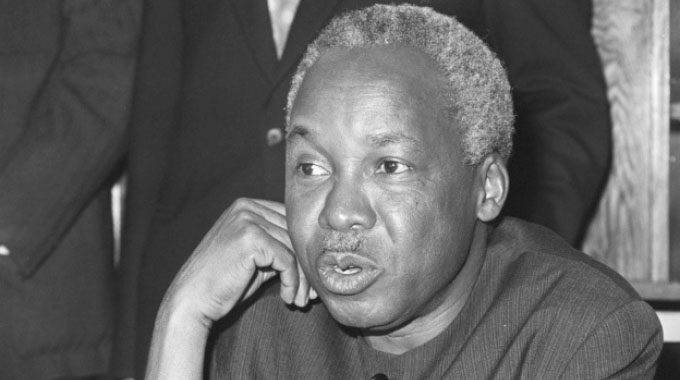
Figures such as Ghana’s Kwame Nkrumah, Algeria’s Ben Bella, Tanzania’s Julius Nyerere, Guinea’s Sekou Toure and Mali’s Modibo Keita, among others, played pivotal roles in providing sanctuary and support to African nationalist leaders and the liberation armies they fought alongside.
The independence and freedom struggles of countries like Mozambique, Namibia, Angola, Zimbabwe and South Africa were tied to the efforts of these pan-Africanists and nationalist leaders. There was no separation of thought or principle between the two generations. They fulfilled their mission, partly or entirely.
Since then, new generations have emerged. From Zimbabwe’s independence in 1980, the liberation agenda of the nationalists coincided with the birth of a new generation — the millennials (born between 1981 and 1996). The nationalists and millennials worked together to ensure the transfer of continuities for the total liberation and emancipation of the masses under the leadership of Zanu-PF.
A major political advantage Zanu-PF has over other political parties, past and present, is its ability to remain fluid in organising the masses, recruiting new members and adopting a multi-dimensional approach to engage with new generations.
Besides connecting well with millennials, Zanu-PF has successfully built consensus with centennials, those born between 1997 and 2012. In its longevity, it will do the same with succeeding generations, including Generation Alpha, born from 2013 onwards.
Thus, for Zanu-PF, there must be an enduring umbilical connection linking pan-Africanists, nationalists, millennials and centennials. Its ability to reach out to centennials reflects Zanu-PF’s capacity to use soft power to achieve its goals through attraction and persuasion.
Centennials were born during a period of rapid transformation in global communication infrastructure. They entered a world where the communication space was booming, and new platforms emerged to interconnect people.
As a result, centennials are now actively shaping political and social discourse, whether professionally or informally — and they will remain active for a long time to come.
They were born into an era where they have access to instruments previous generations never had: social media. In their millions, they can now organise and rally around causes faster than ever before.
In March 2018, President Mnangagwa urged the Zanu-PF Youth League to harness social media to advance the party’s ideological imperatives and use these platforms to reach out to the youth.
These young people are digital natives who are beginning to think transnationally rather than internationally. In their orbit, they recognise that social spaces and identities are not automatically linked to a single territory; instead, they create imagined or virtual geographies without boundaries or demarcations.
They are informal in their approach and non-linear in their thinking patterns, focusing on multiple links and interactions across national borders through everyday informal connections.
Moreover, they leverage youth-led movements to learn from one another, sharing similarities in strategies such as the rapid circulation of digital content and even the use of shared cultural symbols.
However, this generation also faces challenges. They appear less capable of handling stress and failure compared to previous generations.
Skilled at curating content in their imagined worlds — driven by Facebook, Instagram or TikTok — they excel at projecting the life they want others to believe they lead.
They present a confidence they often do not possess, sounding as though they have all the answers when, in reality, they do not.
As digital natives form one of the most significant voter groups, they attract the attention of political parties due to their sheer numbers. Yet this generation often exhibits apathy and a lack of political knowledge. They need ideological grounding and political education.
Zanu-PF cannot afford to ignore this generation, which represents a crucial constituency for its organisation, maturity and longevity.
This is a dominant force among Zimbabwe’s electorate and across many African countries. Their engagement pattern shows continued reliance on social media.
They experiment with these platforms, and such experiments, if unguided, can lead to negative implications that may threaten national social and security fabric.
Zanu-PF, as it has done with previous generations, must not neglect young people. It is the party’s responsibility to provide guidance to this constituency.
Their calls for broader economic opportunities, empowerment programmes and access to financing should be addressed structurally to ensure inclusivity across both urban and rural areas.
These challenges are not unique to this community; they affect everyone. Therefore, Zanu-PF should manage every developmental progression with great liberal precision.