Online Reporter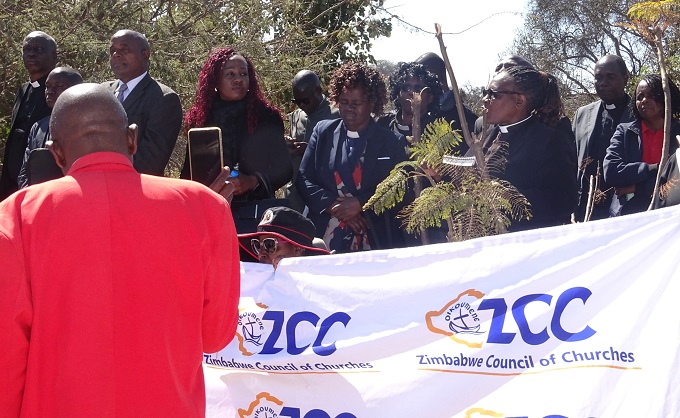
George Maponga in BIKITA
More than 50 000 villagers in Gutu and Bikita districts are benefiting from a climate-proof agriculture programme being implemented by the Zimbabwe Council of Churches (ZCC) in partnership with Canadian churches and church-based agencies.
The initiative, being run under the Canadian Food Grains Bank (CFGB), has received funding of more than 6 million Canadian dollars and is aimed at improving food security in drought-prone areas.
Beneficiaries in Chivaka (Ward 31) in Bikita and Kurai (Ward 16) in Gutu are receiving training in water harvesting, production of drought-tolerant traditional grains, organic manure production, fireguard creation and development of Pfumvudza/Intwasa plots.
Canadian Ambassador to Zimbabwe Alder Aristide, toured some of the projects this week and pledged his country’s long-term commitment to supporting climate-proof agriculture.
“We stand ready to partner the people of Zimbabwe in reducing the effects of climate change through adoption of climate-proof farming methods,” he said.
“We are also being affected by climate change in Canada where global warming is causing some glaciers to melt.”
He underscored the importance of water harvesting and small grain production to mitigate the effects of climate change in Africa.
ZCC general secretary, Mr Wilfred Domingu, said the scaling up resilience programme had already benefited more than 50 000 villagers since its launch in 2019 and will continue for the next three years.
“The scaling up resilience programme that we are implementing with our partners has to date benefited more than 50 000 villagers in Bikita and Gutu districts and we are closely working with Government departments,” he said.
Bikita District Development Coordinator, Mr Bernad Hadzirabwi, said Government welcomed partnerships with churches and development agencies, adding that the Second Republic under President Mnangagwa, had made significant progress in promoting climate-proof agriculture.
He said the initiatives complemented national efforts to achieve food self-sufficiency and to attain upper middle-income status by 2030.
One of the beneficiaries, Mrs Revai Muchena of Chivaka village, said the programme had improved household food security by encouraging farmers to grow drought-tolerant crops.



 Online Reporter