Online Reporter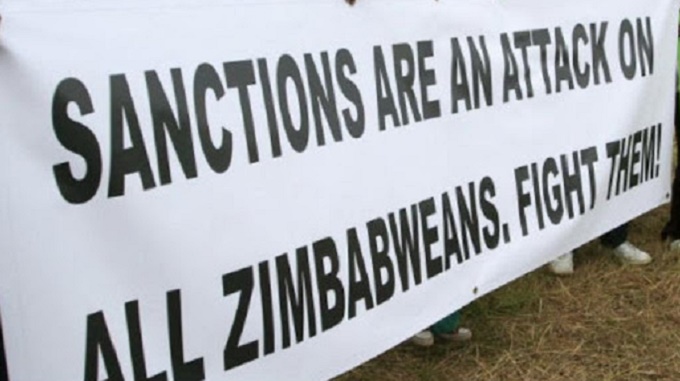
Gibson Nyikadzino in Uppsala, Sweden
NO Zimbabwean should be tempted to believe — or even entertain the notion — that the indigenous people residing between the Zambezi and Limpopo rivers are less capable of making land productive than any other people or race. The people of Zimbabwe are as strong, capable, and organised as any other. On this matter, both facts and history stand firmly on the side of the indigenes.
Successive pre-colonial states in Zimbabwe sustained agro-based economies, managed by locals who, in times of surplus, stored food for future hardships such as drought or famine. The agricultural systems adopted during that era reveal a deep reliance on small grains and a well-organised rotational cropping and grazing system. Famines were rare occurrences — far less frequent than during the colonial period.
The colonial disruption institutionalised in Zimbabwe from September 1890 dismantled the food supply chains that locals had developed over generations. Decades of indigenous economic productivity were erased by the colonial project, which, in its early years, ironically depended on the food and livestock production of the very people it sought to subjugate.
It was the peasants — smallholder farmers — who remained the backbone of the agro-based economy during both the pre-colonial and colonial periods, even as the settler establishment seized land through legislative manipulation and brute force under the British South Africa Company (BSAC).
From 1890 to 1980, this monopolistic corporation embodied Western colonial and neo-colonial interests, enriching itself and its foreign backers through the plunder of Zimbabwe’s natural resources, ultimately amassing vast, ill-gotten wealth.
Reversing land criminality
There is always a price to be paid when a people pursue the path of self-determination. Among the many forms this pursuit takes, the most contentious is the quest for economic emancipation — particularly when it involves the fair redistribution of resources. Such efforts often provoke the ire of former colonial powers.
Land is the cornerstone of economic production. Whoever controls land, controls destiny.
By embarking on the land reform programme in 2000, Zimbabwe sought to reverse the historical injustices that had shaped land ownership. Despite the indigenous philosophy of communal land ownership for the common good, colonial powers imposed foreign land tenure systems enforced by racially discriminatory laws.
From the 1930s, land was formally divided along racial lines, with white settlers occupying the most fertile areas. This deep injustice fuelled national resentment and became a central pillar of the liberation struggle.
Thus, Zimbabweans’ continued resistance to illegally imposed sanctions is a collective stand against allowing the country’s rich natural resources — both above and below the soil — to continue enriching those who once profited from the population’s impoverishment.
Dancing with wrath
Following Zimbabwe’s land reclamation process, the country faced a calculated economic onslaught. This came in the form of the Zimbabwe Democracy and Economic Recovery Act (ZDERA) of 2001 and the European Union’s sanctions in 2002.
This economic assault was not limited to Western governments. It was supported by a broader network that included multinational corporations, Western billionaires, international financial institutions, and non-governmental organisations (NGOs).
The wrath Zimbabwe faced was emblematic of imperialism’s core feature: the consolidation of international capitalist monopolies seeking to divide and dominate the world.
This collective punishment aimed to cripple Zimbabwe’s economy, isolate it diplomatically, and portray it as an unsafe investment destination. It also served as a warning to other African nations contemplating similar land reforms. Zimbabwe became a test case for Western economic retaliation, evidenced by massive capital flight and efforts to make the economy “scream.”
Sanctions were less about justice and more about asserting Western dominance — reinforcing the notion that one group has more right to own the means of production than another.
Zimbabwe’s experience exposes the broader struggle between the Global North and Global South over control of property and sovereignty.
Is South Africa being warned?
Zimbabwe’s experience served as a cautionary tale for other nations. South Africa, which has signalled its intention to redistribute land to the black majority, has already faced backlash from the United States.
Today, the network of capitalist monopolies employs subtler methods to maintain dominance. In South Africa’s case, the message is clear: reclaiming land is tantamount to committing “white genocide.” The US’s absence from the G20 summit in South Africa speaks volumes.
Ultimately, it is up to South Africa to decide its course and how it engages with global powers like the US.
Cautious progress
There are signs that the US is beginning to acknowledge that Zimbabwe’s land issue is a closed chapter.
Discussions around repealing ZDERA are underway. While this is a positive development, Zimbabwe remains cautious, aware that the US still wields the Magnitsky Act, which targets Zimbabwean leaders with sanctions.
Zimbabwe is treading this path carefully, recognising that the land issue is settled. The right to self-determination means Zimbabweans must control and exercise permanent sovereignty over their natural resources to achieve national development.
To lack ownership of the means of production is to remain shackled by the legacy of colonialism — a system designed to keep the Global South dependent on the Global North. In retrospect, it is undeniable that while Africa significantly contributed to global development, its people were disproportionately dispossessed of their resources and livelihoods.
Such injustice must not be allowed to persist in the post-colonial era.