Sundaymail Editor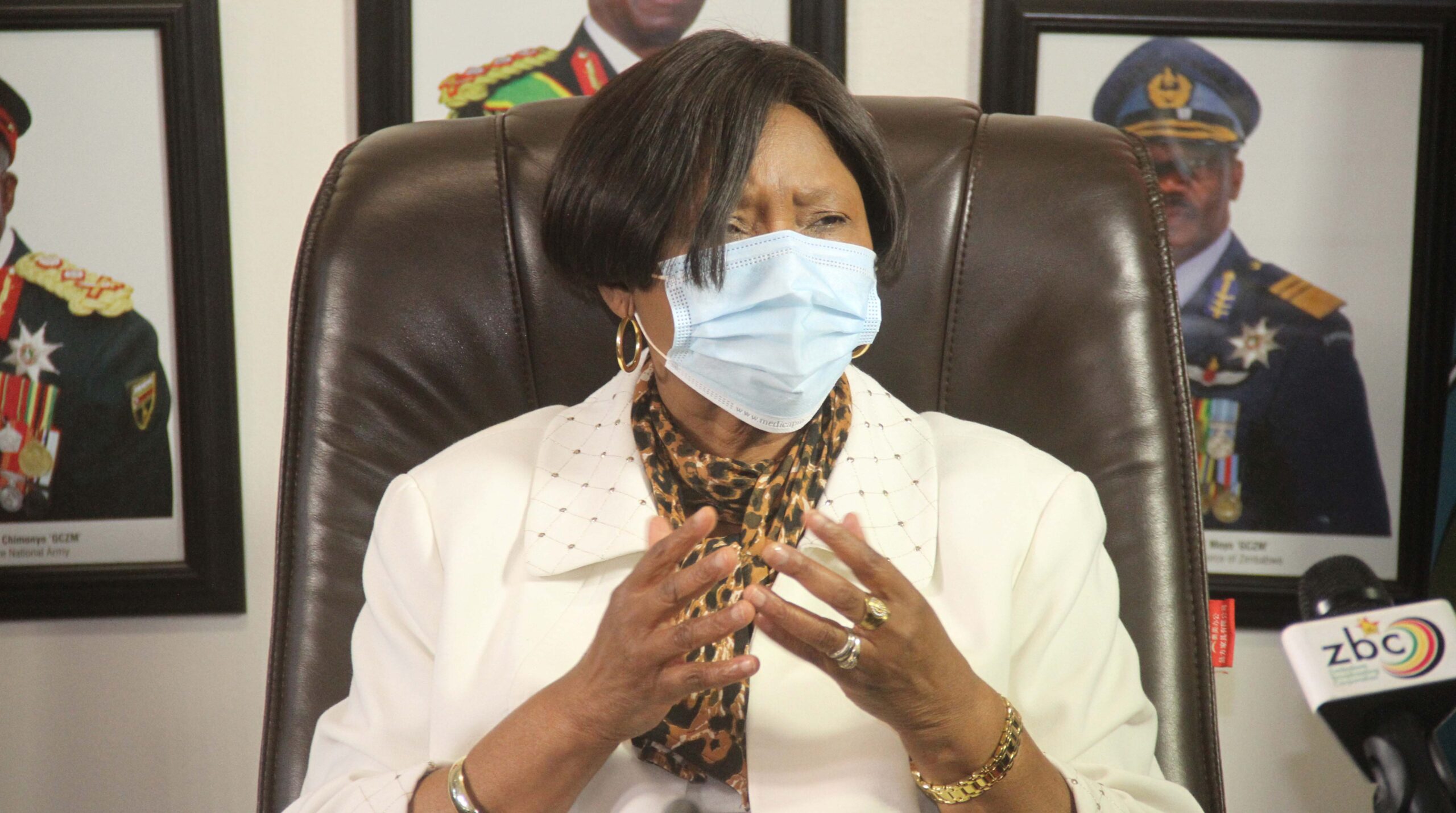
Zimbabwe commemorates Heroes’ Day and Defence Forces Day holidays tomorrow and Tuesday respectively. The holidays pay tribute to gallant sons and daughters who sacrificed their lives to liberate the country from colonial rule. They also celebrate the significance of the Zimbabwe Defence Forces (ZDF) in protecting the nation and guaranteeing peace. Last week, Defence and War Veterans Minister Oppah Muchinguri-Kashiri sat down with ZBC and ZTN to unpack the significance of Defence Forces Day.
****************
Q: Your reflections as Zimbabwe commemorates Zimbabwe Defence Forces Day?
A: My reflections on this important occasion date back to the time of the liberation struggle and the attainment of independence.
The historic formation of the Zimbabwean Defence Forces from the amalgamation of three distinct armies is one of the major success stories of our Independence.
Despite the different backgrounds of the members, the respective commanders have worked hard to unify them and reorient them towards the common goal of defending Mother Zimbabwe.
Indeed, this has been achieved and today we boast of the ZDF as the vanguard of Zimbabwe’s hard-won independence, national sovereignty, territorial integrity and national interests.
The history of the ZDF is pregnant with numerous successes both in defence and various other sectors such as agriculture, construction and many more. All these successes bring to the fore the importance of the ZDF in Zimbabwe’s socio-economic development.
Q: Can you explain Zimbabwe’s influence in regional and continental missions of defence and security?
A: The ZDF has an excellent record of contributing to regional and international peace. This has been realised through collaboration with its peers at bilateral and multilateral levels.
As a member of the Southern Africa Development Community, African Union and United Nations, the ZDF is always an active player at such international fora.
At the regional level, the ZDF has played a significant role towards the achievement of a state of preparedness of the SADC Standby Brigade by commanding the effort’s Exercise Amai Africa II, which confirmed SADC’s readiness to deploy towards the African Union’s peace-keeping efforts.
In the same vein, Zimbabwe is currently holding the position of Chief of Staff of the African Standby Force, a position first occupied by the late Major-General (Trust) Mugoba before being taken over by AVM (Air Vice Marshal) (Brian) Chikonzo from the Air Force of Zimbabwe. ZDF training institutions also enrol a number of regional and continental students and in so doing they influence military thinking. The region has an entrenched democratic history of periodically conducting elections when they are due.
This has ensured the prevalence of peace in African countries, despite the growing trend of losing candidates disputing election results.
In most cases, those results would have been endorsed by various Election Observer Missions.
Since my appointment, successful elections were held in Namibia, Botswana, Mozambique, South Africa and Tanzania.
In Mozambique, as a neighbour, Zimbabwe is naturally concerned with the situation in Cabo Delgado, Mozambique.
This is mainly because the two countries have a long history of struggle against colonial oppression.
Mozambique is a SADC member state and has the bloc’s full support.
Article 6 of the SADC Mutual Defence Pact provides that “An armed attack on a State Party shall be considered a threat to regional peace and security, and such attack shall be met with immediate collective action.”
SADC has held several meetings to consider the course of action to take, especially in Mozambique.
Recently, SADC took the important decision to deploy in Mozambique as a region, with each individual SADC member state pledging their various capabilities towards the deployment.
Some sections of the media have accused SADC of delaying in intervening and assisting the member country.
However, the position to intervene had to be reached after following due processes.
Zimbabwe has pledged to deploy a training contingent of 304 ZDF members to that mission. However, we await deployment instructions from SADC Secretariat. Some countries have already deployed in that country and sooner than later, the insurgency will be contained.
Q: Please explain the role of the Zimbabwe Defence Forces in the socio-economic transformation of the nation.
A: The ZDF has a constitutional mandate of maintaining peace and stability, as well as safeguarding the country’s national independence, sovereignty and territorial integrity and national interests. This is based on the realisation that no meaningful and sustainable development can take place without peace and stability.
The ZDF has over the years successfully discharged this responsibility, despite efforts by our detractors to soil their image by faking abductions and instigating fringe demonstrations in the hope of unseating the democratically elected Government.
Q: Can you explain the ZDF intervention with regards to community assistance across the country, particularly reconstruction efforts in Cyclone Idai-affected areas?
A: Each year, a week prior to the main ZDF Day commemorations, the ZDF conducts a week-long Community Assistance programme. The programme is an opportunity for us to showcase and hand over completed projects across the country.
In essence, the ZDF prides itself in the Community Assistance Programme as it brought innumerable developmental benefits to various communities.
In an effort to make a more economic impact, the ZDF has departed from the previous pattern of undertaking short-term projects during the Defence Forces Community Assistance Week. They have now adopted ongoing projects that run for longer periods.
Instead of spending time sweeping the streets and doing other small activities, the ZDF now undertake projects that benefit communities in the long term.
Those who watch the television will testify to seeing the handover of school and clinic buildings by commanders of the various provincial units.
Some of the projects undertaken this year include the following: i. Construction of a Maternity Ward at Mberengwa District Hospital; ii. 2 by classroom blocks at Charleswood Primary School, Chimanimani; iii. 2 by classroom blocks at Zhompepe Primary School in Beitbridge; iv. Tongogara Polyclinic in Shurugwi; v. Neromwe Clinic in Chiredzi; vi. Donations of medical equipment to Murongwe (Mt Darwin); vii. Rutanhira (Hwedza); and viii. Negove (Mberengwa).
Spearheading social and economic programmes and projects is one of the Zimbabwe Defence Forces (ZDF)’s peacetime roles under their Military Assistance to Civil Ministries and Authorities. The principle is a permanent feature of the ZDF policy and has gained more prominence under the New Dispensation.
You may be aware that in March 2018, soon after the coming into office of the New Dispensation, Zimbabwe was hit by Tropical Cyclone Idai, which triggered flooding in Chimanimani and Chipinge Districts in Manicaland.
You may also be aware that one of the first responders was the ZDF, who conducted search-and-rescue operations of the victims before embarking on the restoration of the damaged infrastructure.
In some of the programmes, they collaborated with their South African counterparts in installing Bailley bridges donated by the South African government in Chimanimani and Chipinge.
Q: What is the significance of this year’s theme to the overall mission and objectives of the ministry?
A: The ZDF’s 2021 theme reads “The Zimbabwe Defence Forces: creating a conducive environment for the attainment of Vision 2030.”
The theme captures two important elements — the country’s aspirations and the key role played by the Zimbabwe Defence Forces in national development. You are aware that since 2017, Zimbabwe embarked on an economic recovery trajectory, which started with the Transitional Stabilisation Programme (TSP).
The TSP, which lasted for one-and-a-half years, was succeeded by the National Development Strategy 1. The NSD1 details the milestones being pursued towards the achievement of Vision 2030.
Therefore, the ZDF have an important role of ensuring a peaceful environment for the achievement of Vision 2030.
Q: For the year 2021, celebrations are being done as the nation faces the threat of Covid-19. How has your ministry been able to assist in this regard?
A: The Covid-19 pandemic has indeed wreaked havoc in the country and the world over. An Inter-Ministerial Task Force was established by His Excellency, the President, to co-ordinate the country’s response efforts.
The ZDF has a significant complement of health personnel, for example, doctors, nurses, radiographers, et cetera, within its ranks.
These health professionals have, since the outbreak of the Covid-19 pandemic in March 2020, joined forces with their Ministry of Health and Child Care counterparts in assisting Covid-19 patients in the various health facilities throughout the country.
We acknowledge the significant assistance received from our Chinese counterparts in the form of PPE (personal protective equipment) and 100 000 doses of the Sinopharm vaccine.
The ZDF has been assisting ZRP counterparts in enforcing the lockdown in the country. This way, they have greatly contributed to the safety of Zimbabweans citizens.
Q: Your portfolio has a key aspect of War Veterans Affairs. What is the progress on polices and strategies that relate to their welfare?
A: The ministry has made significant progress in implanting polices and strategies relating to the welfare of Veterans of the Liberation Struggle.
First, a Cabinet directive was issued in June 2019 for all ministries to allocate a 20 percent quota to the Veterans of the Liberations Struggle in all Government programmes. This has seen the veterans of the Liberation Struggle benefiting from the Command Agriculture; Livestock Heifer programme; Presidential Inputs scheme; Ruwa, Pomona and Masvingo Housing Schemes; Ministry of Women Affairs’ community development schemes; and allocation by the Ministry of Environment, Climate, Tourism and Hospitality Industry of fishing claims.
The Ministry of Mines and Mining Development has established a special desk to handle mining claims applications and disputes affecting Veterans of the Liberation Struggle.
Ministry of Defence and War Veterans Affairs officials have been incorporated into the District and Provincial Land Committees to ensure the implementation of the 20 percent quota.
The ministry continues to monitor the implementation of the directive through constant liaison with line ministries.
The gazetting of the Veterans of the Liberation Struggle Act (Chapter 17:12) formalised the implementation of Section 23 of the Constitution of Zimbabwe that obliges the State to take reasonable measures, including legislative ones, for the economic empowerment of the Veterans of the Liberation struggle.
This is a fundamental step that provides a legal foundation for Treasury to make allocations towards veterans’ empowerment and also protect them from arbitrary land dispossessions.
The ministry, therefore, based on the legislation, is continuously engaging the Ministry of Finance and Economic Development on the funding of the Veterans of the Liberation Struggle projects and is looking forward to the release of funds for small-scale self-help projects before end of 2021.
The launch of the Veterans of the Liberation Struggle investment vehicles by His Excellency the President, on 12th July 2021, paved the way for the establishment of the Liberation Struggle Fund. The exploitation of abundant national economic resources will reduce dependence on the fiscus and increase capacity to introduce sustainable Veterans of the Liberation Struggles Schemes.
The vehicles are: Veterans Investment Corporation; Veterans Tourism Company Pvt Ltd; Veterans Mining Company Pvt Ltd; Veterans Agriculture Company; Veterans Bank Limited; and Veterans Health services Pvt Ltd.


 Online Reporter