Online Reporter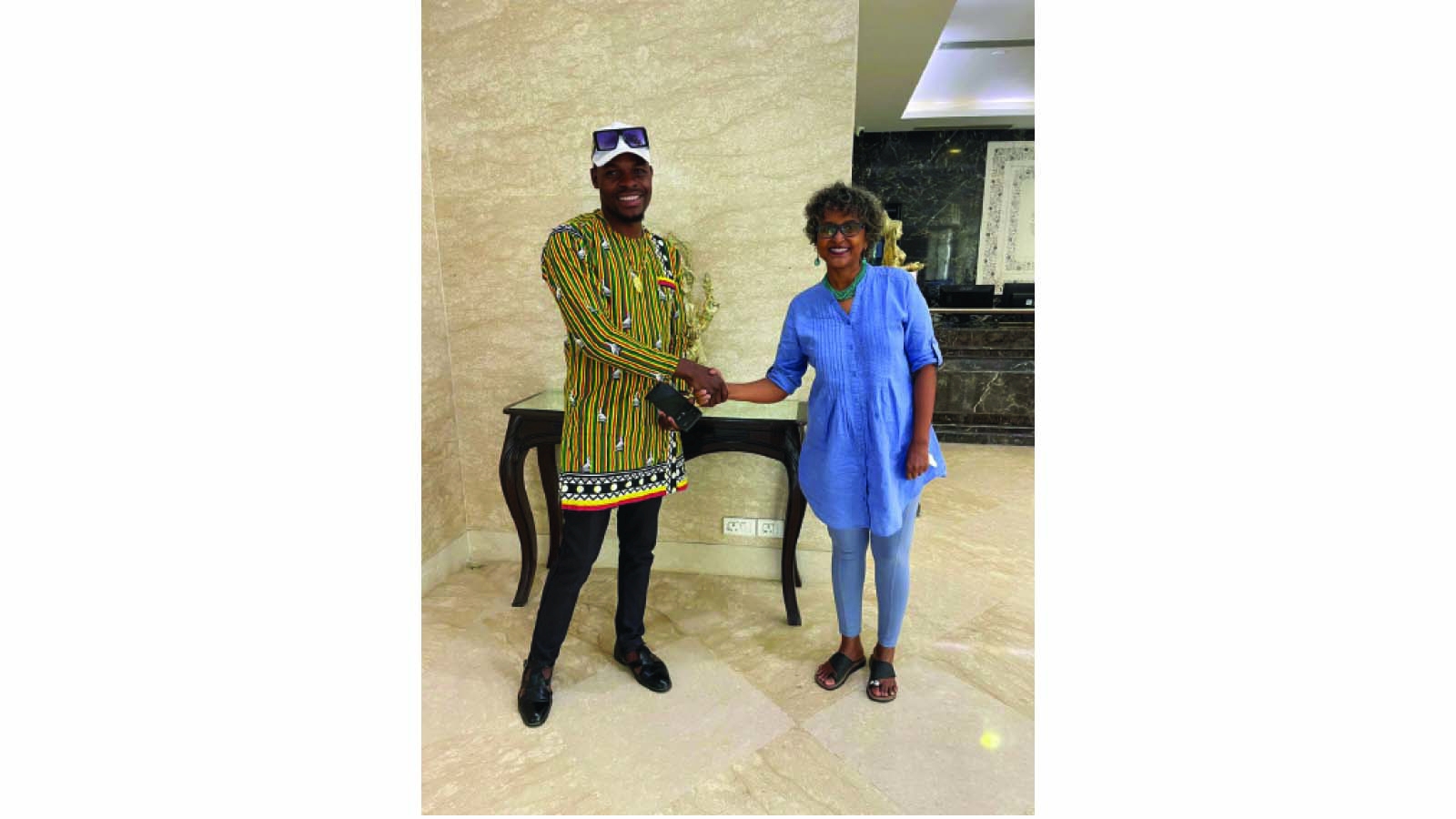
Maria Chiguvari
Zimpapers Arts and Entertainment Hub
AWARD-WINNING visual artist, Keith Zenda, said exhibiting at the India-Africa Forum Summit was more than an opportunity to showcase his work on an international stage.
Keith believes the exhibition became a journey of discovery that reshaped his understanding of history, faith and the role of art in preserving collective memory.
In an interview with Zimpapers, Keith said the visit left a lasting impression.
This was his first time to exhibit his work in India.
His work had been showcased in India before through galleries but never in person.
Keith described being struck by the country’s deep commitment to preserving its heritage, not only in museums, but in everyday life.
“The biggest surprise was how India keeps its memory alive in every place.
“In Zimbabwe we have museums in cities, but in India even villages have museums.
“All the records and history of their forefathers are kept not just in books, but in art paintings, on temple walls, door posts, sculptures.
“Everything is a record. Food was another shock: the depth of flavour, the way each region tells its story through spice. The whole experience was humbling.
“It felt like walking through a living book.
“Every street, every temple had a story about sacrifice and faith from the old generation.
‘‘It made me respect how art can carry history when nothing else is left.”
Keith said the visit had a profound impact on the themes explored in his artwork, particularly pieces centred on independence, freedom and faith.
“Yes, it changed everything. I went there with paintings about Independence, freedom and faith themes I know from Zimbabwe.
“But seeing how Indians hold faith on walls, doors, and sculptures made me understand my own work differently.
“I realised freedom isn’t just political. In India, faith is also freedom, the freedom to remember, freedom to believe despite persecution.
“So, when I exhibited, I wasn’t just showing African pain and hope anymore. I was showing a conversation between two old nations who both paid a price for freedom.
“The art felt heavier, but also more connected.”
The artist said at the India-Africa Forum Summit exhibition visitors engaged deeply with the artworks often spending long periods discussing their meanings and symbolism.
Keith said one of his paintings in particular sparked extensive discussion.
The artwork featured a clay pot whose cracks formed the outline of the map of India.
“The audience loved the work and they didn’t just look they questioned. That’s what made it special. They wanted to understand every crack, every colour.
“The painting that got the most comments had a clay pot with cracks shaping the map of India.
“People stood there for long, asking: ‘Is the pot India?’ ‘Are the cracks our struggles?’ That conversation went on all day.
“But the clay pot painting opened the deepest talk about how fragile and strong a nation is at the same time.
“Just like the pot holds water, India holds many people through cracks and all.
“In India, I saw that faith is also freedom, the freedom to remember. My paintings found a new home there.
“I would love to give special thanks to the (Embassy of India), Ministry of Sports Arts and Recreation, National Art Gallery of Zimbabwe for the support,” he said.