admin
admin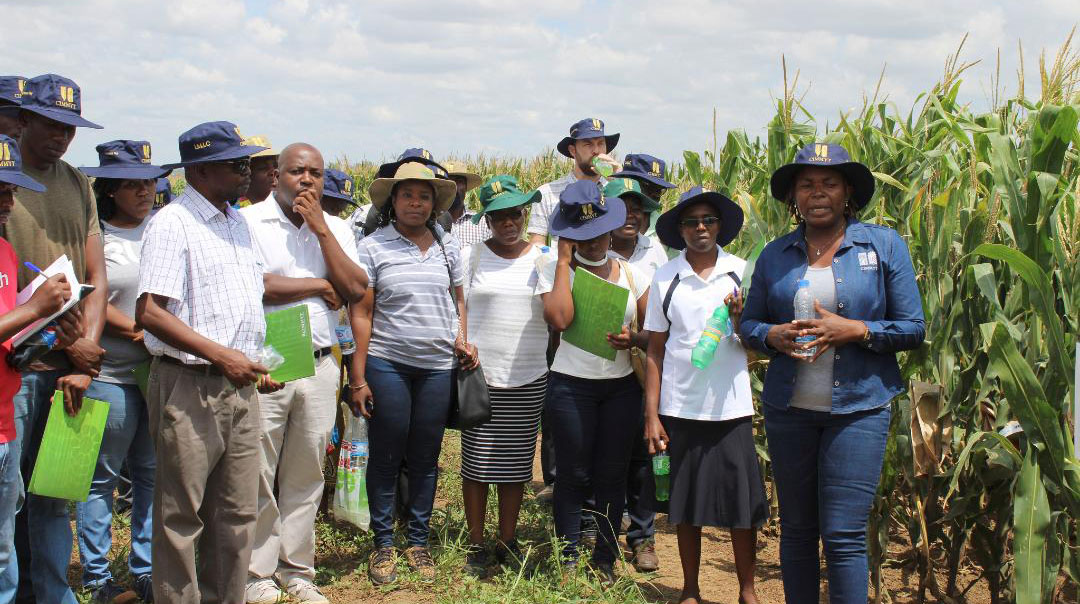
Tendai Chara
THE United Nations Sustainable Goal 2 seeks to end hunger, achieve food security, improve nutrition, and the promotion of sustainable agriculture by the year 2030.
Changing climatic conditions that have often resulted in droughts, cyclones and floods have, however, seriously derailed efforts so far made towards achieving these milestone goals.
Undeterred, stakeholders in the local agricultural sector are, however, leaving no stone unturned as they seek to achieve, at all cost, the set goals.
Agronomists, plant breeders, government officials, farmers, representatives of seed companies and research institutions recently gathered in Harare and exchanged notes on how they can work towards achieving the Vision 2030 goals.
Converging at the CIMMYT Research Station at the University of Zimbabwe Farm, the stakeholders were hosted by the Mexico-headquartered International Maize and Wheat Improvement Centre (CIMMYT) as part of the Southern Africa Regional Office Annual Partners Day.
Through research programmes, CIMMYT is dedicated to reducing poverty, increasing food security, human health and nutrition by developing drought and heat stress tolerant as well as nutritious maize seed varieties.
CIMMYT has been developing drought and heat tolerant maize varieties that give much better yields in drought years such as the current one.
In a speech read on behalf of the Minister of Lands, Agriculture, Water, Climate and Rural Resettlement, Minister Perrance Shiri, the Principal Director of Research and Specialist Services, Dr Canes Mguni said the ministry was cognisant of the fact that recurrent drought and climate change was one of the most challenges confronting Africa.
“It is indicated earlier that the Zimbabwean team has released a number of maize varieties (OPVs and hybrids) that are now on the market,” said Dr Mguni.
An update on the breeding of pro-zinc enriched maize varieties emerged as one of the major talking points during the day-long proceedings.
After successfully breeding pro-Vitamin A maize varieties, the focus has now been shifted towards the bio-fortification of maize with zinc.
Research has shown that zinc enriched maize reduces malnutrition, an important component of Goal 2. A number of health problems are associated with zinc deficiency like growth retardation, loss of appetite, and impaired immune function.
In more severe cases, zinc deficiency causes hair loss, delayed sexual maturation, impotence and eye and skin lesions.
Zinc deficiency also causes weight loss, problems with wound healing, decreased ability to taste food, and lower alertness levels.
Online sources indicates that zinc also supports a person’s growth and development, making it an essential mineral for pregnant women as well as growing children.
Dr Thokozile Ndhlela, a maize breeder with CIMMYT said zinc deficiency has become an international issue as children suffer from stunted growth.
According to Dr Ndhlela, the breeding of bio-fortified zinc maize hybrids is a key factor in the fight against malnutrition and general well-being.
“Work is in progress as we seek to develop local seed varieties that are zinc bio-fortified. We got breeding lines from Mexico. As you might be aware, Latin America has been in the forefront in releasing breeds for high zinc in maize,” Dr Ndhlela said.
The world’s first bio-fortified zinc maize hybrid, the ICTA HB 18, was first released in Guatemala in 2018 and was developed by CIMMYT, the CGIAR Research Programmes on Maize (MAIZE) and Guatemala’s Institute for Agricultural Science and Technology.
According to the research by CIMMYT, bio-fortified zinc maize hybrid contains more zinc and two and half times more quality protein compared to conventional maize varieties.
It is estimated that about 1,1 billion people in the world are zinc-deficient due to inadequate dietary intakes. The breeding of fall armyworm tolerant varieties and very early maturity maize varieties were some of the more topical subjects.
Dr Cosmos Magorokosho, another maize breeder, spoke at length on how research has helped South American farmers increase yields.
“We are working towards producing fall armyworm tolerant breeds and also on how local farmers can increase yields. We are getting breeds from South America that will help us achieve our goals,” Dr Magorokosho said.
According to Dr Magorokosho, maize yields potentials can go to as much as 25 tonnes per hectare provided the right seed variety is grown using good agricultural practices in an appropriate environment.
Local farmers have average yields of as low as two tonnes per hectare. The production of maize varieties that quickly ripen is a key factor in increasing yields and closing the hunger gap between one harvest and the next one.
In other regions of the world, some early maturity maize varieties can reach maturity in less than 90 days after planting.
The early maturity breeds local farmers can access reach maturity close to 100 days.
Speaking at the same occasion, Dr Elijah Nyakudya, the executive dean in the Faculty of Agriculture at the UZ said there is need for sustainable seed and cropping systems.
Dr Nyakudya said the UZ is changing its approach towards learning.
“In the past, we used to concentrate too much on theory and research. Our major focus now is on innovation and industrialisation. There is need for us to commercialise,” Dr Nyakudya said.
According to Dr Nyakudya, the UZ is completing an innovation hub and is also in the process of constructing an industrial park for the commercialisation of some of the innovations.



 Online Reporter