Rutendo Nyeve [email protected]
POWER utility, Zimbabwe Electricity Supply Authority (Zesa) Holdings, has recorded a remarkable financial performance for the first half of 2026, posting an operating profit of US$139,3 million, a 68 percent surge against a target of US$82,8 million.
Zesa business development manager, Mr John Mapani, revealed this during a presentation at a recent Ministry of Energy and Power Development Strategic Planning Workshop held in Victoria Falls.
Presenting the utility’s 2026 half year performance review, Mr Mapani attributed the impressive financial turnaround to a combination of strategic power trading, cost containment, and effective hydrological management at Kariba Power Station.
“The operating profit of $139,3 million against a target of $82,8 million represents a significant milestone in our journey towards financial sustainability,” he said.
“This was largely driven by successful trading on the Day-Ahead Market, where we secured a favourable average import tariff of 7,4c/kWh compared to bilateral tariffs of 13c/kWh wanted by Eskom and 12,8c/kWh from HCB and EDM.”
The financial gains were also supported by a 22 percent reduction in total expenditure against the budget, primarily due to reduced generation costs and electricity imports.
The operational efficiency has had a direct impact on power supply, with the country experiencing zero load shedding in 2026.
The average hours of electricity per day reached 24 hours, exceeding the H1 target of 14,9 hours by 61 percent, a massive improvement from the 11,75 hours recorded in 2025.
“The restoration of zero load shedding is a direct result of improved generation capacity and strategic imports. Our system load factor improved to 77,25 percent, up from the 65 percent target, indicating high utilisation across grid operations,” said Mr Mapani.
Despite a slight 2,4 percent shortfall in dependable generation capacity, which stood at 1 271,5MW against a target of 1 302,5 MW, the utility managed to keep the lights on.
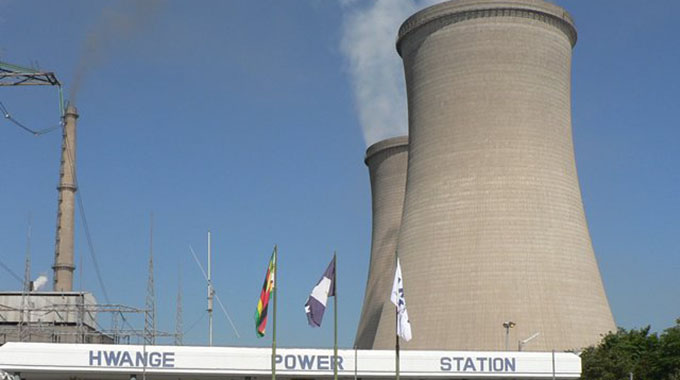
ZPC output exceeded targets, with Kariba outperforming by 3,86 percent and Hesco by 7,16 percent, offsetting underperformance at Hwange due to forced outages.
However, the review highlighted challenges in infrastructure expansion.
Grid reinforcement and extension stood at 275,7km against a target of 414,4km, while new customer connections were significantly below target at 16 430 against a goal of 160 000. Total system losses also increased to 22 percent, above the 18 percent target. Looking ahead, Mr Mapani outlined priority generation projects aimed at bridging the supply gap.
“We’re accelerating the Hwange 1-6 Rehabilitation, with Unit 6 statutory outage completed, and the Deka Upgradation project where 9 of 12 pumps are commissioned. The Kariba Unit 4 Turbine Replacement is also underway, with installation expected in 2027,” he said.
Other strategic projects include the Batoka Gorge Hydro scheme, with US$440 million equity committed by Zimbabwe and Zambia, and several solar projects including Gwanda, Munyati, and Plumtree.
The projects are critical as the forecasted demand is expected to rise from 8 843 GWh in 2025 to over 20 000 GWh by 2030. Mr Mapani emphasised that the profitability is crucial for capitalising the business and funding the expansion projects.
“The positive financial performance allows us to invest in maintenance and new capacity. However, we remain concerned about the high debtors book and vandalism, which cost the utility US$21,9 million in lost value between January and August 2026 alone,” he said.
Mr Mapani said while the financial and operational performance in H1 2026 is commendable, sustained investment in generation and grid infrastructure is essential to maintain the momentum and achieve universal access to electricity by 2030.