admin
admin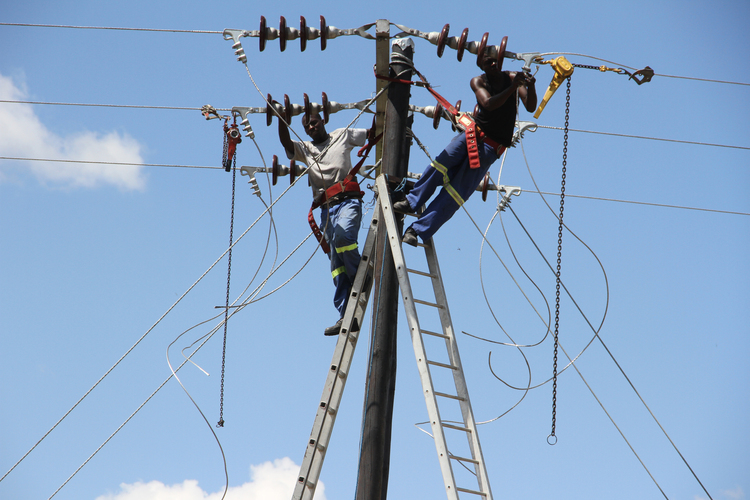
Africa Moyo
GOVERNMENT will effect a new electricity tariff once consultations have been finalised, it has been learnt.
The confirmation puts paid to market rumours that Government was indefinitely defer any tariff hike. Ordinary consumers, the Confederation of Zimbabwe Industries and Zimbabwe National Chamber of Commerce are broadly opposed to any hike. Equally, Competition and Tariff Commission chair Mr Dumisani Sibanda has said any increase would be unsustainable.
“When we look at our economy, it is in deflation and Zesa should be reducing its costs. If we increase tariffs when everyone in the economy is reducing charges, then we are not being sincere. We will actually be killing ourselves.
“When you look at the mining sector, it is suffering because of falling mineral prices. The mineral prices are envisaged to fall even further, which means the mining sector needs a cost reduction.
“Our industrial exports are also not competitive because of high production costs while local produce is more expensive than imported products,” said Mr Sibanda.
He added that there was need for Zesa to publish its financials to justify its proposals.
Government maintains that an increase is unavoidable considering that the Zimbabwe Electricity Supply Authority is importing power from Mozambique’s Hidroelectrica De Cahora Bassa and Eskom of South Africa.
If the Zimbabwe Energy Regulatory Authority approves the proposed increase, electricity charges will rise to USc14,46 per kilowatt hour — the regional average — from USc9,86/kWh.
Zera acting CEO Mr Edington Mazambani said last week, “That is not true (that the hike has been turned down) as the proposed application is still being considered in terms of the provisions of the law.”
In a recent interview with The Sunday Mail Business, Zesa Holdings CEO Engineer Josh Chifamba said the power utility could not be expected to operate profitably in the absence of a viable tariff. He also noted that electricity costs were not necessarily tied to factors driving down costs in other sectors.
“Our cost of production might be completely independent of everything that is coming down. Let them reduce the price of coal, imports from (Hydro) Cahora Bassa.
“We actually publish our results more timely than some listed companies. Our 2014 results have been published and we are doing the 2015 audit, an external audit (team) is here doing the 2015 results.
“I am surprised why not many people have not accessed our financials because we submit them to Parliament and it’s public. We are not a listed company, you know what I mean, and we do not have such requirements (to widely circulate results) but otherwise it’s a fact that we publish our results,” said Eng Chifamba.
In the year ended December 31, 2013, Zesa reported that its subsidiaries Zimbabwe Power Company, the Zimbabwe Electricity Transmission and Distribution Company, Zesa Enterprises and PowerTel Communications recorded losses of US$55,2 million, US$589 million, US$9 million and US$4,3 million respectively.
It also had a negative working capital of US$67,4 million. It is estimated that Zesa generates more than US$684 million in revenues per year. However, US$1 billion in bills remains uncollected.



 Online Reporter