Rutendo Nyeve, [email protected]
ZESA Holdings and Zhongjin Heli have launched a reforestation programme targeting more than 1 200 trees across institutions and public spaces in Hwange as the two entities seek to mitigate the environmental impact of power infrastructure development.
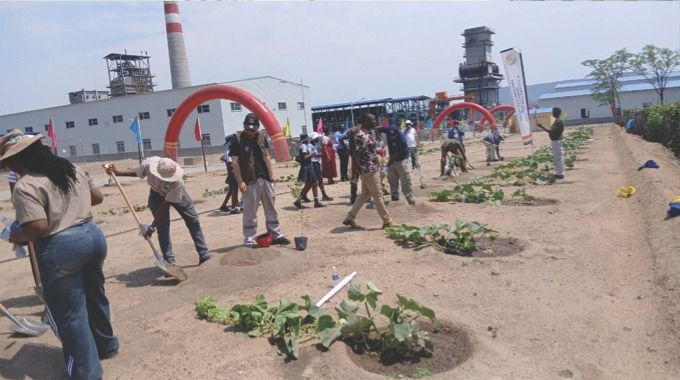
The Zhongjin Heli Reforestation Programme was officially launched on Wednesday at the company’s industrial park in Hwange, bringing together the power utility, private sector, traditional leaders and environmental agencies in a drive to promote environmental restoration.
The programme will see trees planted at schools, clinics, hospitals, Government offices and other public spaces, including 200 indigenous trees along the power infrastructure wayleave corridor.
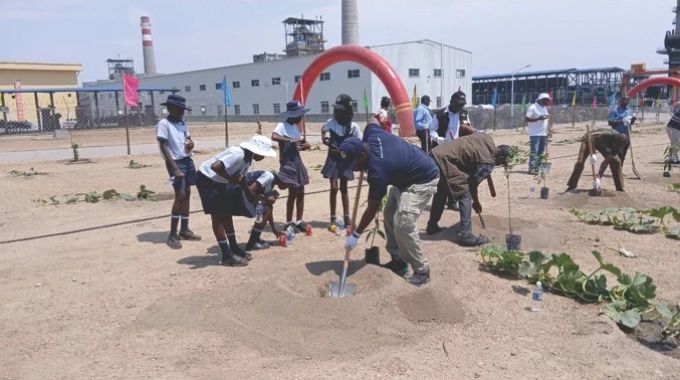
The selected species include mopane, msasa, acacia, muzonzo, tamarind, African kigelia and mukwa, alongside fruit trees expected to provide shade, nutrition and potential income for communities.
Speaking at the launch, Hwange Rural District Council chief executive officer Mr Phindile Ncube commended Zesa and Zhongjin Heli for working together to address the environmental footprint of infrastructure development.
“I commend Zhongjin Heli and Zesa for choosing to work jointly on this programme. When a contractor and a national utility commit to repairing the land and not just building on it, they set a standard for others to follow,” he said.
Mr Ncube said the Zhongjin Heli 100-megawatt and 112-megawatt thermal power projects had contributed to the country’s electricity supply, but their development also highlighted the need to balance infrastructure investment with environmental protection.
“Development of this size leaves a footprint. The construction of power infrastructure requires wayleaves and access roads that cut through land that our communities use for grazing and farming. Today is about how we answer that responsibility,” he said.
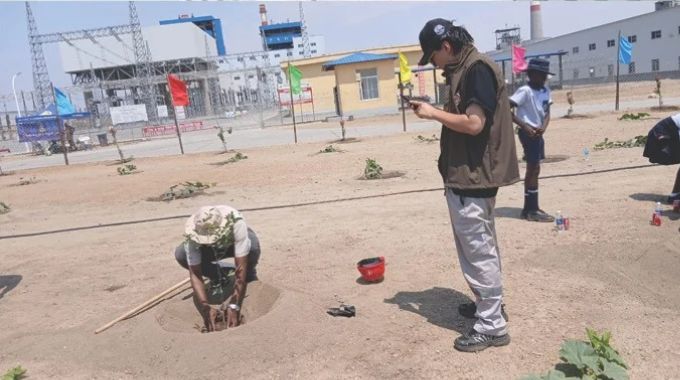
Mr Ncube urged beneficiaries and communities to take responsibility for nurturing the trees beyond the launch, saying the programme’s success would depend on their survival.
He said regular survival checks and progress reports would be submitted to the district, with success measured by the number of trees that survived and flourished rather than the number planted on launch day.
Mr Ncube also warned that trees must be planted at safe distances from electricity infrastructure to prevent branches and trunks from interfering with power lines as they grow.
“We plant these trees well clear of power lines so that as they grow tall they never touch or come close to the conductors. Tall-growing species should never be planted under or near power lines for your own safety,” he said.
The programme is also intended to support biodiversity and soil health while strengthening community participation in environmental conservation.
The launch was attended by Zhongjin Heli staff, traditional leaders, including Chiefs Shana, Nengasha and Nekatambe as well as representatives from the Forestry Commission, Environmental Management Agency, Zimbabwe Parks and Wildlife Management Authority (ZimParks) and various Government departments.
Mr Ncube also urged communities to protect electricity infrastructure, warning that the theft of conductors, cables and transformer oil undermined reliable power supplies and harmed local communities.
“I urge our traditional leaders and every community member to be the eyes and ears of Hwange. Protect the lines, report suspicious activity to the police and to Zesa, and refuse to buy or trade in stolen cables and metals,” he said.
The initiative aims to promote cooperation between industry and communities in protecting Hwange’s environment while supporting development for future generations.