Online Reporter
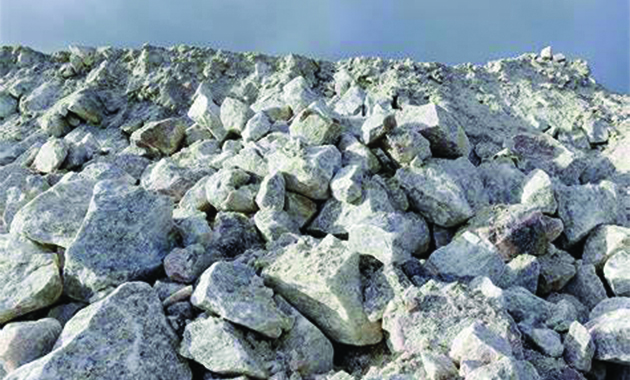
ZIMBABWE’S drive to extract greater value from its mineral resources is opening a new frontier in the lithium industry, with low – grade ore that previously had limited commercial value now being upgraded into export-grade concentrate at Zheli Lithium Mine in Zvishavane.
The development provides a practical example of how local processing can increase the economic value of Zimbabwe’s lithium resources while positioning the country to move further up the global battery-mineral value chain.
Zheli, which began operations last year, has invested about US$15 million in its processing operation and is now preparing for another major step up the value chain through the establishment of a lithium sulphate plant in the Midlands.
Equipment for the new plant is already in transit and the company targets establishing the sulphate plant in December.
At the moment, the company exclusively processes low-grade lithium ore supplied by Sandawana Mines, upgrading it into higher-grade concentrate for export.
Speaking during a media tour organised by the Minerals Marketing Corporation of Zimbabwe recently, Zheli general manager Mr Kudakwashe Zimondi said the operation was demonstrating the potential locked in lower-grade ores.
“Our mine supplier is Sandawana Mines. We only process low-grade lithium ores and the idea is to magnify the grade into a higher grade concentrate,” he said.
The processing operation currently has two lines with a combined capacity of about 900 tonnes a day.
Production is expected to exceed 1 000 tonnes a day once the second line, which has recently been completed, reaches full capacity.
Zheli operations manager, Mr Ding Xin Jie, said the company’s investment reflected its focus on adding value to Zimbabwe’s lithium resources locally.
“We have been focusing on the processing of lithium ores to add to the value addition and beneficiation thrust as required,” he said.
The planned lithium sulphate plant will take the company beyond concentrate production, marking another stage in the local processing of lithium.
“We are planning to set up a lithium sulphate plant somewhere in the Midlands for further beneficiation.
“We expect it in December and equipment is already in transit,” Mr Jie said.
The development comes as the Government intensifies efforts to ensure Zimbabwe derives greater economic benefit from its mineral resources by encouraging local processing and restricting the export of unprocessed minerals.
The policy shift is already being reflected in the country’s lithium export figures.
Lithium concentrates sales in the first eight months of the year rose 413 percent in value to about US$1,247 billion, from approximately US$243 million during the comparable period last year.
Volumes increased by 23 percent, from 663 833,13 tonnes to 816 774,35 tonnes, highlighting the significant increase in earnings relative to the growth in volumes.
Under the Government’s export quota framework, selected lithium producers have been allowed to continue exporting concentrate under conditions linked to the development of local processing capacity.
The Government has also said the lithium value chain has generated more than 5 000 jobs as the industry expands.
For Zheli, the next stage is to deepen processing while improving the resilience of its existing operation.
The company is stockpiling ore ahead of the rainy season to minimise potential disruptions along roads linking Sandawana Mines and the processing plant.
It is also recovering iron fines as a by-product, creating an additional revenue stream from the processing operation.
However, electricity costs remain one of the biggest operational pressures.
The company spends between US$150 000 and US$200 000 a month on electricity and is considering investing in solar power to reduce its energy costs.
“Electricity affects us a lot. We are paying between US$150 000 and US$200 000 per month. We have plans to set up a solar power plant,” Mr Jie said.
The company’s experience illustrates the wider transformation taking place in Zimbabwe’s lithium industry — from simply extracting the mineral to processing increasingly complex products locally.
With the planned sulphate plant, Zimbabwe stands to retain more value from its lithium resources while developing industrial capacity around one of the minerals expected to play a key role in the global energy transition.
And for Zheli, the journey from low-grade ore to concentrate and ultimately lithium sulphate also demonstrates the commercial possibilities that emerge when mineral beneficiation moves from policy ambition to investment on the ground.