Zvamaida Murwira-Senior Reporter
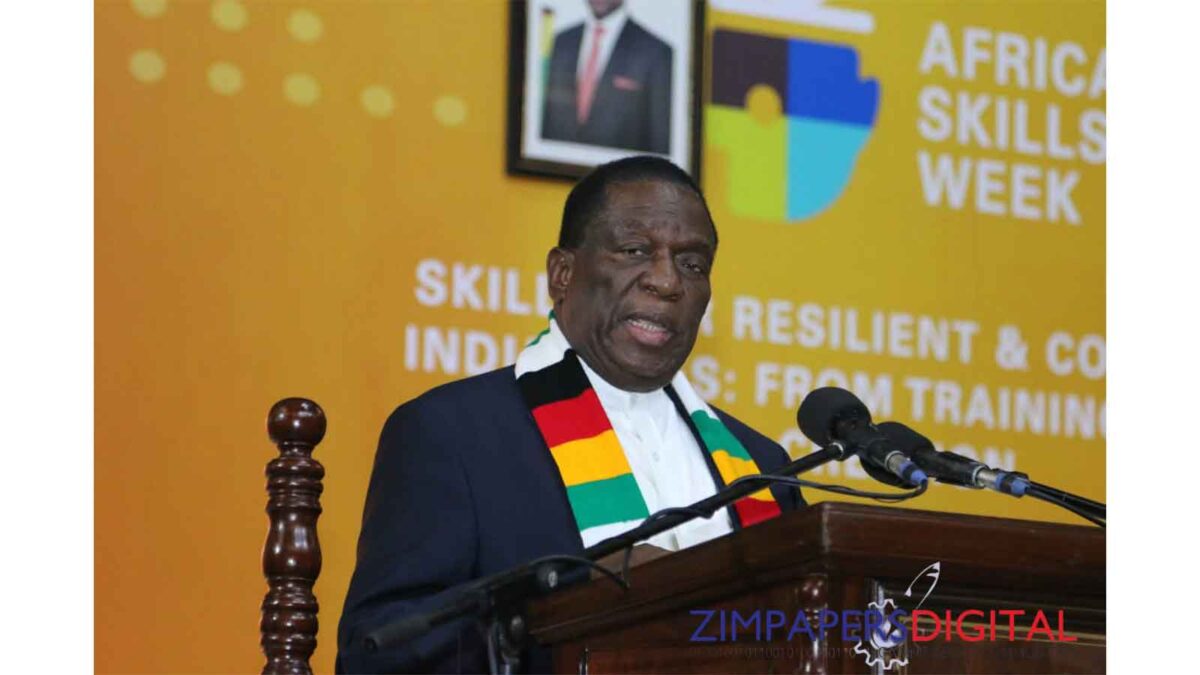
AFRICA’S development cannot be outsourced, but must be driven by its own citizens with the continent harnessing its immense demographic potential through targeted investments in skills, work-based learning and enterprise incubation, President Mnangagwa has said.
Opening the Third African Skills Week, which brought together policymakers, educators and academics from across the continent yesterday, the President said the continent’s future rested in African hands.
“Our continental vision, encapsulated under Agenda 2063, calls for an integrated, prosperous and peaceful Africа driven by its own citizens and representing a dynamic force in the international arena,” said the President.
“To realise the ‘Africa We Want’, development of our continent must be spearheaded by Africans. The development of our continent cannot be outsourced or rely on external formulas.”
The continent was endowed with young and talented people whose talents could be harnessed for the greater good of all.
“Africa possesses the youngest population in the world, with over 60 percent being under the age of 35. This represents both our key comparative advantage and a competitive force. The immense demographic potential must be converted through suitable investments in relevant skills, work-based learning and enterprise incubation as well as industrial development,” he said.
Zimbabwe took pride in the milestones it has realised, driven by the national development philosophy: Nyika inovakwa, inotongwa, inonamatigwa, nevene vayo / Ilizwe lakhiwa, libuswe, likhulekelwe ngabanikazi balo.
“This cardinal compass reinforces the Pan-African truth that the primary responsibility for economic transformation rests with the citizens of the nation. Under our National Development Strategy 2, Zimbabwe is prioritising human capital development, research, science, technology, innovation and modern industrial infrastructure as core drivers of inclusive growth.
“This institutional innovation ensures that our education and training outputs are continuously refined, benchmarked and aligned with current and future labour market requirements. Occasionally, national skills assessments are undertaken to ensure that resources are directed towards necessary training to meet current market and industry requirements.”
President Mnangagwa said Government’s heritage-based Education 5.0 model has resulted in academic institutions registering an increased number of patents and producing prototype technologies.
“These have seen the launch of commercial start-ups with a direct impact on day-to-day needs of communities and the economy as a whole. This model is an adaptable framework for the African continent, more-so, as we strive to connect learning and increased enterprise, production and productivity,” said President Mnangagwa.
The World Economic Forum had highlighted that global labour markets were undergoing fundamental structural shifts.
“Artificial Intelligence, advanced robotics, automation, cloud computing, and the green transition are reshaping workplace demands worldwide. Africa cannot be left behind and must remain fluid by embracing current trends, best practices and new technologies,” said President Mnangagwa.
“Our efforts under the skills transformation agenda must, therefore, continue to be responsive, adaptive and forward-looking. ICT and Artificial Intelligence literacy must be embedded across all levels of our education systems.”
The global imperative on building climate resilience required a rapid greening using Africa’s human capital base.
“This should be realised through adoption of sustainable construction technologies, renewable energy installation, bio-economy development, and climate-smart agriculture. In the enduring pan-African spirit of collective development, cooperation and continental integration, Zimbabwe stands ready to share insights and perspectives on the successful Presidential Pfumvudza/Intwasa agriculture climate-proofing model, among other initiatives,” said President Mnangagwa.
“We must, as a continent, remain capable of feeding ourselves.”
The operationalisation of the African Continental Free Trade Area (ACFTA) had opened up avenues for intra-African trade, regional value chain integration, and collective industrialisation.
“However, this will not only succeed based on increased tariff reductions, trade in human capability, high-value manufactured goods, processed agricultural products, and complex digital services across our borders,” said President Mnangagwa.
“Africa has an obligation to continue building broader specialised technical skills in logistics, green metallurgy, agro-processing, pharmaceuticals, packaging, and international trade law, among other critical facets of our industrialisation agenda.
“Under Agenda 2063 and the Action Plan for the Accelerated Industrial Development for Africa, local mineral beneficiation and value addition is now an urgent necessity. Our continent’s vast reserves of minerals, including lithium, platinum, nickel, cobalt, and rare earth elements, should never be extracted and exported as primary raw commodities. This counterproductive legacy should end.”
Through regional cooperation, Africa should establish regional centres of excellence to train the workforce that would power Africa’s green transition.
President Mnangagwa commended the African continent for dismantling structural barriers and occupational segregation that historically discouraged young women from pursuing science, technology, engineering and mathematics fields, as well as other technical trades.
Investing in human skills yields the highest return on investment for any sovereign nation.
“Therefore, financing the ongoing skills revolution requires innovative domestic resource mobilisation, leveraging national training levies, engagement with investors, and collaboration with regional financial institutions. As we engage at high-level panels, the skills development market-place and field visits, I challenge you to focus on concrete recommendations, observations and outcomes. Our deliberations must advance ‘African solutions to African challenges’,” he said.
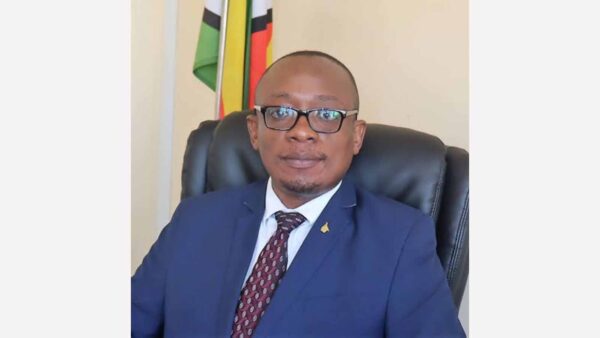
Skills Audit and Development Minister Dr Jenfan Muswere said President Mnangagwa’s drive to improve the education sector had caught the attention of the African Union, which now wanted him to be a Champion in Education and Innovation for the continent.
“I have just been reminded by the AU Commissioner in Charge of Education, Science, and Technology (Professor Gaspard Banyankimbona) that they have a request to His Excellency, President Mnangagwa, that he become the champion for Africa as a continent in terms of education and skills development,” said Dr Muswere.
The African Skills Week was important in that it provided emphasis on skills and their development.
The conference is being held under the theme: “Skills for resilient and competitive African industries: From training to value creation.”
The event drew participants from African leaders, policymakers, captains of industry, academia and youth.
It was attended by Cabinet ministers, legislators and diplomats accredited to Zimbabwe, among other participants.