Gibson Mhaka
Zimpapers Politics Hub
IN the enduring, complex narrative of Zimbabwe’s modern economic trajectory, monetary stability was long considered an elusive frontier.
For years, household budgets, corporate balance sheets, and long-term industrial planning were persistently eroded by currency volatility, diminishing public trust and an overwhelming reliance on foreign currencies for basic daily transactions.
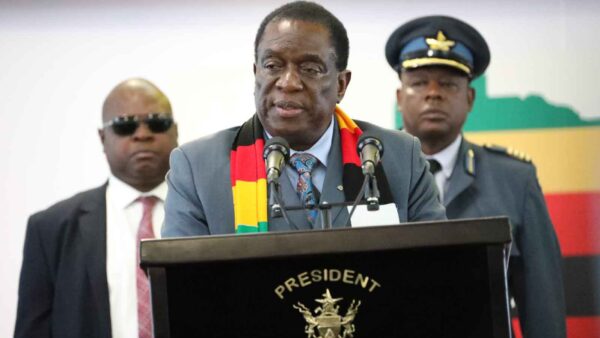
Yet, as the nation advances resolutely toward an empowered upper-middle-income society under President Mnangagwa’s Vision 2030, a decisive turnaround is taking shape across the financial landscape: the Zimbabwe Gold (ZiG) currency has completed its longest sustained period of stability since its launch in April 2024 — anchoring predictable prices, protecting household incomes, and restoring market confidence in domestic monetary policy.
This unprecedented monetary stability distances the country from its troubled financial past, most notably the hyperinflation of July 2008 when inflation peaked at an astonishing 208 million percent, wiping out local currency savings, dismantling household wealth, and severely eroding institutional trust.
Between February 2019, when the former Zimbabwe dollar was reintroduced and April 2024, when the gold-backed ZiG was officially unveiled, the domestic economy lacked prolonged, predictable currency stability.
The rapid devaluation and persistent depreciation of the previous local currency diminished public trust and entrenched widespread reliance on the US dollar for everyday commercial transactions.
Today, however, ordinary Zimbabweans whose real incomes were chronically eroded by volatility are experiencing the practical benefits of a predictable currency, reflected in stable grocery prices, consistent public transport costs, and protected domestic purchasing power.
The sustained stability of the gold-backed ZiG is the direct output of deliberate, disciplined, and multi-pronged macroeconomic reforms instituted under the Second Republic’s strategic policy direction.
By anchoring the domestic currency to solid physical reserves—including gold bullion, strategic reserve minerals, and foreign exchange holdings—and enforcing strict fiscal rectitude, the central bank and the Ministry of Finance have systematically dismantled the underlying structural drivers of currency inflation.
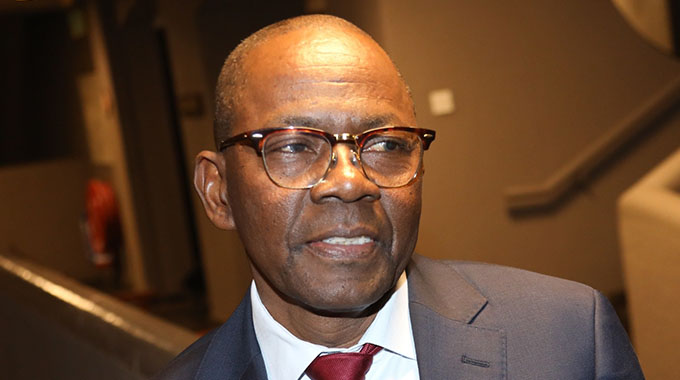
Addressing economists, corporate leaders, and policy makers while officially closing the 2026 Zimbabwe Economic Development Conference (ZEDCON) in Bulawayo recently, Reserve Bank of Zimbabwe (RBZ) Deputy Governor, Dr Innocent Matshe, highlighted how this robust macroeconomic framework has solidified market expectations and built lasting institutional credibility across the national financial system.
“There is currently sustained macroeconomic stability in the economy characterised by low single-digit inflation and a stable exchange rate,” said Dr Matshe.
“The stability has resulted in greater confidence in the domestic currency, monetary and fiscal policies among investors and other economic agents in the country.”
Empirical indicators across the financial sector validate this growing domestic and international confidence.
Zimbabwe has maintained annual ZiG inflation below five percent for eight consecutive months since January this year, with inflation hitting a historic 46-year low of 2,9 percent in August before moderating slightly to 3,7 percent in September following global crude oil price fluctuations above US$100 per barrel.
Furthermore, monthly ZiG inflation averaged a remarkable 0,4 percent over the January to September period, demonstrating exceptional domestic price stability.
On the foreign exchange market, the ZiG has traded steadily within a tight band of ZiG25 to ZiG27 against the greenback through the second quarter, while the parallel market exchange premium has compressed below 20 percent.
Reflected in disciplined monetary management, reserve money growth has remained comfortably within target parameters under the International Monetary Fund (IMF) Staff-Monitored Programme, while total foreign exchange inflows surged by 37,8 percent to reach a robust US$14,3 billion to August.
Demonstrating firmly anchored inflation expectations, the RBZ Monetary Policy Committee responded decisively on September 28 by cutting the policy rate from 30 percent to 27,5 percent, effectively lowering borrowing costs for productive business enterprises.
While monetary stability serves as an essential immediate relief for households and small businesses, its broader strategic value lies in its capacity to serve as a powerful catalyst for long-term capital formation and transformative national infrastructure development.
With annual ZiG inflation projected by the central bank to remain comfortably below seven percent by December 2026, the prevailing macroeconomic stability offers an ideal operating environment for attracting billions of dollars in domestic and foreign private capital into high-impact economic sectors.
Dr Matshe stressed that the current macroeconomic stability must now be aggressively translated into resilient physical infrastructure including modern highways, energy assets, water dams, logistics hubs, and airport expansions—to sustain Zimbabwe’s positive growth trajectory toward Vision 2030.
“The country’s various economic players are encouraged to embrace the prevailing favourable macroeconomic conditions in their concerted efforts towards building and utilising the key transformative infrastructure needed to sustain the country’s high positive growth trajectory,” Dr Matshe stated, emphasising that modern economic transformation requires broad multi-sectoral collaboration.
“A particularly important message emerging from this conference is that smart infrastructure requires smart institutions, smart financing and smart partnerships.
“Government alone cannot deliver the scale and sophistication of infrastructure required to transform our economy. We need stronger collaboration among the Government, the private sector, academia, and development partners.”
This call for collaborative infrastructure investment aligns seamlessly with the National Development Strategy 1 (NDS1) and its successor framework, NDS2, alongside the national philosophy Nyika inovakwa nevene vayo /Ilizwe lakhiwa ngabanikazi balo.
His remarks also highlight an important dimension of President Mnangagwa’s Vision 2030 agenda: stability must become a vehicle for infrastructure development, industrialisation and improved living standards.
Roads, dams, airports and reliable electricity supplies are essential for lowering production costs, improving connectivity and attracting investment.
By combining fiscal rectitude, disciplined reserve money growth, and private capital mobilisation, President Mnangagwa’s reforms are laying a durable foundation for self-reliant industrialisation.
Although further work remains to expand foreign exchange import cover from its current 1,7 months toward the six months required for a seamless mono-currency transition, the extended stability of the ZiG represents a landmark achievement in Zimbabwe’s monetary history.
Ultimately, monetary transformation is measured by its capacity to protect household livelihoods, foster domestic savings, and attract long-term capital.
By delivering prolonged currency stability and single-digit inflation, President Mnangagwa’s economic reforms have restored public trust, renewed investor confidence, and placed Zimbabwe on an irreversible path toward Vision 2030.
This sustained stability anchors long-term national prosperity, driving economic transformation across all sectors of the economy.