Online Reporter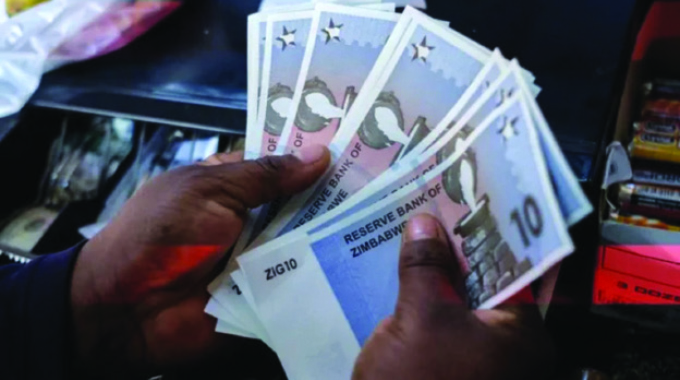
Tapiwanashe Mangwiro, Zimpaper Business Hub
ZIMBABWE’S gold-backed currency, the ZiG, has now enjoyed a sustained period of exchange rate stability against the US dollar since its launch in April 2024, restoring predictability to a banking sector previously unsettled by monetary turbulence.
Since its introduction 15 months ago, the ZiG has traded within a relatively narrow premium range on the parallel market, interrupted only by a one-off 43 percent devaluation in September 2024 before settling into a more consistent pattern.
This performance marks a significant departure from the chronic depreciation that previously fuelled speculative gains and eroded confidence in the local currency. Tighter monetary controls and a surge in foreign currency inflows have helped anchor inflation expectations, with businesses and lenders now adjusting to a more stable policy environment.
Presenting the Mid-Term Monetary Policy Review last week, Reserve Bank of Zimbabwe governor Dr John Mushayavanhu said the currency’s performance reflected a disciplined approach to policy-making.
“This comes at a time when the Reserve Bank has consistently walked the talk and stayed the course of durably anchoring and fostering price, currency and exchange rate stability, since the introduction of ZiG in April 2024,” he said.
The central bank’s stance, he added, has kept money supply growth aligned with targeted inflation and economic expansion.
The Government projects Gross Domestic Product growth of 6 percent in 2025, a notable improvement from the 1,7 percent expansion recorded in 2024, which was adversely affected by the El Niño-induced drought.
Foreign currency inflows reached US$7,2 billion in the first half of 2025, up from US$5,9 billion during the same period last year. These inflows, largely driven by exports and diaspora remittances, have provided the Reserve Bank with significant latitude to maintain currency stability, build reserves, and intervene in the foreign exchange market to smooth volatility.
Month-on-month ZiG inflation averaged 0,6 percent between February and July, while annual inflation is expected to close the year at around 30 percent, down from elevated levels earlier in 2025. For the financial sector, currency stability has prompted a structural shift in earnings.
According to brokerage firm FBC Securities, banks remained profitable in the first-half of 2025, although net profit declined to ZWG5 billion (US$184 million) from ZWG10,4 billion (US$760 million) in the same period last year.
Data from the first-half of 2025 shows a complete disappearance of revaluation gains on investment property and translation gains on foreign currency assets, which had accounted for over half of total earnings in the same period of 2024. Instead, banks are now deriving most of their income from traditional operations.
Interest on loans contributed 31,91 percent of total revenue, while fees and commissions made up 45,37 percent.
“This indicates a more stable operating environment, more predictable and better aligned with sound banking practices,” FBC Securities noted.
Profitability margins have narrowed, with return on assets at 4,4 percent and return on equity at 12,8 percent. However, analysts argue that the earnings base is now grounded in genuine intermediation and economic activity.
Banker Mr Raymond Madziva said the ZiG’s steadiness had provided lenders with greater clarity in managing their balance sheets.

“For the first time in years, we can model our loan books without constantly second-guessing the exchange rate. This is restoring confidence not only for banks but also for clients who transact in ZiG,” he said.
He cautioned, however, that the loss of currency-related windfalls requires a more disciplined growth strategy.
“The post-revaluation environment means banks must double down on core lending, fee-based services and digital products to sustain profitability.
The discipline this requires will make the sector stronger over time,” Mr Madziva said.
Economists have welcomed the improved monetary conditions but warned that sustaining stability will depend on continued fiscal discipline and steady foreign currency inflows.
A drop in commodity prices or remittances could quickly test the currency’s resilience.
For now, low monthly inflation, a firmer exchange rate, and a banking sector anchored on core income streams have lifted confidence in the domestic currency.