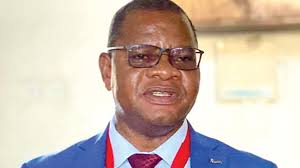
Theseus Mauruki Shambare
GOVERNMENT has allocated an additional ZiG4,7 billion towards water resources development in the 2027 National Budget to accelerate dam construction, expand irrigation and transform rural communities into productive economic hubs.
The funding, on top of the ZiG27,555 billion allocated to the Ministry of Agriculture, Mechanisation and Water Resources Development, is expected to strengthen resilience against recurring droughts and reduce reliance on rain-fed agriculture.
Permanent Secretary Professor Obert Jiri said the additional resources would fast-track dam construction, irrigation expansion and the rollout of Village Business Units (VBUs) in anticipation of possible El Niño conditions.
“The core focus of our 2027 budget allocation is driving a robust climate response at two levels: at the household level through conservation agriculture (Pfumvudza/Intwasa), and at the macro level through irrigation development to counter the ongoing El Niño threat,” he said.
Government is also implementing the Dam Infrastructure 6.0 model, designed to transform water bodies into multi-purpose economic hubs supporting irrigation schemes, fisheries, water reticulation and mini-hydropower generation.
“Under this model, the dam wall itself is not the end project; rather, irrigation schemes, fisheries, water reticulation and mini-hydropower become the active economic projects surrounding that water body,” said Prof Jiri.
“Wherever we impound water, we immediately deploy these interventions to transform communities and sustain agricultural output regardless of rainfall patterns.”
Commercial Farmers Union president Dr Shadreck Makombe welcomed the allocation, noting that irrigation development is critical for sustaining agricultural production amid increasingly erratic rainfall patterns.
While calling for effective implementation, rehabilitation of existing schemes and affordable water and electricity tariffs, he said: “Water infrastructure should be viewed as an investment in national food security, employment creation and economic growth.
“If properly implemented, these projects can improve agricultural output, support rural livelihoods and reduce the country’s vulnerability to drought.”
Zimbabwe Tobacco Growers Association president Mr George Seremwe echoed the sentiment, saying reliable water supplies are essential for sustaining tobacco production, maintaining leaf quality and improving yields beyond the traditional rainy season.
Calling for affordable access to water and the rehabilitation of irrigation schemes, he added: “Investment in water infrastructure is an investment in agricultural productivity, rural employment, export earnings and the sustainability of the tobacco industry.”
Prof Jiri said macro-level water projects complement household climate-proofing measures being implemented under Pfumvudza/Intwasa, where more than 15 million plots have already been prepared across the country.
He urged farmers to prioritise drought-tolerant crops such as sorghum and millet, apply heavy mulching and implement timely agronomic practices to conserve soil moisture.
Beyond water infrastructure, the ministry is strengthening the sustainability of Village Business Units, supporting agricultural value chains and promoting the local production of acaricides and vaccines to protect the national herd against foot-and-mouth disease and January disease.