Vusumuzi Dube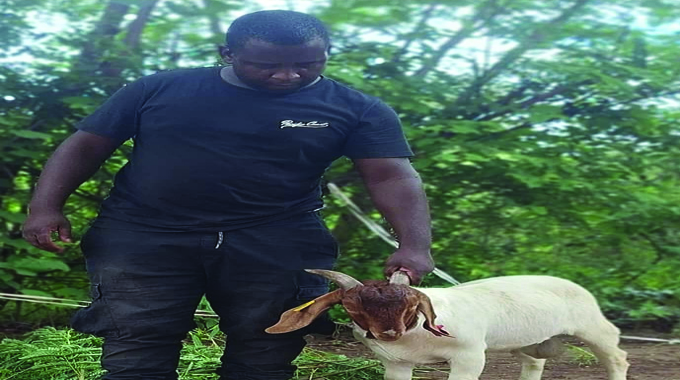
Thupeyo Muleya
IN the arid, yet majestic landscape of southern Zimbabwe in Beitbridge District, a remarkable transformation is taking place as communal farmers take agriculture, mainly livestock production, as a business.
In fact, a quiet revolution is underway.
Communal farmers, long accustomed to raising traditional livestock breeds in the period before and a few years after independence, are increasingly turning to improved varieties that promise better yields, greater resilience and increased profitability.
This shift is transforming not only the farmers’ livelihoods but the entire rural economy as well, as communities reap the benefits of enhanced food security, improved nutrition, and newfound economic opportunities.
Once characterised by dwindling cattle herds and stagnant agricultural growth, the Beitbridge area is now a beacon of hope for rural development, thanks to innovative initiatives that are transforming the local livestock sector.
The area has an estimated 200 000 cattle, 150 000 goats, 90 000 sheep and 40 000 donkeys.

Crop production, especially the horticulture sector, remains at its lowest due to erratic rainfall patterns.
According to agriculture experts, Beitbridge requires an average of 400mm of rainwater for a successful cropping season.
However, in the last decade, most areas in the district have been receiving 80mm.
This area falls under Natural Region 5 and 3 respectively.
Many communal farmers have turned to several adaptation methods in the agricultural sector which include irrigation-based farming that uses mainly solar energy and drip irrigation.
However, livestock ranching, mainly cattle, goats, and sheep have become the main economic activity in the district.
Due to droughts, many farmers had to watch in despair as their herds of cattle got decimated.
At some point, the district lost more than 500 cattle due to drought induced deaths.
But the tide has since turned and in the last decade, the number of high value breeds of sheep, goats and cattle has been increasing around the district producing a new breed of indigenous farmers.
It’s no longer business as usual as indigenous farmers have hugely penetrated the livestock market once dominated by mostly commercial farmers before independence.
A development worker, Mr Enock Kwinika said high value breeds of goats and cattle have improved returns on investment for farmers.
“Many rural farmers have embraced Boer goat production. These goats are bigger than the traditional goats,” he said.

“Even if you decide to sell four-month old kids, you can still get more money than selling an adult traditional goat.
“Rural farmers should continue working with non-governmental organisations (NGOs) and Government extension workers to get advice on farming as a business and types of goats and cattle they can keep.”
Mr Kwinika said farmers need to invest in more breeds which can easily adapt to the climatic conditions in Beitbridge to increase production.
He said it is also important for development agencies to carry out more research on types of breeds which can do well in Beitbridge.
A rising livestock farmer from Lutumba area, Ward 15, Mr Phumudzo Mudau said after undergoing training and exposure to new market trends, many farmers were taking livestock production as a business and not as a culture.
“We are investing in better breeds to improve growth rate. It is important to note that these goat breeds like Boer goats, Kalahari Reds and Savannah can generate more money compared to our local breeds.”
Dr Anna Muleya, chairperson of the Beitbridge Business Expo said the introduction of high value breeds were giving farmers higher returns on their investment.

She said some are now able to compete in markets that require high value breeds, especially the export markets.
“I think an increase in security in the communal areas will help farmers get better returns because they are losing a lot due to rampant stock theft. Farmers also need to be trained on the right techniques of taking care of high value breeds,” she said.
Renowned goat breeder, Mr Ntandoyenkosi Ndlovu said having a better breed of goats, sheep or cattle is positive economic development that has improved the livelihoods of communal farmers in the district.
He said there is a notable improvement in new goat breeds’ milk and meat compared to the local breeds.

“When you adopt a new livestock breed you are assured of better quality of both milk and meat which means better returns,” said Mr Ndlovu.
Beitbridge and Gwanda farmers are buying Boer goats and crossing them with Matabele goats that produce more milk.
Mr Ndlovu said the growth rate of goats is improving especially for those targeting the meat market.
These are drought tolerant breeds that grow faster with improved carcass weight.
He said the new breeds of goats fetch better returns on the market, ranging from US$150 to US$250 for cross breeds. This is better than selling a local goat for bwtween US$25 and US$30.
Beitbridge Rural District Council acting chief executive officer, Mr Peter Ncube said goats were now being sold together with cattle at auction sales.
“Goats are now recognised as an economic driver and we are now experiencing a number of farmers from up north coming to Beitbridge to buy breeding goats,” said Mr Ncube.
“You might recall back then that a goat was not treated as an economic asset and its rearing was just for subsistence purposes.
“This has changed now because of the new breeds that are giving farmers more money compared to the past. Farmers no longer engage in livestock farming for just symbolic reasons as was the case before,” he added.
Businesswoman and farmer, Mrs Nokuthula Ngwenya said many of her colleagues were realising high returns from better breeds of cattle and goats.
“It is also pleasing to note that even women are taking up opportunities in livestock production.
From a woman’s point of view, this development is creating another revenue stream for many families,”she said.

Beitbridge District Development Coordinator, Mrs Sikhangezile Mafu-Moyo, said an improvement of livestock breeds was a positive development as the country moves to achieve an improved rural economy by 2030.
She said the Government and its partners continue to create an ideal environment for investment in livestock production, which is a major economic driver for the majority of Beitbridge communal farmers.
Mrs Mafu-Moyo said the farmers were also engaged in market-led production with some of them already supplying a ready and ever-growing market.
“We are now seeing people taking farming as a business and that is changing lives in rural areas,” she added.
Beitbridge agricultural extension services officer, Mr Masauso Mawocha said recently that they carried out an artificial insemination project where a total of 1 200 cows were administered with high quality Tuli, Boran, and Brahman semen between 2019 and 2021.

“Over 500 farmers (including the youths) around Beitbridge District have been sensitised to take up the technology as a business,” said Mr Mawocha.
He said they had also trained farmers on breeding bull management.
“We encourage livestock farmers to practice good animal husbandry initiatives such as dehorning, castration, proper dosing, effective tick control, and proper livestock feeding regimes.
“They must also consider embracing the introduction of breeds which have weight such as Tuli, Boran, and Brahman although Brahman is susceptible to drought,” said Mr Mawocha.


 Online Reporter