

 daniel chigunwe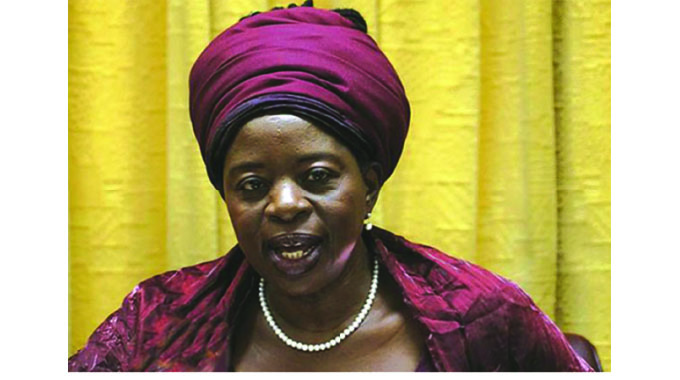
Oliver Kazunga
Senior Business Reporter
ZIMBABWE and rest of Africa need to increase the pace of their industrialisation in order to fully exploit the vast raw materials on the continent and export value added goods, a Cabinet Minister has said.
In an interview with Zimbabwe Television Network (ZTN), Industry and Commerce Minister Dr Sekai Nzenza said it was agreed at the summit on Africa’s industrialisation agenda held in Niger towards the end of last year, that it was high time the continent fully embraced the need for value addition and beneficiation.
“What we now need to do is to embrace Africa’s industrialisation agenda.
“At the end of last year, we were in Niger for a summit on Africa, this (summit) was clearly focusing on the future of industrialisation in Africa and the key take away was that Africa has so much raw materials in mining for example.
“And also when we look at agriculture, we can grow cotton and what is happening, which is sad, is that the raw cotton in East Africa and Zimbabwe, we are exporting it raw Africa and the value addition and beneficiation happens outside,” she said.
She said through the African Continental Free Trade Area (AfCFTA), which Zimbabwe is signatory to and has deposited its instrument of ratification (document by which a State expresses its consent to be bound by a treaty), as the continent seeks to promote economic integration.
AfCFTA, which was operationalised on January 1, 2021, is a continent-wide market of about 1,3 billion people.
Zimbabwe has submitted the draft of its proposed AfCFTA tariff market access offer to the African Union Commission for consideration
“We will begin to review the tariff situation to enable those who are producing locally to be able to get value from what they produce.
“But more importantly, I am very keen on the beneficiation aspect whereby the cost of production will be less if we look at the latest technology within Zimbabwe,” said Minister Nzenza.
She expressed confidence that the implementation of the AfCFTA will significantly promote economic integration on the continent, adding that Zimbabwe stands a chance to benefit from the initiative.
For instance, as part of the AfCFTA initiative, Zimbabwe and Zambia have an agreement to implement a common agricultural market.
“We have an agreement now with Zambia to work on a common agricultural market where this is coming under the AfCFTA and supported by Comesa (Common Market for Eastern and Southern Africa).
“We are now at the stage of doing a feasibility study to see how best we can create a common agriculture market between Zambia and Zimbabwe,” said Minister Nzenza.
“It’s also happening between different countries. Dairibord (Zimbabwe) for example, increased their production and they are exporting across the borders. There are so many different companies and my ministry has got a whole list of companies that are trading outside Zimbabwe and also importing.”
Commenting on the recently held 63rd edition of the Zimbabwe International Trade Fair (ZITF) in Bulawayo, she said the country’s premier expo was absolutely successful on the back of the Second Republic’s desire to improve the ease of doing business as well as engagement and re-engagement drive with the international community to enhance trade and investment in the country.
“With all these policies, the onus is now on us to begin to implement the National Development Strategy 1. We also need to look back to see what was the image of Zimbabwe in the last 20 years and how much has changed over a number of years.
“What was really significant about ZITF this year is that we came to the realisation that the policies that we have been talking about have been working and this can also be measured by the number of exhibitors that participated at the trade fair,” she said.
A total of 21 foreign nations participated at this year’s trade fair compared to 13 last year.
The European Union (EU) delegation attended the ZITF for the first time since the Government embarked on the land reform programme in 2000, and this was also an indicator that the Second Republic’s engagement and re-engagement drive was bearing fruit.
In the past, individual States from the 27-member bloc such as the United Kingdom, and Germany have participated at the ZITF.
At this year’s trade fair, the EU delegation comprised countries such as Sweden, Germany, France, Italy, and the Netherlands.
Belarus, an Eastern European country but not a member of the EU, also participated as a new entrant at the 2023 ZITF which was held under the theme, “Transformative Innovation, Global Competitiveness”.


 Online Reporter