admin
admin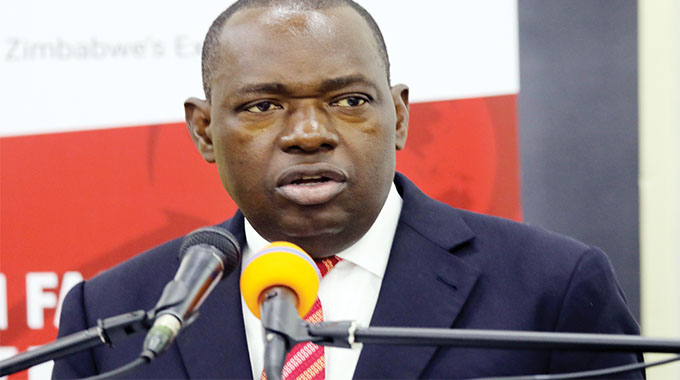
Zvamaida Murwira, Harare Bureau
Zimbabwe has registered significant political, legal and economic reforms, including implementing recommendations made by several election observer missions, and it is time that Harare is allowed to re-join the Commonwealth, a Cabinet Minister has said.
Foreign Affairs and International Trade Minister Sibusiso Moyo said this in an article published in an Australian-based publication, The Spectator, where he was imploring member countries that include Canberra to lend their support to have Harare re-join the 53-member body after it withdrew in 2003.
Australia is one of the founding members of the 53 Commonwealth member countries and its former president, Mr John Howard, was part of a Troika that suspended Zimbabwe before Harare eventually withdrew from the body the following year.
The call to have Zimbabwe allowed to re-join the Commonwealth followed a meeting between President Mnangagwa and Commonwealth secretary general, Mrs Patricia Scotland last month on the sidelines of the United Nations General Assembly.
In the article published yesterday, Minister Moyo said Mrs Scotland had rightfully observed that Zimbabwe had embarked on major reforms that included repeal and replacement of laws that infringed personal and economic freedoms, a process he said was already underway.
He said the reforms had led to a rise in global rankings for freedom of expression – and place Zimbabwe amongst the top 20 improvers in the World Bank’s Doing Business 2020 index.
“Yet, after two decades of isolation, blanket change is required,” he said. “Our reform agenda has only just started, and therefore is today, partial – and we do not pretend otherwise. Currently, we are undertaking all these reforms – all the painful processes that are needed and necessary – without any form of external assistance.
“But, ultimately, we cannot go it alone – and that’s why Zimbabwe now looks to Australia for support to expedite our readmission to the Commonwealth. Put simply, our speed and capacity to complete reforms after Mugabe-era isolationism can be accelerated by our Commonwealth return.
“Similarly, the bilateral partnership between Australia and Zimbabwe and opportunities for Australian businesses only benefit from the inclusion of both nations within the Commonwealth family.”
Minister Moyo said Government’s economic changes were making Zimbabwe once more open for business – coupled by the potential of economic collaboration in the areas of mining, energy and agriculture where Australia is acknowledged as a world leader.
“Specifically, the Government has implemented ground-breaking reforms to land tenure laws – and is dispersing compensation to former white farmers removed from farmland dating back to the late nineties and early 2000s – events which led first to Zimbabwe’s suspension from the Commonwealth in 2002 after decision of a ‘troika’ of Commonwealth leaders – including then prime minister John Howard, and later Zimbabwe’s unilateral withdrawal,” he said.
“Under new laws, farmers are provided with tradable 99-year leaseholds; agriculture sector majority ownership and farmland leases are fully available to both overseas nationals and international businesses – including, of course, from Australia.”
Minister Moyo said time had come for Zimbabwe to re-join the Commonwealth and it was imperative to have the support of Australia. He said prosecution of offenders of the August 1, 2018 post election violence will commence next year as law enforcement agencies would have finalised investigations.
“Zimbabwe has rapidly begun the task of implementing the (Motlanthe) Commission’s key recommendations – that include reforming legislation on law and order, freedom and liberalisation of the media and electoral reform – and we can expect prosecutions of those responsible to begin next year, after the police and prosecution services have completed their post-inquiry investigations,” said Minister Moyo.
In his address at the UN General Assembly recently, President Mnangagwa said it was important to note that Zimbabwe had not been expelled from the Commonwealth, but had withdrawn and the issues that led to its pulling out, that of land reform, had since become water under the bridge.


 Online Reporter