Online Reporter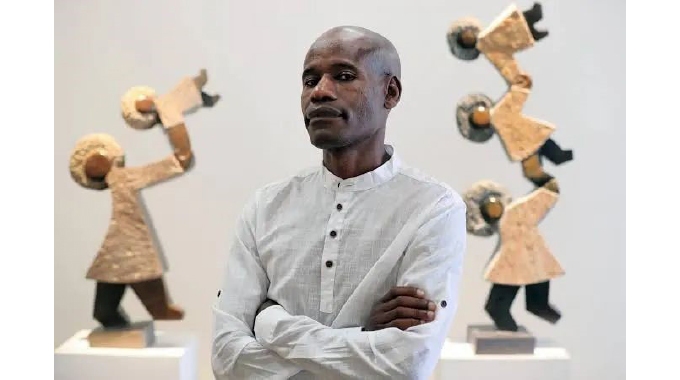
H-Metro Correspondent
Renowned sculptor Dominic Benhura has looked East.
The award-winning artist, known for his work through the medium of stone − more commonly referred to as Shona sculpture − has set sights on leaving a mark in Asia.
While most of Benhura’s work has had a footprint in Europe, with pieces in major cities and galleries in Europe and the United States of America, Benhura has set sights on the Chinese market – and it has reaped early rewards.
Benhura, who is featured in the documentary ‘Zimbabwe-China Relations @45’ − released last week by a local think tank − reveals how he has literally carved a new niche in China, starting rather auspiciously.
“As you know, the President of China, His Excellency Xi Jinping, has two of my pieces,” he tells the documentary producer. The pieces in question, were given to the Chinese leader as presents. Benhura continues: “After the President’s gifts, I also did some pieces which were presented to some Chinese officials…I had a lot of coverage from Chinese journalists who are stationed in different parts of Africa; they all came here. I was on many platforms and newspapers and interviews.
“So as a result, I have a lot of friends and clients from China,” Benhura said.
Nearly 50 years since breaking onto the scene and becoming one of Zimbabwe’s globally recognised cultural workers, the internationally acclaimed Benhura has in recent years showcased in China, including at the 9th Beijing International Arts Biennale held in 2022, which promotes global harmony through contemporary artwork exhibitions drawing over 5000 artists from 114 countries.
Benhura’s new strategic direction and focus onbthe Chinese market represents a new direction for the arts industry, building on strong bilateral ties, cultural exchange and people-to-people interactions.
The CEO of the National Arts Council of Zimbabwe, Napoleon Nyanhi, reveals that Zimbabwe and China are cooperating widely in the areas of arts and cultural exchange, noting that there are many opportunities that could transform the local sector.
“The National Arts Council of Zimbabwe has been at the forefront of facilitating for young people, artists and practitioners to have exchange programmes with their Chinese counterparts,” Nyanhi says. “Those exchange programmes have been of great benefit to our artists in the country,” he said.
DreamStar − a Chinese sponsored nationwide talent search competition that showcases and empowers young Zimbabwean creatives in fields such as music, dance, and beatboxing – is an example of close cultural collaboration between the two countries. Winners get prizes, recording contracts and opportunities to tour and showcase in China. The talent show has unearthed massive Zimbabwean gems in the arts sector including the award winning Zimbabwean afro contemporary musical group, Fusion 5 Mangwiro.
Ruzivo Media & Resource Centre team leader and documentary producer and director, Tichaona Zindoga said: “This arts and cultural exchange aspect highlights the important yet sometimes overlooked aspect of relations between Zimbabwe and China.
“Art and music are universal languages which have the potential to unite people and deepen friendship, and it is in the interest of stakeholders to invest in this to promote and engender friendship between Zimbabweans and Chinese people, especially so among the young generation.”