admin
admin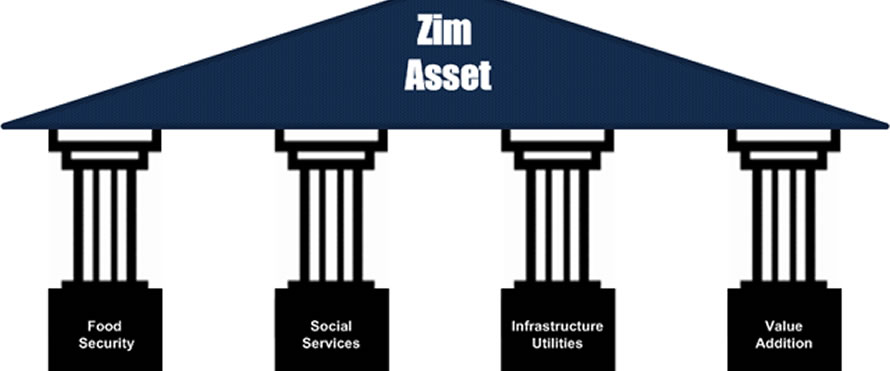
 Cliff Maringauta
ONE of the fundamental tasks of governments worldwide is to take a leading role in the creation of employment for citizens hence the resuscitation of industries in the country and Bulawayo in particular is very crucial.The crafting of the economic blueprint, the Zimbabwe Agenda for Sustainable Socio-Economic Transformation (Zim Asset) last year was long overdue.
It is one programme, which is people centred and bound to transform their lives.
However, I must point out that the implementation of the economic blueprint will not be a walk in the park as corruption, if left unchecked, is likely to derail its progress.
We look upon the Government to put tight measures in place and come down heavily to fight this monster called corruption in order for the country to see the fruits of Zim Asset.
Once upon a time there was a fund for struggling companies named Distressed Industries and Marginalised Areas Fund (Dimaf), which I believe was crafted to help in the resuscitation of industries but instead of delivering on its original mandate, the fund was hijacked by politicians as they spent most of the time arguing on the modalities rather than allocating that money to the companies and save them from closing down and save jobs.
To date we do not know how many jobs were created or saved because of the fund.
All I am saying is that the Government has a big role to play in the creation of employment.
The efforts by Government to attract Foreign Direct Investment (FDI) has been to some extent scuttled by corruption, which has been highlighted extensively in the media.
Zimbabwe is not a failed State as prophets of doom would want the international community to believe. In addition Zimbabweans have become self critique to the extent that it has become self-destructive.
Let’s join hands and work for the good of this nation after all there is only one Zimbabwe which we must be all proud of.
The coming on board of Zim Asset was long overdue as on paper it seems as the medicine that the doctor has prescribed.
But I must be quick to point out that creating an economic blueprint is one thing and implementing it is another.
Thus the creation of employment or saving of jobs which are about to be lost should be among the Government’s top priorities.
In Bulawayo there are number of companies whose capacity utilisation need to be increased and some whose machinery is now obsolete.
These are some challenges which Government should move with speed to address.
The re-engagement of the international community on our terms should be revisited as it will rescue the situation in a big way.
Leadership in various organisations need to devise a cocktail of measures to save the institutions they lead particularly those in Government.
An example is the engagement in Private Public Partnerships initiatives.
I have seen them transforming organisations in a big way because leaders are employed to think outside the box than being crybabies.
The PPP initiatives under way at Mpilo Central Hospital is a typical example of how such initiatives can transform institutions.
A snap survey will point to a massive transformation in a big way. In fact the results are there for everyone to see and the health care delivery system at this institution is set for a big transformation.
All this is done under their theme “Towards being the centre of excellence in health care provision”.
The objective here is to turn Mpilo Central Hospital into a world class health delivery centre.
I mentioned the influx of cheap imports and their impact on our economy in this publication on this column in 2012 but am afraid to say that the situation has not improved much if anything it is worse as shown by the trade deficit between this country and mainly South Africa — Zimbabwe’s biggest trading partner in Africa.
This shows how our import bill has continued to balloon while our own industries continue to suffer from reduced markets and uneven competition.
Even goods which were banned by the Government are still finding their way into our shops raising suspicions that our borders are not as tight as we are made to believe.
I must, however, be quick to point out that it is not all gloom as the poultry industry has come out of its shell as evidenced by the increase of locally produced poultry products especially chickens and eggs, well stocked in most supermarkets.
If sentiments by the National Employment Council for Clothing Industry that since 2006 more than 19 000 jobs have been lost are anything to go by then the Government should have taken measures and moved with speed to avert such catastrophe.
The Government should move swiftly and save the textile industry, which was once one of the biggest employers in the country.
Some of the challenges faced by our industries can be averted by controlling the influx of cheap goods and smuggling of second-hand clothes, availing cheap funds to support operations and limiting load shedding in industrial areas.
Zesa is a Government institution hence the need to monitor how it operates and proffer direction on how to minimise the effects of power shortages.
Cliff Maringauta is an economic analysts employed in the chain supply of a leading healthcare provider and writes in his own capacity. He can be contacted on [email protected] <mailto:[email protected]> or 0772393536/0713047811.



 derick.khumalo