

 admin
admin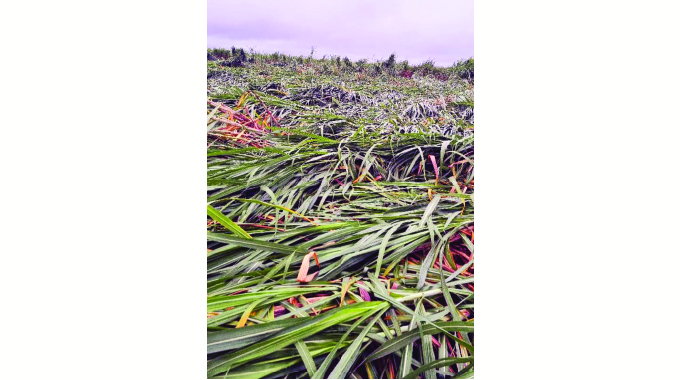
Zvamaida Murwira Senior Reporter
Zimbabwe is now much better prepared to deal with cyclones as was seen by the measures taken in advance to warn everyone about Tropical Storm Freddy, which even though it was less powerful than expected still brought heavy rains, and the emergency relief efforts that have already started, Local Government and Public Works Minister July Moyo said yesterday.
All civil protection units remain on high alert as damage reports are assessed and emergency action taken, the Minister said in an interview, and he expected that some of the repair work on schools and other public buildings could now start almost immediately since local authorities have access to devolution funds, so pupils will not have to study long in emergency tents if their classroom was damaged.
Minister Moyo said the Government had deployed a team to assess the magnitude of damage and would be using Air Force of Zimbabwe helicopters in some areas in Gokwe North where floods cut off roads to move in emergency supplies.
“We are thankful that Freddy has not been as devastating as we had imagined. When it landed on the coast of Mozambique after spending days in that country, it weakened.
“By the time it landed in Zimbabwe it had been reduced significantly, but there were still heavy rains in some parts of southern Zimbabwe and we still had floods in affected areas and infrastructure damaged, particularly schools and houses. All our civil protection units have been put on high alert and remain on alert,” said Minister Moyo.
“Over the weekend we sent a team to assess on the ground what was happening in the more devastated areas of Binga, Gwanda and Gokwe North.
“We still want to use helicopters to give assistance to some areas that are not accessible particularly in Gokwe North and we are working with the Air Force of Zimbabwe and Civil Protection Department here in Harare so that we can assist those people. They have no food.”
In Beitbridge, there was a secondary school damaged and a bridge swept away and Government was already working with development partners to have the infrastructure attended to.
“We are appealing to well-wishers and development partners who have been working with us so that we can assist those people. Where schools have been damaged we have got assistance from development partners in order to have tents so that schooling can continue.
“The visit by our team from Harare accompanied by development partners was not just assessing the damage, but also the preparedness of our teams who are in the districts throughout Zimbabwe,” said Minister Moyo.
“We are happy to report that the level of preparedness is much better than we have had in the past. This is because last year when we expected normal to above normal rainfall we presented to Government our preparedness planning.
“It involved all the Ministries and local structures and local authorities. In the case of Beitbridge, for instance, the local authorities is assisting the affected areas in terms of re-building schools.
“That means our devolution funds can be used to quickly do some work which could have taken longer if the money was coming from central Government. So prepositioning of resources whether food or other items help us to overcome any devastation that might take place.”
Minister Moyo said early warning systems where now active and effective since the time of Cyclone Idai around 2019.
“You will have realised that this year and last year especially after Cyclone Idai, the Meteorology Service Department has sharpened its tools in giving us early warning. They have not failed us this season. They work closed with CPU; they have been issuing statements,” he said.
Minister Moyo said it was critical that lower structures such as traditional leaders, village heads, local authorities continue to take the early warnings seriously so as not to be caught off-guard.
The weakened Tropical Storm Freddy has killed one person, damaged houses and some sugarcane fields in various parts of the country since Saturday.
The cyclone made landfall on the Mozambique coast around Maxixe (about 400km from the south eastern border of Zimbabwe) last Friday after building up power in the Mozambique Channel.
Explaining the weakening of Freddy, the Met Department said cyclones are weakened by two main factors: frictional surfaces due to mountains and other land objects that disturb the smooth flow of winds within the system, and lack of moisture especially when outside the ocean waters.
The delays by Freddy to make a landfall in Mozambique saw it weakening its magnitude and reducing its severity, hence the delays in reaching Zimbabwe.



 Online Reporter