admin
admin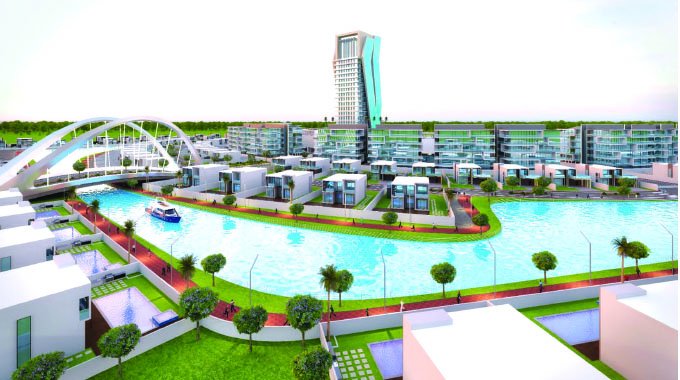
Herald Correspondent
Zim Cyber City, situated in the serene landscapes of Mount Hampden, Zimbabwe, emerges as a beacon of innovation in a continent on the cusp of urban transition. With globalisation passing to Africa, the continent is projected to witness a significant urban influx, with over 55 percent of its population anticipated to reside in urban areas by 2050. Amidst this narrative, Zim Cyber City unveils a canvas of sustainable urban living backed by the illustrious Mulk International, known for its global footprint in transformative projects. This venture transcends the conventional boundaries of real estate, morphing into a vision of sustainable urbanism that harmonises modern living with environmental stewardship.
Long-Term Vision
The long-term vision of Zim Cyber City is encapsulated in a 5-year master plan, a meticulously crafted roadmap that outlines the trajectory of the city’s evolution. This master plan provides a clear picture of the phased development, technological integration, community development, and expansion of commercial zones. The emphasis on community development showcases a human-centric approach, ensuring that the city evolves into a vibrant, inclusive, and sustainable community. The vision also encompasses expanding commercial zones, a step towards fostering economic growth, job creation, and entrepreneurial innovation, making Zim Cyber City a self-sustaining urban ecosystem.
Regulatory Framework:
The regulatory scaffolding of Zim Cyber City is one of its cornerstone features that sets it apart in the investment landscape. The Special Economic Zone (SEZ) status, a model that has seen remarkable success in regions like Shenzhen, China, and Singapore, brings forth a bouquet of tax incentives and a conducive legal environment. This regulatory milieu is not just a conduit for financial influx but a manifestation of Zimbabwe’s stride towards creating an investor-friendly ecosystem. By aligning with the SEZ framework, Zim Cyber City positions itself as a lucrative venture for investors seeking financial growth and regulatory security.
Investment Prospects
The financial narrative of Zim Cyber City is compelling, with a projected Return on Investment (ROI) of 22 percent on commercial space. This figure stands competitive when juxtaposed against average ROIs in the regional real estate sector. The venture is not just a short-term financial expedition but a long-term investment horizon promising capital appreciation over the years. The backing of Mulk International, a conglomerate with a rich tapestry of successful global ventures further accentuates this financial allure. The financial architecture of Zim Cyber City is thus not merely about numbers; it’s about a sustainable financial narrative that holds promise for immediate and long-term financial growth.
Sustainability Measures
The aspiration of Zim Cyber City to achieve LEED (Leadership in Energy and Environmental Design) certification underscores its unwavering commitment to environmental sustainability and healthy living spaces.
LEED, a globally recognised green building certification system devised by the US Green Building Council, provides a stringent framework for constructing and operating buildings in an environmentally friendly and energy-efficient manner. The certification encompasses several levels — Certified, Silver, Gold, and Platinum — each denoting a higher standard of sustainability and efficiency. Pursuing LEED certification by Zim Cyber City is a voluntary endeavour reflecting a forward-thinking approach to urban development. By aligning with the LEED framework, Zim Cyber City is not only adhering to international sustainability standards but also creating a precedent in the region for environmentally responsible urban development.
The LEED certification will testify to the city’s energy efficiency, water conservation, sustainable material utilisation, and improved indoor environmental quality, ensuring a healthy and sustainable living environment for its residents. This voluntary pursuit of LEED certification, often seen in global metropolises, strongly indicates the ambition driving Zim Cyber City to be a frontrunner in sustainable urban development in Zimbabwe and the African continent.
Innovative Building Materials
The modern architectural landscape demands durable, aesthetically appealing, and environmentally responsible materials. Alubond emerges as a prime choice in the construction blueprint of Zim Cyber City. This material, known for its superior fire resistance, serves as a bulwark against fire hazards, a feature that is becoming increasingly indispensable in urban constructions worldwide. Besides its safety attributes, Alubond boasts a sleek aesthetic appeal, aligning with the modern, sophisticated design envisioned for Zim Cyber City.
The durability of Alubond is a testament to the city’s long-term vision, ensuring structures built to last, reducing the need for frequent maintenance or replacements. Furthermore, the growing utilisation of Alubond in contemporary constructions globally mirrors the forward-thinking approach of Zim Cyber City in embracing materials that align with the modernity and sustainability narrative.
Technology Integration
In an era where technology is the linchpin of efficiency and convenience, Zim Cyber City envisions a habitat where technology is seamlessly integrated into the daily lives of its inhabitants.
The integration of Blockchain technology, for instance, fosters a transparent and efficient administrative framework.
This approach mirrors the Smart Dubai initiative, where Blockchain has been harnessed to streamline governmental processes, engendering a culture of transparency and efficiency. Moreover, deploying advanced surveillance systems is a proactive stride towards ensuring the city’s residents’ and businesses’ safety and security.
These technological underpinnings are not just about modernising urban living; they are about creating a smart, secure, and efficient urban ecosystem that caters to the evolving needs of modern urban dwellers.
Track Record of Mulk International
The involvement of Mulk International is a cornerstone feature of Zim Cyber City’s narrative. With a portfolio that spans diverse geographies and sectors, Mulk International brings a reservoir of expertise and a proven track record of transforming visionary projects into tangible realities.
Their previous venture, the iconic Sharjah University City, is a testament to their prowess in materialising projects that are financially viable benchmarks of innovation and sustainability.
The engagement of Mulk International in Zim Cyber City infuses a layer of trust, financial stability, and a global perspective that is indispensable for navigating the complex terrain of urban development in today’s globalised world.
Conclusion
Zim Cyber City unfolds as a canvas of sustainable urban innovation in the heart of Zimbabwe. Its meticulously crafted blueprint resonates with a global narrative of urban sustainability, technological integration, and financial growth. Backed by the reputable Mulk International, this venture transcends the traditional contours of real estate to morph into a vision of modern urban living.
The confluence of a robust regulatory framework, promising investment prospects, sustainable building practices, innovative building materials like Alubond, and the integration of cutting-edge technologies, delineates a promising trajectory for Zim Cyber City. Its aspiration towards LEED certification underscores a deep-seated commitment to environmental stewardship, a narrative pivotal in today’s climate discourse.
Moreover, the long-term vision encapsulated in a detailed 5-year master plan unveils a roadmap towards achieving a city and a sustainable, technologically advanced, and community-centric urban habitat. It’s an endeavour that transcends beyond the realms of construction, envisioning a habitat that resonates with the aspirations of modern urban dwellers.
As Zim Cyber City burgeons into a reality, its ripple effect is poised to transcend beyond the boundaries of Zimbabwe, potentially serving as a beacon of sustainable urban development in the African continent. The meticulous planning, global partnerships, and an unwavering commitment to sustainability make Zim Cyber City a groundbreaking venture worth the gaze of investors, urban developers, and policymakers alike.
References:
- Urban population projections: UN DESA report
- Special Economic Zones: World Bank report
- LEED Certification and sustainable buildings: US Green Building Council
- Alubond material: Alubond Official Website
- Blockchain in Dubai: Smart Dubai initiative
- Mulk Holdings International projects: Mulk Holdings International Website
- Urban development in Africa: African Development Bank Report



 Online Reporter