Chronicle Editor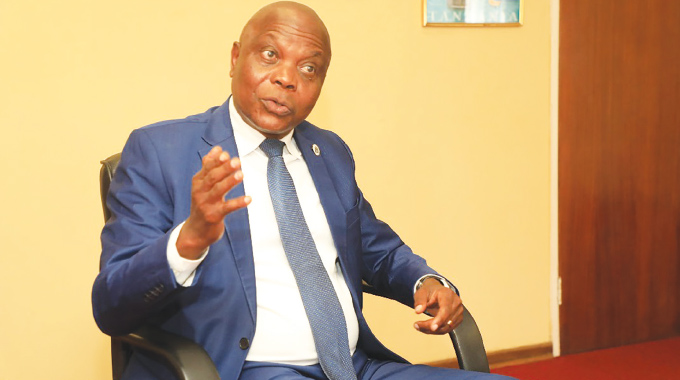
ZIMBABWE and Tanzania share enormous historical, economic, social and cultural relations.
The two countries are exploring more areas of engagement for the mutual benefit of their people. To get more insights on the bilateral and regional commitments the two countries share, Zimpapers Politics Hub’s Gibson Nyikadzino (GN) had an interview with Tanzania’s Ambassador to Zimbabwe, Mr Simon Sirro, (SS) who confirmed that the two countries are inseparable.
Mr Sirro took time to explain Zimbabwe’s development course under the Second Republic; how it fits into the Sadc industrialisation agenda. Below are the excerpts:
GN: From your assessment, how are relations between Zimbabwe and Tanzania contributing towards regional unity and stability?
SS: Before I answer your question, the first thing I should appreciate and commend is the good job which is being done by His Excellency, Dr ED Mnangagwa. As far as development is concerned, he is trying his level best to make sure that there is very big development. Whenever we move around, we see that there are new roads which are being constructed. They are repairing some roads; new hospitals have been built. You see even some big industries have been built, for example, steel industries. Therefore, it is really something very commendable. But the second thing is just the appreciation also for the Sadc for their decisions to awaken our industry. We know industry is the pillar of our development.
GN: Thank you. And how does this feed into the Zimbabwe-Tanzania relations and contribute towards regional stability?
SS: Go to our historical background, Tanzania and Zimbabwe are brothers and sisters. Go to the history of how Zimbabwe got independence, we were together. Our forefathers, Mwalimu Nyerere and Robert Mugabe were friends.
That is why even when I came here, I feel that I am still in Tanzania. Whenever I move around, you see, whenever you speak Shona, it doesn’t differ from Kiswahili. It is almost the same, this is the Bantu language. Therefore, we have our strong ties between our two nations because we share the issue of politics, economics and trade.
GN: How are these relations connecting or benefiting our people?
SS: If you happen to go to Kariakoo in Tanzania, you will meet a lot of women from Zimbabwe. They go there to buy a lot of goods. At the same time, there are lot of products from Tanzania that come to Zimbabwe. Therefore, the question of relationship, I can assure you that we have a very strong relationship between our two nations. And I am sure that this should go on.

GN: Trade and industrialisation are now major themes in Sadc. Ahead of the August 44th Ordinary Summit, what do you think must be the biggest talking points, including at the Industrial Week?
SS: Industry is everything. Once we talk industry, it means money, local or foreign. Therefore, once we talk about foreign money, which means development. You cannot build a hospital without money. So embracing the Industrial Week is important. It is important that even stakeholders, if at all they bring their products here, then they are going to showcase them. I am sure that most of the partners will come in. Some in the private sector will come to see what is there. Therefore, it is high time for us in our Sadc countries to show the following: our resources; our heritage, gold; platinum; cotton among others. Whatever. Cotton, all other things which are really very, very important. But the second thing is to market our products and it is very important that this exhibition has to be there. The other thing is to show our skilled force because whenever the foreign investors come, they want to know how much skills and expertise we have. That is vital.
GN: A synchronised industrial policy is key in delivering that. How do you compare Zimbabwe and Tanzania’s industrial policies in providing a conducive environment for foreign investors?
SS: Industrial policy is very important. For example, our policy and the policy in Zimbabwe are very good policies. Our environments invite investors to come in. There is no complication as far as our policy is concerned. Our policy here in Zimbabwe, the policy in Tanzania and Zimbabwe, it is almost the same, which policy encourages the investors to come in, to invest.
GN: At a regional level, the industrialisation agenda gained traction around 2013 and 2014. Ten years later, we have that once again. What explains the relative calm we had about the issue before?
SS: To me, I think it is because of the challenges. Once you meet the challenges, you see what would be an opportunity. Therefore, we think they (Sadc leaders) after facing challenges maintained it is high time now to embrace this thing, it is very important for us. Because whenever you have the challenges, you cannot lie down and live with the challenges there. You have to look for the opportunity. Therefore, I think because of the challenges they had, as I said before, that once you talk about industries, automatically you talk about income. Without money you cannot provide services to the people. Without money you cannot provide food to the people. Therefore, with the challenges, then you have to opt for industrialisation.
GN: In your view, how are all these regional efforts fitting into the AfCFTA agenda? Are we on the right footing to engage in trade among ourselves as African countries and as a region?
SS: Absolutely! Information is power. During the Industrial Week exhibitions here, there are lots of things to share. Because by sharing information you know which country has which resources, and bilaterally, some countries can come together and decide what has to be done together. I am sure whenever the investors will come from different countries in the Sadc region, they are going to share information. We are lacking information, actually. And once you talk of the Africa Continental Free Trade Area, we are also lacking information. People need to know what is there in Zimbabwe? What kind of industries are there in Zimbabwe? What kind of resources are there in Zimbabwe? That is what investors are thinking about. But now, because of the sanctions, investors end up thinking Zimbabwe does not do anything. That is why I say that it is very important that they come and see. Seeing is believing. Once they come, they will see that actually President Mnangagwa is doing a lot with all the sanctions. Therefore, to me, I think it is a place for the investors, especially from the Sadc countries, to come in, to share and exchange information.
GN: How do you then see women and young men coming in to contribute to this industrialisation agenda and drawing benefits too?
SS: Industrialisation is very important, it addresses even the challenge of unemployment. Therefore, if at all we have enough industries, then it is going to cut some of the challenges of unemployment, because most of the young people and women will be employed. But what is very important is the issue of innovation. Go back to history. Once you talk about industrialisation, for example in Zimbabwe, you are talking about Education 5.0. That is very important. The policy talks about teaching, research and service to the people, then innovation and industrialisation. It is very important for our graduates now to be innovative.
Continues on www.chronicle.co.zw



 Online Reporter