Gibson Nyikadzino
Zimpapers Politics Hub
IT is often said that in international relations, long-standing rivalries and disagreements give way to pragmatic partnerships when the costs of continued conflict outweigh the benefits.
The likelihood of states undertaking cost-benefit analyses to secure their interests is, therefore, high and understandable.
For example, after years of hearing the West frame China’s rise as a “threat” and Russia’s resurgence as “a return of the Soviet Empire”, it does little to erase the reality that these major powers increasingly recognise the need for cooperation as countries enter an uncertain future.
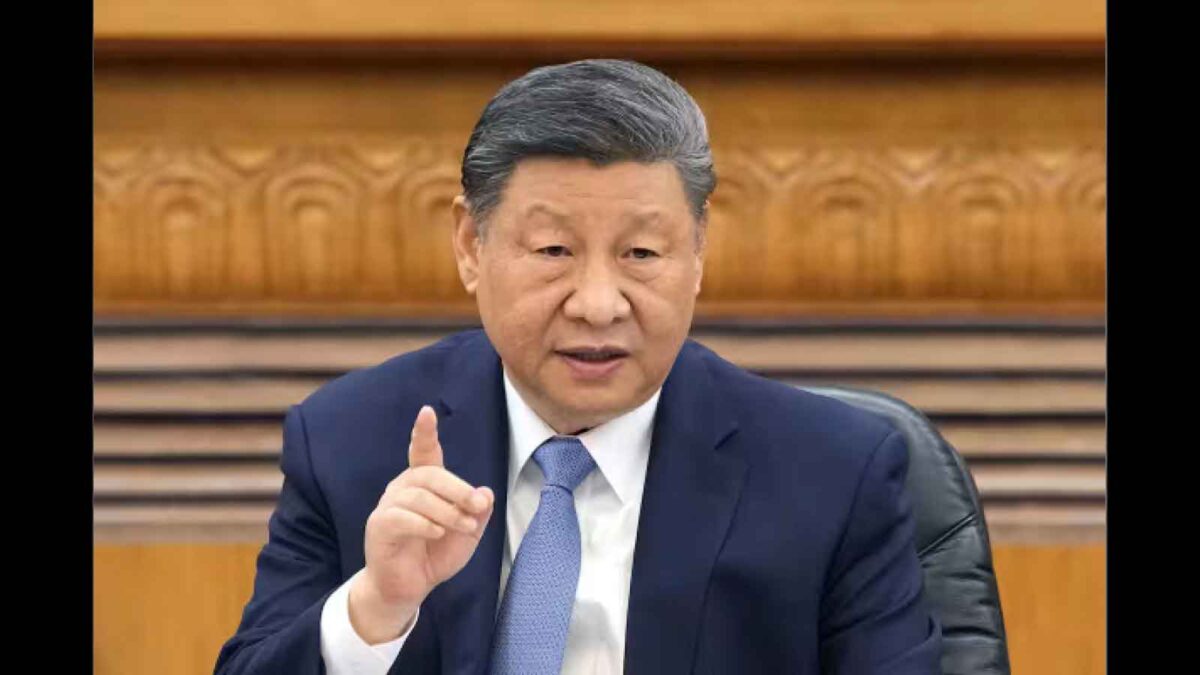
In a globalised world where the ship has no captain, leaders of three of the world’s great powers are meeting in China this coming Thursday: China’s Xi Jinping, Russia’s Vladimir Putin and the United States’ Donald Trump. This suggests that, as the world transitions towards a multipolar order, the formation of issue-based synergies is becoming increasingly prevalent.
That is why, despite their ideological differences, these three world leaders are increasingly pursuing a common goal: cooperation over competition.
Zim, EU, UK need to survive
Over the past week, Zimbabwe and the European Union (EU), on one hand, and Zimbabwe and the United Kingdom (UK), on the other, held separate bilateral talks to identify common ground and new frontiers of cooperation in pursuit of their respective interests.
Within this framework, what many international political analysts have observed is that the influence of both the EU and the UK on the international stage is waning, creating a need for renewed engagement and relevance.
This revival is taking place after years of characterising Zimbabwe-EU and Zimbabwe-UK relations as frosty, hostile and tense. It can be argued that mutual exhaustion among the parties, coupled with the emergence of common interests, has made cooperation more advantageous than continued hostility.
From an international politics standpoint, by moving away from past hostilities and focusing on cooperation, the three parties are making rational choices and acting as rational actors.
To describe a State as a rational actor means that it bases its policies on credible ideas and makes decisions through a deliberative policymaking process. Such processes help Governments weigh strategic risks, benefits and incomplete information before making decisions.
What, then, are the strategic benefits that Zimbabwe, the EU and the UK seek to attain?
Since November 24, 2017, when the Second Republic came into being, Zimbabwe has pursued a transformative trajectory in its foreign policy, informed by an understanding that the world was undergoing rapid change.
Some of the major changes witnessed so far include the United States’ withdrawal from the Paris Climate Agreement and some United Nations organisations; major conflicts such as the Russia-Ukraine war and the conflict involving the United States, Israel and Iran; the rise in intra-state conflicts; global pandemics; and insecurity in regions regarded as the world’s economic arteries.
It is against the backdrop of these disruptions that Zimbabwe is entering a new phase of cooperation.
Historically, from the perspective of the UK and the EU, Zimbabwe is strategically positioned in Southern Africa. It is a founding member of the Southern African Development Community (SADC) and a regional hub connecting trade and the movement of goods and services. It is also among the region’s relatively peaceful and stable countries, where national security and stability are essential considerations for investors.
Above all, Zimbabwe possesses mineral resources that are key to the just energy transition, which both the EU and the UK are keen to advance.
For Zimbabwe, domestic priorities include economic revival involving both large conglomerates and small-to-medium enterprises, industrial capacitation, infrastructure development, innovation, and value addition and beneficiation.
In Zimbabwe’s view, value addition should not be interpreted as resource nationalism, but rather as a mechanism for ensuring mutual economic benefits for all parties.
The EU and the UK are important markets for Zimbabwe’s finished products and agricultural produce, while also offering opportunities for employment and access to expertise and much-needed technology. They need each other for survival.
It should also be emphasised that, beyond the EU and the UK, Zimbabwe has other strategic interests and partnerships with global powers. While progress is being made in engagements with the EU and the UK, Zimbabwe cannot abandon the sound political and economic relations it has maintained with other countries.
To maximise its interests while balancing those of traditional allies and new partners, Zimbabwe is reassessing its strategies to ensure that economic interests remain central to modern-day statecraft.
This balancing act means Zimbabwe can leverage economic and diplomatic tools to mitigate the dominance of powerful countries, while pursuing soft balancing within the broader global balance of power. This nuanced approach enhances the country’s national security and economic prosperity by fostering diverse alliances and minimising reliance on a single global power.
Forging alliances, balancing interests
Currently, flexibility is a crucial element in balancing relations while safeguarding national interests. No State can survive on radicalism alone, as doing so risks isolation.
One example of flexibility in international politics can be seen in Russia and China’s support for Iran on political, security, economic and research issues, while opposing its purported nuclear ambitions.
The world does not have a single government responsible for enforcing norms, values and systems of governance. In the absence of such an authority, states pursue whatever strategies they consider necessary to survive.
Through engagement and re-engagement, Zimbabwe, the EU and the UK are also seeking to forge economic partnerships that protect their interests against potential threats arising from the actions of a global hegemon. They are working to safeguard what they already have while maximising available opportunities, despite holding different worldviews on certain issues.
Like Russia and China, Zimbabwe has the latitude to adopt a flexible approach to strategic balancing. This may involve supporting initiatives with one global bloc while retaining the flexibility to abstain from or align with other blocs when necessary.
Survival is a policy
The pathway to global survival is premised on sound policy formulation. Zimbabwe currently maintains that it is a “friend to all and enemy to none”. This position forms part of its Foreign Policy Doctrine, whose mandate is derived from the country’s Constitution.
Above all, what is essential to this survival strategy is how Zimbabwe, as a state, aggregates its views and determines which policies to maintain or adopt as it pursues engagement and re-engagement. This, in itself, is a rational choice.
A state’s policy is considered rational when it is based on a credible set of ideas. Policies that are not grounded in such ideas cannot be regarded as rational.
Zimbabwe, the EU and the UK are, therefore pursuing cooperation as a means of safeguarding their respective interests and securing their place in an increasingly uncertain international order.