Online Reporter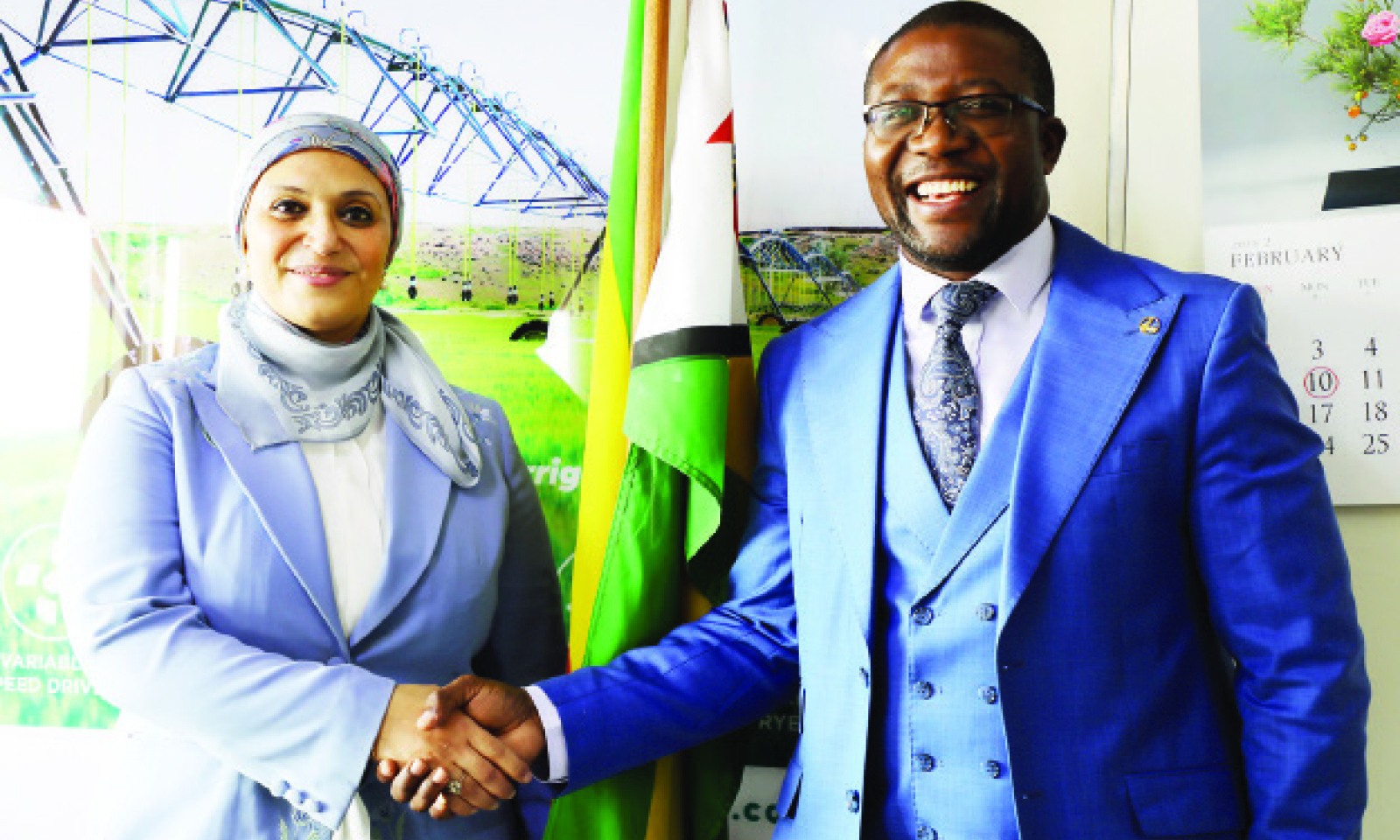
Rumbidzayi Zinyuke and Remember Deketeke
ZIMBABWE is moving to strengthen international trade and investment partnerships through diplomatic engagements with key international partners in line with the Second Republic’s engagement and reengagement drive.
Industry and Commerce Minister, Mangaliso Ndlovu, yesterday met the ambassadors of the European Union, Serbia and Egypt to discuss economic cooperation, trade agreements and investment opportunities to strengthen the country’s industrial and commercial sector.
Speaking after the engagements, Minister Ndlovu said Zimbabwe’s ongoing diplomatic breakthroughs are paving the way for economic cooperation with global partners.
“We hope that with such engagements, Zimbabwe continues to take her place as a country that is a friend to all and enemy to none, a country that is open for business, a country that is engaging and re-engaging throughout the world,” he said.
“As the Ministry of Industry and Commerce, we have engaged these countries in so far as unlocking opportunities that could arise in the areas of manufacturing, quality assurance exchange programmes, which we discussed with Egypt, as well as with the EU,” he said.
Minister Ndlovu said the meeting with the EU Ambassador to Zimbabwe Jobst von Kirchmann discussed a range of issues of potential economic cooperation, particularly the hosting of the inaugural EU-Zimbabwe Business Summit this year.
“It’s a clear demonstration that Europe is warming up; they are now bringing their business to Zimbabwe and they are very keen to invest in a number of things.
“We had a very productive meeting with a number of sectors around agro-processing, resilience building, and we have begun discussions around manufacturing and other areas,” he said.
The Government is also looking at interrogating more trade agreements that could help improve exports into Europe and improve the environment for Europe to sell products to Zimbabwe and Africa.
Minister Ndlovu also met the Serbian Ambassador to Zimbabwe Radish Grujic, who expressed gratitude for Zimbabwe’s support for that country’s bid to host the 2027 Serbia Specialised Expo.
“More importantly, we discussed how they want to have an expo that benefits Africa, where Africa will have the front seat for all the activities that will take place, Zimbabwe included.
“We discussed economic opportunities again, because while we have had relations with Serbia, we have not escalated our relations into economic relations. There are a number of proposals that we have discussed, and we agreed that our private sectors will have to have exchange visits, and in the near future, to have a business expo that is organised by the two private sectors,” he said.
Minister Ndlovu said his meeting with the Egyptian Ambassador to Zimbabwe, Ms Salwa Mowafi, emphasised the cordial relations with that country which could be tapped into.
“They are keen to invest in a number of sectors. We discussed at length their investment interest in fertilizer production, which is an investment interest that they have expressed in Zimbabwe, and is still under consideration,” he said.
Ambassador von Kirchmann underscored the EU’s commitment to bolstering trade and investment in Zimbabwe.
He said the EU had signed its fifth investment facility, totaling €20 million, bringing the overall investment volume over the past five years to €90 million.
The facility, managed through the European Investment Bank and local financial institutions, is specifically geared towards supporting small and medium-sized enterprises (SMEs) and women-led businesses.
“In that context, I visited two of the beneficiaries, including a chicken farm that has created over 70 000 jobs. You can imagine that this is a fantastic result.
“We are really committed to boosting investment,” he said.
Additionally, the EU reaffirmed its participation in the upcoming Zimbabwe International Trade Fair (ZITF) in Bulawayo, where it has won the award for the best international stand twice in previous years.
The European Union is the fourth biggest trading partner of Zimbabwe, buying approximately 42 percent of all horticulture products.
On his part, Ambassador Grujic said there was a need to improve both countries’ economies through bilateral trade.
“One of the issues we discussed with Minister Ndlovu was on how best we can improve Zimbabwe and Serbia’s economies and bilateral trade as it was impacted by Covid-19.”